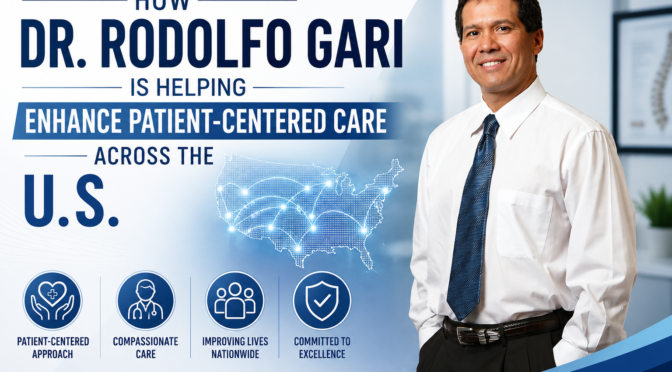
How Dr. Rodolfo Gari Is Helping Enhance Patient-Centered Care Across the U.S. 

What does modern healthcare require to enhance patient outcomes and support long-term satisfaction? Across the healthcare industry providers are increasingly recognizing that successful treatment involves more than simply addressing symptoms. Patients want personalized communication accessible care and treatment plans designed around their individual needs. This growing shift has fuelled the rise of patient-centered care USA initiatives across hospitals clinics and specialty practices. 

This transformation is being driven in part by healthcare leaders such as Dr. Rodolfo Gari. With decades of experience in medicine pain management and healthcare operations Dr. Gari has helped develop care models focused on improving the patient experience while supporting clinical excellence. His work as a physician entrepreneur and healthcare executive has focused on broadening access to specialized treatment and strengthening physician-patient relationships. 

His work reflects many of the principles shaping modern healthcare including personalized treatment plans integrated services and improved access to specialty care. Through leadership in pain management organizations and healthcare practice development he has helped support broader conversations surrounding patient-centered care USA and long-term healthcare improvement. 

This article explores how Dr. Rodolfo Gari’s approach aligns with evolving healthcare priorities and examines the role of innovation collaboration and patient-focused treatment strategies in today’s medical environment. 

The Growing Importance of Patient-Centered Care USA 

Healthcare systems throughout the country continue shifting toward more personalized models of care. 

Traditional healthcare often focused primarily on diagnosis and treatment. While clinical outcomes remain critical modern healthcare increasingly recognizes the importance of communication education accessibility and patient engagement. 

The concept of patient-centered care USA focuses on creating healthcare experiences that prioritize individual needs preferences and long-term wellness goals. 

Core principles include: 

  • Shared decision making 
  • Personalized treatment planning 
  • Improved patient communication 
  • Coordinated care delivery 
  • Enhanced accessibility 
  • Long-term health management 

These principles help create stronger relationships between healthcare providers and patients while supporting improved satisfaction and clinical outcomes. 

Many healthcare organizations are embracing patient care improvement initiatives that foster trust and support seamless continuity of care. 

Dr. Rodolfo Gari’s healthcare leadership reflects many of these objectives through efforts focused on expanding specialty care services and improving treatment accessibility. 

How Dr. Rodolfo Gari Supports Patient-Centered Care USA? 

Throughout his career Dr. Rodolfo Gari has worked across multiple areas of healthcare including anaesthesiology pain management and healthcare operations. His experience provides insight into both clinical and administrative aspects of patient care. 

His healthcare philosophy has often emphasized improving access to specialized treatment while supporting physician autonomy and patient engagement. 

Several aspects of his work align with patient-centered care USA priorities: 

Expanding Access to Specialized Care 

Many patients with chronic pain encounter difficulties when trying to access the care they need. 

These challenges may include: 

  • Long wait times 
  • Limited specialist availability 
  • Fragmented care coordination 
  • Delayed treatment access 

Dr. Gari helped establish and expand pain management practices focused on improving accessibility for patients requiring specialized care. 

Supporting Physician-Patient Relationships 

Healthcare outcomes often improve when patients feel heard and involved in treatment decisions. 

Strengthening physician-patient relationships has been identified as a key organizational priority by groups associated with Dr. Gari. 

By enhancing communication and trust, these efforts reinforce patient care improvement strategies aimed at sustaining long-term engagement. 

The Role of a Pain Management Specialist USA in Modern Healthcare 

Millions of Americans experience chronic pain each year, highlighting its status as a significant and complex healthcare concern. 

A skilled pain management specialist USA provider plays an important role in helping patients manage conditions that affect mobility function and quality of life. 

Pain management often requires comprehensive treatment approaches rather than single interventions. 

Conditions commonly treated include: 

  • Back pain 
  • Neck pain 
  • Nerve pain 
  • Joint disorders 
  • Post-surgical pain 
  • Chronic musculoskeletal conditions 

Dr. Rodolfo Gari’s background includes extensive experience in anaesthesiology and interventional pain management. His work has focused on helping patients access specialized care options designed to improve daily function and symptom management. 

Why Pain Management Requires Patient-Focused Care 

Pain affects every patient differently. 

Successful treatment often requires: 

  • Individualized assessments 
  • Ongoing monitoring 
  • Treatment adjustments 
  • Multidisciplinary collaboration 

This aligns closely with patient-centred care USA principles where treatment plans are designed around individual patient needs rather than standardized approaches. 

The role of a pain management specialist USA provider continues growing as healthcare organizations seek more personalized treatment pathways for chronic pain patients. 

Patient Care Improvement Strategies Driving Better Outcomes 

Healthcare organizations increasingly recognize that improving outcomes requires more than medical expertise alone. 

Successful care delivery often depends on operational efficiency communication quality and patient engagement. 

Many leading organizations now implement patient care improvement strategies that focus on enhancing every stage of the patient experience. 

Examples include: 

Improved Communication Systems 

Clear communication helps patients better understand: 

  • Diagnoses 
  • Treatment options 
  • Medication instructions 
  • Follow-up care plans 

Patients who feel informed often demonstrate stronger treatment adherence and engagement. 

Coordinated Care Models 

Fragmented care remains a challenge throughout healthcare. 

Integrated care coordination helps ensure: 

  • Faster referrals 
  • Better information sharing 
  • Reduced treatment delays 
  • Improved continuity of care 

These initiatives support broader patient-centered care USA objectives by reducing barriers and improving healthcare navigation. 

Data-Driven Quality Improvement 

Healthcare leaders increasingly rely on data to evaluate performance. 

Organizations may track: 

  • Patient satisfaction 
  • Treatment outcomes 
  • Appointment access 
  • Care coordination metrics 

These patient care improvement strategies help identify opportunities for operational enhancement while supporting long-term quality improvement goals. 

Value-Based Healthcare Models and the Future of Care 

The healthcare industry continues moving away from volume-focused reimbursement structures toward more outcome-driven systems. 

These evolving value-based healthcare models focus on improving patient outcomes while managing costs more effectively. 

Rather than rewarding service volume alone healthcare organizations increasingly prioritize: 

  • Quality outcomes 
  • Preventive care 
  • Patient satisfaction 
  • Care coordination 
  • Long-term health improvement 

This transition aligns naturally with patient-centered care USA initiatives because both approaches emphasize patient well-being rather than transactional care delivery. 

How Value-Based Healthcare Models Support Better Outcomes 

Value-based care models are most effective when they emphasize preventive care and sustained health outcomes. 

Benefits may include: 

  • Reduced hospital readmissions 
  • Improved chronic disease management 
  • Better patient engagement 
  • Stronger care coordination 

Healthcare leaders who embrace these principles help create more sustainable healthcare systems. 

Dr. Gari’s focus on integrated specialty care services reflects many goals associated with modern outcome-focused healthcare strategies. 

Innovation and Leadership in Patient-Centered Care USA 

Healthcare transformation often requires both clinical expertise and organizational leadership. 

Over the course of his career Dr. Rodolfo Gari has been involved in developing healthcare organizations focused on specialty treatment access and practice growth. 

Healthcare innovation increasingly centres on: 

  • Expanding patient access 
  • Improving operational efficiency 
  • Enhancing treatment personalization 
  • Supporting interdisciplinary collaboration 

These priorities continue shaping the future of patient-centered care USA

Building Scalable Healthcare Systems 

Growing patient demand requires healthcare organizations to develop scalable solutions. 

Healthcare leaders often focus on: 

  • Clinic expansion 
  • Workforce development 
  • Technology adoption 
  • Operational standardization 

These efforts help improve access while maintaining care quality. 

Supporting Healthcare Professionals 

Strong healthcare systems also require physician support. 

Many patient care improvement strategies focus not only on patients but also on helping providers spend more time delivering care and less time managing administrative burdens. 

Ensuring this balance is essential for the future stability and sustainability of healthcare. 

The Future of Patient-Centered Care USA 

Healthcare continues evolving rapidly. 

Emerging technologies changing patient expectations and new reimbursement models are reshaping how care is delivered. 

Future patient-centered care USA initiatives will likely focus on: 

  • Digital health integration 
  • Telemedicine expansion 
  • Personalized treatment planning 
  • Predictive healthcare analytics 
  • Enhanced care coordination 

At the same time the role of the pain management specialist USA provider will remain important as chronic pain continues affecting large patient populations. 

Healthcare organizations implementing advanced patient care improvement strategies and embracing modern value-based healthcare models will be better positioned to meet future healthcare demands. 

Leaders who prioritize accessibility communication and personalized treatment will continue influencing positive change throughout the healthcare industry. 

Conclusion 

The future of healthcare depends on creating systems that place patients at the centre of every decision. Through leadership in pain management healthcare operations and specialty care development Dr. Rodolfo Gari has contributed to broader efforts supporting patient-centred care USA principles. His work reflects the growing emphasis on accessibility physician-patient relationships personalized treatment and long-term healthcare improvement. 

By embracing innovative care strategies and value-based approaches, healthcare organizations can deliver more seamless and patient-centered care experiences. If you are seeking specialized treatment and a patient-focused approach to healthcare, consider scheduling a consultation with a qualified provider to explore personalized care options that support your long-term health goals.  

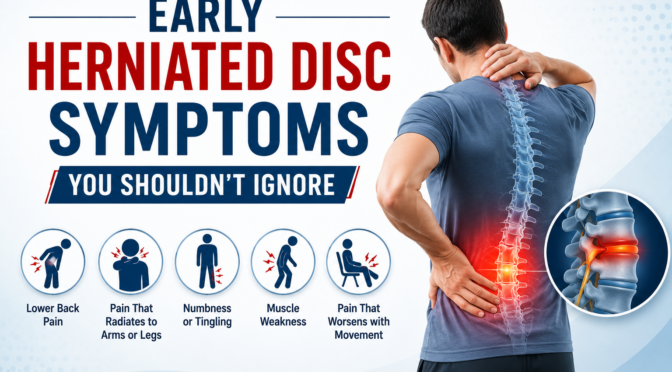
Early Herniated Disc Symptoms You Shouldn’t Ignore 

Have you been experiencing persistent back pain tingling sensations or unexplained numbness that does not seem to go away? These symptoms may appear minor at first, but they could signal a more serious spinal condition. A herniated disc symptom often develops gradually which makes it easy for many people to overlook the early warning signs until the condition begins affecting daily activities. 

The primary role of spinal discs is to absorb shock between the bones of the spine. They absorb shock and allow the spine to move comfortably. When one of these discs becomes damaged the soft inner material can push through the outer layer and place pressure on nearby nerves. This process is known as disc herniation. Depending on the location and severity of the problem symptoms can range from mild discomfort to significant pain and weakness. 

Recognizing a herniated disc symptom early can help prevent complications and improve treatment outcomes. Early intervention often allows patients to manage symptoms with conservative treatments before more advanced procedures become necessary. Understanding the signs of early disc issues can also help individuals seek medical attention before nerve damage progresses. 

In this guide we will explore the most common symptoms of a herniated disc explain how the condition develops discuss risk factors and review when professional evaluation becomes essential. 

Understanding a Herniated Disc Symptom 

Before discussing symptoms, it is important to understand what happens during a disc herniation. 

The spine contains a series of vertebrae separated by discs. Each disc consists of a tough outer layer and a soft gel-like centre. These structures work together to absorb pressure and support flexibility. 

Over time age-related wear repetitive stress poor posture and injuries can weaken the outer disc wall. When this outer layer develops a tear or weak spot the inner material may push outward. If the displaced material irritates or compresses nearby nerves symptoms can develop. 

herniated disc symptom can vary depending on the location of the affected disc. Some individuals experience only mild discomfort while others develop severe pain numbness or muscle weakness. 

Several factors increase the risk of disc herniation including: 

  • Aging and disc degeneration 
  • Heavy lifting 
  • Repetitive bending 
  • Obesity 
  • Smoking 
  • Sedentary lifestyle 
  • Poor posture 
  • Occupational strain 

People who understand these risk factors are often better prepared to recognize early disc issues before symptoms become more severe. 

Persistent Back or Neck Pain 

One of the earliest warning signs of a disc herniation is persistent pain in the neck or lower back. 

Many people initially assume the discomfort is caused by muscle strain or fatigue. However, pain associated with a herniated disc often behaves differently. It may continue for weeks or months and may become worse with certain movements. 

Pain usually develops in the area where the disc is damaged. A herniated disc can cause pain in different areas depending on its location, with lower back herniations typically causing back pain and neck herniations leading to neck discomfort. 

Patients frequently describe the pain as: 

  • Sharp 
  • Aching 
  • Burning 
  • Stabbing 
  • Persistent 

Unlike temporary muscle soreness disc-related pain may not improve significantly with rest alone. 

Certain activities can also worsen symptoms including: 

  • Sitting for long periods 
  • Bending forward 
  • Twisting 
  • Lifting heavy objects 
  • Coughing 
  • Sneezing 

If these signs occur consistently, they may signal a herniated disc that should be examined by a healthcare provider. 

Persistent pain should never be ignored especially when it begins interfering with work physical activity or sleep quality. 

Tingling and Numbness May Indicate Early Disc Issues 

As a herniated disc begins affecting nearby nerves sensory symptoms often develop. 

Tingling and numbness are among the most common signs of early disc issues. These sensations occur because compressed nerves struggle to transmit signals normally between the brain and affected body parts. 

Patients frequently describe symptoms as: 

  • Pins and needles 
  • Burning sensations 
  • Reduced sensitivity 
  • Partial numbness 
  • Electrical sensations 

Different nerves can cause symptoms to develop in different parts of the body. 

For example, cervical disc herniations may cause: 

  • Hand tingling 
  • Finger numbness 
  • Arm sensations 

Lumbar disc herniations may cause: 

  • Leg tingling 
  • Foot numbness 
  • Calf sensations 

Many people dismiss these symptoms because they may come and go initially. However recurring numbness or tingling can indicate ongoing nerve irritation. 

herniated disc symptom involving nerve compression should be evaluated promptly because prolonged nerve pressure may increase the risk of lasting neurological complications. 

Early diagnosis often improves treatment effectiveness and recovery potential. 

Radiating Pain Is a Common Herniated Disc Symptom 

Radiating pain differs from localized back or neck discomfort. 

Instead of remaining in one area the pain travels along the path of an affected nerve. This occurs when herniated disc material directly compresses a nerve root. 

herniated disc symptom involving radiating pain can sometimes feel more severe than the pain originating in the spine itself. 

Common examples include: 

Sciatica 

Sciatica develops when lumbar disc herniation affects the sciatic nerve. 

Symptoms may include: 

  • Pain in the buttock 
  • Leg pain 
  • Calf discomfort 
  • Foot pain 
  • Burning sensations 

The pain often travels down one side of the body and may worsen while sitting. 

Cervical Radiculopathy 

When disc herniation occurs in the neck symptoms may radiate into the shoulder’s arms and hands. 

Patients may experience: 

  • Arm pain 
  • Shoulder pain 
  • Hand discomfort 
  • Finger tingling 
  • Muscle fatigue 

The presence of radiating pain can be a clear sign of nerve-related irritation or compression. 

Recognizing this type of herniated disc symptom can help patients seek evaluation before symptoms progress further. 

Muscle Weakness Should Never Be Ignored 

While pain often receives the most attention muscle weakness can be a more concerning symptom. 

Nerves control muscle movement throughout the body. When nerve signals become disrupted muscle performance may decline. 

People experiencing early disc issues may notice subtle changes such as: 

  • Reduced grip strength 
  • Difficulty carrying objects 
  • Trouble climbing stairs 
  • Leg fatigue 
  • Balance problems 

Initially these changes may seem insignificant. However, weakness can gradually worsen if nerve compression continues. 

In some cases, patients develop foot drop which makes lifting the front part of the foot difficult during walking. 

Muscle weakness can affect everyday activities including: 

  • Walking 
  • Driving 
  • Exercising 
  • Household chores 
  • Occupational tasks 

herniated disc symptom involving weakness should always be assessed by a healthcare professional because it may indicate significant nerve involvement. 

Prompt treatment can help protect nerve function and improve recovery outcomes. 

Changes in Mobility and Daily Function 

Many individuals with disc herniation notice changes in mobility before receiving a diagnosis. 

Movement can become restricted when pain, stiffness and nerve irritation are present. Daily activities that once seemed straightforward may become challenging. 

Common mobility changes include: 

  • Difficulty bending 
  • Reduced flexibility 
  • Slower walking speed 
  • Trouble standing for long periods 
  • Difficulty changing positions 

These limitations often develop gradually which makes them easy to overlook. 

People experiencing early disc issues sometimes alter their movements unconsciously to avoid discomfort. Over time these compensations may contribute to additional muscle strain and reduced physical function. 

Monitoring changes in mobility can provide valuable information during medical evaluation. 

When combined with pain numbness or weakness mobility limitations often strengthen the likelihood that a herniated disc symptom is affecting nerve function. 

Serious Symptoms That Require Immediate Medical Attention 

Most disc herniations can be managed successfully with conservative treatment. However certain symptoms require urgent evaluation. 

The following symptoms warrant immediate medical evaluation: 

  • Loss of bladder control 
  • Loss of bowel control 
  • Severe weakness 
  • Progressive numbness 
  • Difficulty walking 
  • Numbness around the groin area 

These symptoms may indicate a rare but serious condition known as cauda equina syndrome. 

Cauda equina syndrome occurs when multiple nerve roots become compressed within the lower spinal canal. 

Potential symptoms include: 

  • Severe back pain 
  • Leg weakness 
  • Urinary retention 
  • Saddle anaesthesia 
  • Loss of sensation 

This condition is considered a medical emergency because delayed treatment can result in permanent neurological damage. 

Recognizing severe herniated disc symptom patterns can help patients obtain urgent care when necessary. 

Diagnosis and Treatment for Early Disc Issues 

Accurate diagnosis begins with a comprehensive evaluation. 

Healthcare providers typically review: 

  • Medical history 
  • Symptom duration 
  • Pain patterns 
  • Functional limitations 
  • Neurological findings 

A physical examination often includes testing: 

  • Muscle strength 
  • Reflexes 
  • Sensation 
  • Mobility 
  • Balance 

Healthcare providers may suggest imaging studies to support the diagnosis. 

Common imaging methods include: 

MRI 

An MRI provides comprehensive imaging of spinal discs, nerve structures and surrounding soft tissues. It is often considered the preferred diagnostic tool for disc herniation. 

CT scan 

CT imaging may be used when MRI is unavailable or unsuitable. 

X-Rays 

While X-rays do not show discs directly, they help identify structural abnormalities affecting the spine. 

Treatment options vary depending on symptom severity. 

Conservative approaches often include: 

  • Physical therapy 
  • Anti-inflammatory medications 
  • Activity modification 
  • Stretching programs 
  • Strengthening exercises 

More advanced cases may require injections or surgical intervention. 

Conclusion 

Recognizing a herniated disc symptom early can significantly improve treatment outcomes and reduce the risk of long-term complications. Symptoms such as persistent back pain radiating discomfort numbness tingling and muscle weakness should never be dismissed as normal aging or temporary strain. These warning signs often indicate underlying nerve irritation that benefits from prompt medical evaluation. 

Understanding the signs of early disc issues allows individuals to seek treatment before symptoms worsen and before nerve damage becomes more difficult to manage. If you have noticed any of the symptoms discussed in this guide, consider scheduling a professional assessment. Book a consultation with a spine specialist today and take the first step toward improved spinal health mobility and quality of life. 

Bulging Disc vs Herniated Disc: Key Differences in Diagnosis & Imaging 

When back or neck pain begins interfering with daily activities, one of the most common questions patients ask is whether they are dealing with a bulging disc vs herniated disc. Although these spinal conditions are often discussed together, they are not the same. Understanding the distinction is critical because the diagnosis, treatment recommendations and long-term outlook may vary depending on the specific condition. 

A spinal disc acts as a cushion between vertebrae, helping absorb shock and support movement. Over time, age-related degeneration, repetitive strain, injury or poor posture can affect these discs, leading to abnormalities that may cause pain, numbness, weakness or reduced mobility. However, distinguishing a bulging disc vs herniated disc requires more than symptom assessment alone. Accurate disc diagnosis typically involves a combination of clinical evaluation and advanced imaging studies. 

Many patients are surprised to learn that some disc abnormalities may appear on imaging even when symptoms are absent. This makes proper interpretation of MRI and CT findings essential for accurate treatment planning. 

In this guide, we will explore the differences between a bulging disc and a herniated disc, discuss common symptoms, review diagnostic procedures, examine imaging findings and explain how healthcare providers determine the most appropriate treatment approach. 

Understanding Bulging Disc vs Herniated Disc 

What Is a Bulging Disc? 

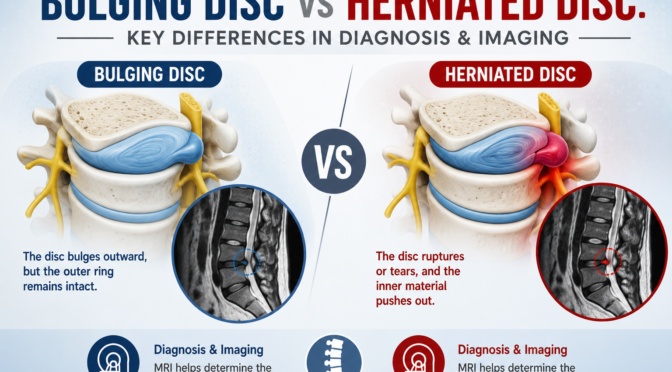
A bulging disc occurs when the outer layer of the spinal disc extends beyond its normal boundary. The disc remains intact, but it protrudes outward, often affecting a broad portion of the disc circumference. 

Bulging discs commonly develop due to: 

  • Age-related disc degeneration 
  • Repetitive spinal stress 
  • Poor posture 
  • Occupational strain 
  • Gradual wear and tear 

Many people with a bulging disc experience no symptoms. However, symptoms may occur if the disc begins pressing against nearby nerves. 

Key Characteristics of a Bulging Disc 

  • Disc wall remains intact 
  • Broad-based protrusion 
  • Often develops gradually 
  • Frequently associated with aging 
  • May be asymptomatic 

What Is a Herniated Disc? 

A herniated disc occurs when the inner gel-like material of the disc pushes through a tear or weakness in the outer disc layer. 

Unlike a bulging disc, a herniated disc involves disruption of the disc structure. This often increases the likelihood of nerve irritation and symptom development. 

Common causes include: 

  • Sudden lifting injuries 
  • Traumatic accidents 
  • Degenerative changes 
  • Repetitive bending and twisting 

Key Characteristics of a Herniated Disc 

  • Outer disc layer is damaged 
  • Inner material extends outward 
  • Often causes nerve compression 
  • Symptoms may appear suddenly 
  • Higher risk of neurological issues 

Bulging Disc vs Herniated Disc Symptoms 

Shared Symptoms 

One reason patients often confuse bulging disc vs herniated disc conditions is because symptoms can overlap significantly. 

Common symptoms include: 

  • Back pain 
  • Neck pain 
  • Radiating pain 
  • Muscle weakness 
  • Numbness 
  • Tingling sensations 

The severity of symptoms often depends more on nerve involvement than the size of the disc abnormality itself. 

Symptoms More Common with Herniation 

A herniated disc is generally more likely to compress spinal nerves and produce noticeable symptoms. 

Potential symptoms include: 

  1. Sciatica 
  1. Arm pain 
  1. Foot weakness 
  1. Hand weakness 
  1. Burning sensations 
  1. Reduced reflexes 

Red Flags Requiring Immediate Evaluation 

Seek prompt medical assessment if symptoms include: 

  • Loss of bowel control 
  • Loss of bladder control 
  • Progressive weakness 
  • Difficulty walking 
  • Saddle anaesthesia 

These symptoms may indicate serious neurological involvement requiring urgent intervention. 

The Role of Disc Diagnosis in Treatment Planning 

Why Accurate Disc Diagnosis Matters? 

Effective treatment begins with a thorough disc diagnosis process. Symptoms alone cannot reliably distinguish a bulging disc from a herniated disc. 

Healthcare providers evaluate: 

  • Medical history 
  • Symptom duration 
  • Pain location 
  • Neurological findings 
  • Functional limitations 

A comprehensive evaluation helps ensure imaging findings align with clinical symptoms. 

Physical Examination Components 

During the examination, providers may assess: 

  • Muscle strength 
  • Reflexes 
  • Sensory function 
  • Range of motion 
  • Walking ability 

These findings contribute significantly to accurate disc diagnosis and treatment planning. 

Diagnostic Challenges 

Not every imaging abnormality causes symptoms. 

Research has shown that many healthy adults have disc abnormalities visible on MRI despite experiencing no pain. This highlights the importance of correlating imaging findings with clinical symptoms rather than relying solely on scan results. 

MRI Findings in Bulging Disc vs Herniated Disc 

Why MRI Is the Preferred Imaging Tool? 

MRI remains the gold standard for evaluating spinal disc conditions because it provides detailed images of soft tissues, nerves and spinal structures. 

Benefits include: 

  • No radiation exposure 
  • Excellent soft tissue visualization 
  • Detailed nerve assessment 
  • Accurate disc evaluation 

MRI is often central to confirming bulging disc vs herniated disc findings. 

MRI Appearance of a Bulging Disc 

MRI typically shows: 

  • Broad, symmetrical disc extension 
  • Intact outer disc structure 
  • Mild nerve contact 
  • Disc degeneration changes 

Radiologists evaluate the extent of protrusion and its impact on nearby structures. 

MRI Appearance of a Herniated Disc 

MRI findings may reveal: 

  • Focal disc protrusion 
  • Disc extrusion 
  • Disc sequestration 
  • Nerve root compression 
  • Inflammatory changes 

These findings help guide treatment decisions and improve diagnostic accuracy. 

Additional Imaging Methods for Disc Diagnosis 

Computed Tomography (CT) 

CT scans may be recommended when MRI is unavailable or contraindicated. 

CT imaging can help assess: 

  • Bone structures 
  • Spinal alignment 
  • Degenerative changes 
  • Disc abnormalities 

However, MRI generally offers superior soft tissue evaluation. 

CT Myelography 

In certain cases, CT myelography may provide additional information regarding nerve compression. 

This technique involves: 

  1. Contrast injection 
  1. Spinal canal imaging 
  1. Nerve root assessment 

Healthcare providers may use it when an MRI does not offer definitive answers. 

X-Rays and Their Limitations 

Standard X-rays cannot directly visualize spinal discs. 

Instead, they help identify: 

  • Spinal instability 
  • Fractures 
  • Arthritis 
  • Alignment abnormalities 

Although X-rays can help identify some spinal issues, they are not typically used to definitively diagnose disc problems. 

Treatment Considerations After Disc Diagnosis 

Conservative Management Options 

Most patients improve without surgery. 

Common treatments include: 

  • Physical therapy 
  • Activity modification 
  • Anti-inflammatory medications 
  • Postural correction 
  • Exercise programs 

Many cases of bulging and herniated discs improve with non-surgical care. 

Interventional Procedures 

If symptoms persist, providers may recommend: 

  • Epidural steroid injections 
  • Nerve blocks 
  • Pain management procedures 

The goal of these approaches is to alleviate inflammation and improve mobility and function. 

When Surgery May Be Needed 

Surgery may be considered when: 

  • Conservative treatment fails 
  • Severe nerve compression exists 
  • Progressive neurological deficits occur 
  • Daily function becomes significantly impaired 

Treatment recommendations should always be individualized based on symptoms, imaging findings, and overall health status. 

Preventing Future Disc Problems 

Lifestyle Strategies 

Taking care of your spine can reduce the chances of developing disc-related conditions in the future. 

Recommended habits include: 

  • Regular exercise 
  • Proper lifting techniques 
  • Weight management 
  • Core strengthening 
  • Ergonomic workstations 

Early Intervention Matters 

Prompt evaluation of persistent symptoms can improve outcomes and reduce the risk of long-term complications. 

Patients experiencing ongoing back or neck pain should seek professional assessment before symptoms worsen. 

Conclusion 

Understanding the differences between bulging disc vs herniated disc conditions is essential for accurate diagnosis and effective treatment. While both involve spinal disc abnormalities, their structural characteristics, imaging findings and clinical implications can differ significantly. Proper disc diagnosis requires a combination of symptom evaluation, physical examination and advanced imaging techniques such as MRI. 

Detecting the condition early allows healthcare providers to provide focused care that can lead to better results and fewer long-term issues. If you are experiencing persistent back pain, neck pain, numbness or weakness, schedule a professional evaluation today. Book a consultation with a spine specialist to receive an accurate diagnosis and personalized treatment plan tailored to your needs.