
How Advanced Pain Treatments Are Reducing Hospital Stays

Before an operation, the question patients ask most is simple: how much will it hurt afterward? For years it got less attention than it deserved. That is changing. Advanced pain treatment options, from nerve blocks to non-opioid drugs, are getting more patients back on their feet sooner. That often helps with reducing hospital stay after surgery.
The same thinking drives chronic pain treatment innovations for people who’ve hurt for years. Below we cover how faster recovery pain management works, what the research does and doesn’t show, plus when it makes sense to see a specialist such as Dr. Rodolfo Gari.
Why Pain Control Shapes Recovery Time
Picture being too sore on day one to sit up, let alone walk the hallway. That’s how some hospital stays end up longer than they need to be.
When pain wins:
- Breathing gets shallow
- Appetite drops
- The early movement that speeds healing doesn’t happen
What enhanced recovery programs add:
- Opioid-sparing medication
- Early walking
- Patients who know what to expect
Studies in colorectal and gynecologic surgery connect these programs with shorter hospital stays, which is why reducing hospital stay after surgery is a fair goal for plenty of operations. Spine surgery has less solid evidence so far. Ask your surgeon what to expect. Our surgical pain management patient guide covers the hospital side.
Multimodal Analgesia: Several Medicines, One Plan
Doctors rarely bet on one painkiller. A few milder drugs, each working in its own way, cover more ground. A typical mix looks like this:
- Acetaminophen
- An anti-inflammatory, if it’s safe for you
- A local anesthetic
- A short course of muscle pain medication for spasm
Each drug is used at a smaller dose, so the opioid total drops. That’s faster recovery pain management in practice. Some patients end up leaving the hospital sooner because of it, which is what reducing hospital stay after surgery comes down to.
How Nerve Blocks Cut Down on Opioids
With a nerve block, numbing medicine goes through a quick injection. The physician places it right beside one specific nerve, so the patch of body that nerve serves stays numb for hours. After surgery, that’s a big deal.
Less pain at the incision means fewer opioids and an easier time standing up to walk, which feeds faster recovery pain management. Our overview of nerve blocks for pain relief covers the main types.
Chronic Pain Treatment Innovations Outside the Operating Room
Close to one in four U.S. adults (24.3%) had chronic pain in 2023, based on CDC survey data. Treating it well today usually means combining targeted tools, which is what good chronic pain management looks like now. Plenty of these advanced pain treatment options are outpatient procedures, so lots of patients are home by evening.
Radiofrequency and Nerve Ablation
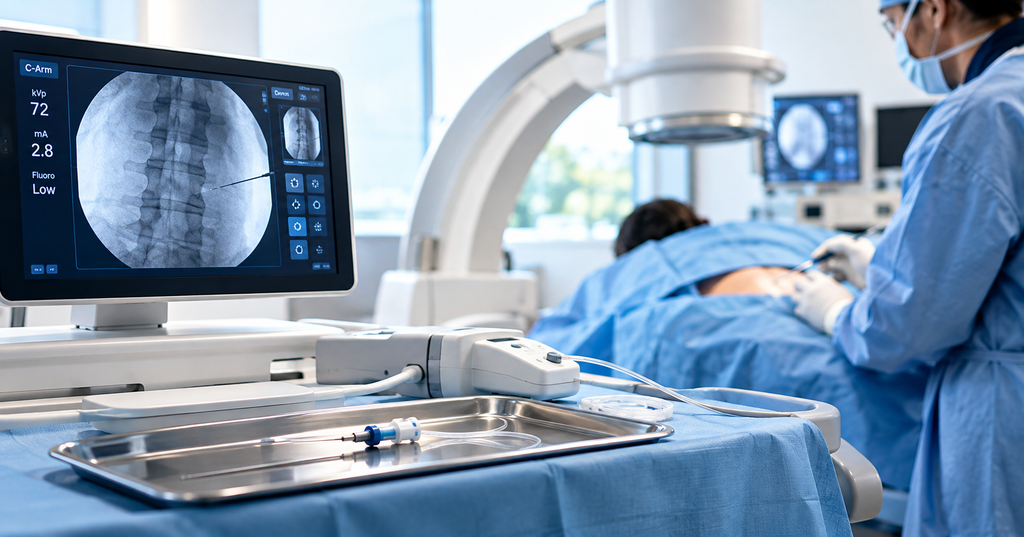
You lie on a table while the area is numbed. The doctor uses X-ray images to steer a thin needle toward the nerves that carry pain from your joint. A little radiofrequency heat through the tip switches those nerves off. You usually head home the same day. Nothing in the joint itself gets repaired, so the nerves eventually grow back, and the pain can return. Until then, pain relief can make a real difference for the right patient. Doctors can run it again if the pain returns.
Curious what each step looks like? Start with our nerve ablation procedure overview.
Neuromodulation for Stubborn Nerve Problems
Neuromodulation is a long word for a fairly short idea. A small device delivers faint pulses of electricity to the spinal cord or one chosen nerve, usually through thin wires. Some people feel a light tingling. Others feel nothing at all. A few start here. It usually comes up after pills, physical therapy and shots haven’t been held up.
You also get a test run first, typically about a week, before anyone talks about a permanent implant. For stubborn nerve problems like pain that runs down an arm or leg, these chronic pain treatment innovations may help some people cut back on heavy medication.
Targeted Muscle Pain Relief
You know the knot that never let’s go? Trigger point injections go straight into it. Some patients notice muscle pain relief fast enough to get through physical therapy without wincing. Over time, that can mean less muscle pain medication.
When to See a Nerve Specialist
If pain is still there long after you should have healed, get it checked. Numbness or tingling is reason enough to go in too. A nerve specialist usually works through the same steps to get to the bottom of nerve problems:
- A physical exam and a review of your history
- Imaging, only if it’s needed
- A clear answer on where the pain is coming from
- A talk about advanced pain treatment options, once the source is clear
Go to the emergency room right away if you notice any of these:
- Sudden weakness
- Trouble controlling your bladder or bowels
- Numbness around your groin
These can point to a medical emergency.
What to Ask Before Your Operation
- Will my plan combine several kinds of pain medicine (multimodal analgesia)?
- Are nerve blocks an option for my procedure?
- What do I need to be able to do before I can go home?
- Could any advanced pain treatment options delay or replace surgery?
Frequently Asked Questions
1.How can advanced pain treatments help reduce hospital stays?
They take the edge off pain, so people get up and walk sooner. Fewer opioids also mean less nausea and drowsiness, which helps with reducing hospital stay after surgery.
2.What pain management treatments can help patients recover faster?
A mix works best: acetaminophen, a nerve block, an anti-inflammatory if it’s safe and a short course of muscle pain medication for spasm. Add early walking for faster recovery pain management.
3.What is the role of pain management in reducing post-surgical hospital stays?
When pain is handled, patients can take full breaths, eat, rest, and start walking. Those are the boxes hospitals want ticked before discharge. Good pain management clears the way but can’t promise an early one.
4.Can better pain control help patients return home sooner?
Often, yes. Controlled pain makes walking and eating easier, which are the goals hospitals look for. A nerve specialist can also treat lingering nerve problems with a chronic pain management plan for home.
Take the Next Step with Dr. Rodolfo Gari
Dr. Rodolfo Gari is an interventional pain management physician in Tampa. Maybe surgery is on the calendar. Maybe you’ve lived with pain for years. Either way, he’s someone to ask about advanced pain treatment options. A first visit is mostly talking: where it hurts, what you’ve tried, what you’re hoping to get back to. From there you can compare a chronic pain management plan with newer chronic pain treatment innovations. Questions about reducing hospital stay after surgery are fair games too. Contact Dr. Gari to set up a visit and start working toward pain relief that lasts. Want background first? Read more about Dr. Gari.
This article is educational and does not replace personal medical advice.