
SI Joint Pain Treatment Without Major Surgery

Advanced spine pain treatment often starts with an ‘aha!’ moment: the sacroiliac joint (SI joint), not the spine itself, is the real source of your pain. The SI joint causes approximately a quarter of all cases of chronic low back pain. If you’ve got ongoing lower back or pelvic pain which hasn’t responded to treatment, it’s very possible that this is the joint in question and that your pain is coming from there rather than your spine.
Non-surgical SI joint pain relief is usually achieved through physiotherapy, specific exercises and supportive devices such as SI belts. Chronic SI joint pain management can include corticosteroid injections or radiofrequency ablation before the point at which surgery is even considered. This article will help you recognize your symptoms and understand the range of options available to you.
Could Your SI Joint Be the Source of Your Pain?
Common Symptoms to Look Out For
- SI joint pain typically presents as pain on one side below the belt line and can radiate into the hip or even the groin at times, sometimes extending up into the upper thigh.
- It’s very common for the pain to be made worse by long periods of sitting.
- The pain can also be exacerbated by climbing the stairs or getting up from a chair.
- Sleeping on the affected side will often make the pain worse.
- Morning stiffness that persists for more than an hour after waking can indicate joint inflammation rather than a simple muscle strain.
SI Joint Pain vs. Sciatica
Distinguishing SI joint pain from sciatica and other nerve problems is crucial to accurate lower back and pelvic pain treatment.
- Sciatica typically radiates pain down the leg, often beyond the knee, with associated numbness or tingling.
- SI joint pain is generally confined to the hip and buttock region and sensory changes are uncommon.
How It’s Diagnosed
Doctors will confirm the diagnosis via history and provocation tests. They will press and move your hip in several ways to try to reproduce the pain. Three or more positive results from the five standard tests give 94% sensitivity and 78% specificity. X-ray, CT and MRI can all be used to exclude other causes, although they rarely confirm the SI joint as the source. If you’re in doubt, a diagnostic injection can be given; if it results in more than a 75% reduction in pain, the joint is confirmed as the source. That result would then guide the next decision for your advanced spine pain treatment.
Non-Surgical SI Joint Pain Relief: First-Line Treatments
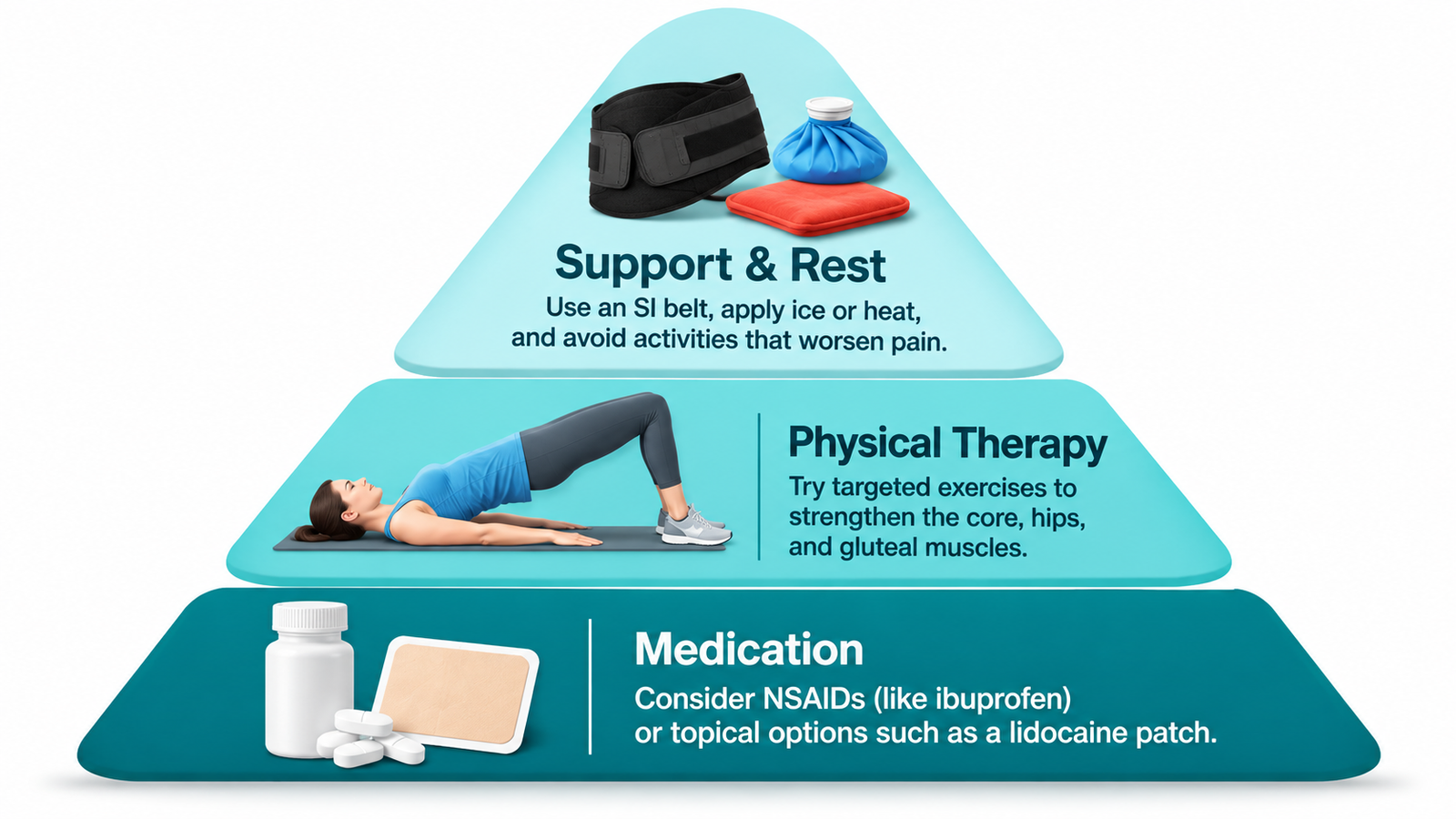
Treating SI joint pain rarely involves surgery. First-line treatment is almost always conservative and non-surgical. Physiotherapy, lifestyle modification and NSAIDs form the basis of treatment for acute, mild to moderate pain.
Over-the-counter meds (ibuprofen, naproxen, etc.) will help with inflammation and pain. Acetaminophen may also be helpful and topical options (lidocaine patches, etc.) can benefit a localized area. Muscle relaxants, a type of muscle pain medication, can help with the spasms that are so common with SI joint irritation. Ice and heat can help reduce inflammation and muscle tightness for muscle pain relief (alternating ice and heat).
Physical therapy is often the mainstay, not just medication. Hamstring and hip flexor stretching, along with exercises to strengthen the glutes and core, can go a long way to restore stability. Joint mobilization can also help. An SI belt provides support and cadaver studies, which has been shown to reduce joint rotation by up to 30%. It may also improve gait in people with SI pain.
Rest is important, but total inactivity is not. Avoid any movement that causes pain, maintains good posture and gradually return to normal activity over a day or two. Consistent use of these first-line measures often determines whether you need further treatment options for chronic SI joint pain management.
Options When SI Joint Pain Persists
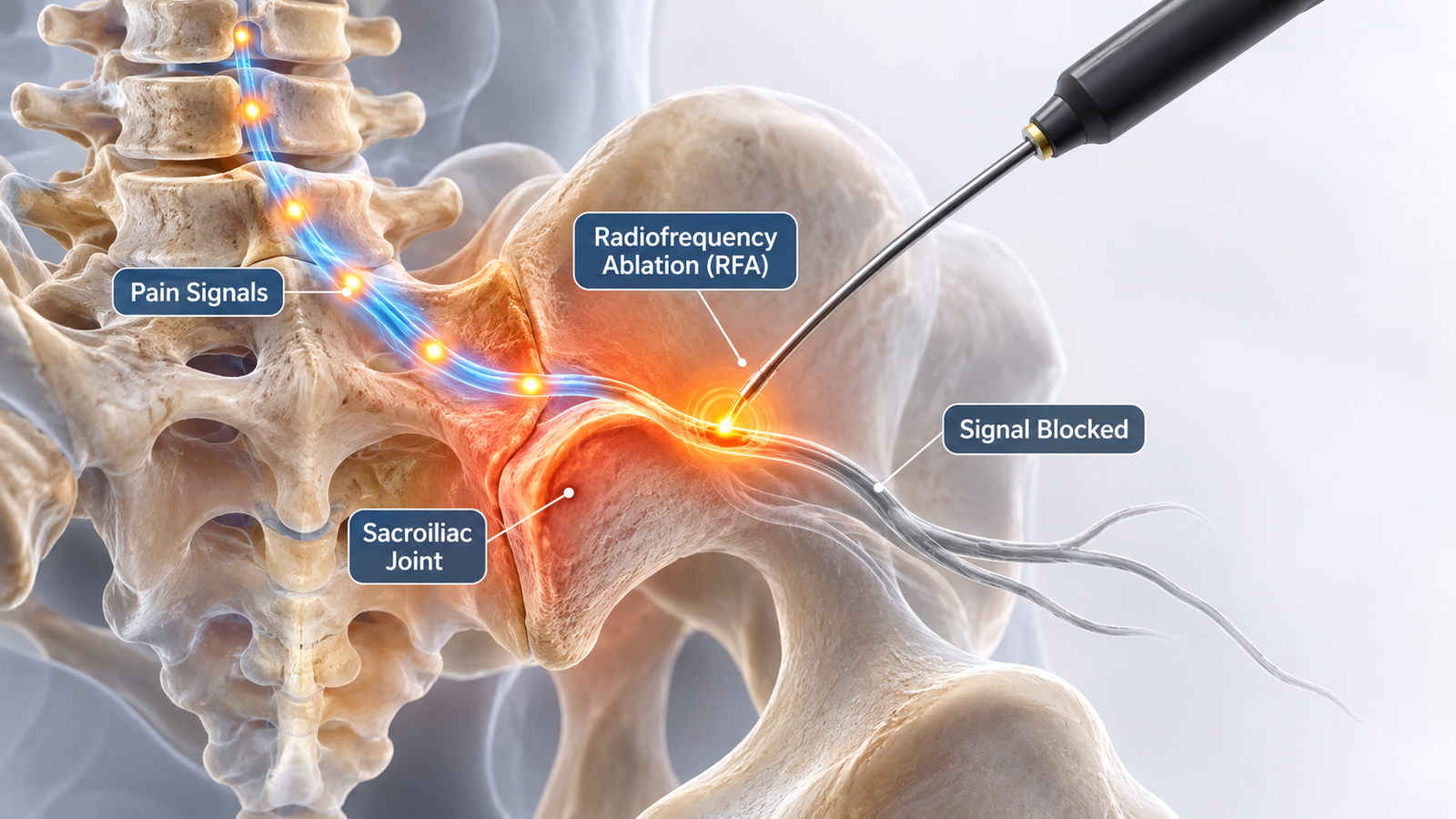
If first-line care isn’t going to deal with the pain, then, in chronic pain management, your doctor has several options before surgery comes into the picture. A sacroiliac joint injection will combine a local anesthetic with a steroid. The anesthetic will provide pain relief within hours and the steroid may take up to 7 days to work. The degree of relief from a therapeutic SI joint injection can vary from days to month, although most health plans will only cover 2 or 3 injections per year, as the benefit can start to wane and the steroids do carry a risk.
RFA, performed by a nerve specialist, can provide much longer-term relief. It works by targeting the nerves that transmit pain from the joint and the results last substantially longer than with steroid injections. At one, three and six months, 73%, 60% and 53% of patients, respectively, reported at least a 50% reduction in pain, compared with 20% at one month with steroids and no benefit thereafter. Cooled and bipolar RFA may extend the relief to 12 months in the right patient.
Chronic SI joint pain that’s not amenable to the above treatments may need minimally invasive sacroiliac joint fusion. This produces a far greater reduction in pain and disability than continued conservative management and patient satisfaction with the surgery is in the region of 77-94%.
Conclusion
SI joint pain almost never needs surgery as a first step. Most people find significant relief from SI joint pain through a combination of physiotherapy, specific exercises, and an SI belt, with injections and then radiofrequency ablation as the next steps if necessary. Fusion is only for the very small number of patients who don’t respond to all the above.
Accurate diagnosis and patience at every stage are vital to recovery. If you’ve got ongoing lower back and pelvic pain, then talking to a pain management specialist such as Dr. Rodolfo Gari, MD can help you identify the source of your pain and to develop a step-by-step plan for the management of chronic SI joint pain that is tailored to your particular symptoms and your own goals.
Frequently Asked Questions (FAQs)
What is the best treatment for SI joint pain without surgery?
No single treatment works for everyone. Most patients benefit from a combination of targeted exercise, short-term medication, and image-guided injections. Radiofrequency ablation is the next step for those who are still suffering. That’s our approach to advanced spine pain treatment, and it works best once you have a definite diagnosis.
Can SI joint pain be treated without major surgery?
Yes, in most cases. A very large number of people will achieve a significant degree of non-surgical SI joint pain relief via therapy, medication and nerve-focused procedures. Surgery is generally only considered after about 6 months of well-delivered conservative management has failed.
How do I know if the SI joint causes lower back pain?
Pain on one side near the buttock that gets worse with sitting or with climbing stairs is the kind of pain that makes you think of a specific diagnosis. Only a clinical examination, a series of provocation tests, and occasionally a diagnostic injection can confirm it. If you’ve got that kind of pain, you need to mention it when you’re coming in for lower back and pelvic pain treatment.
When should I see a pain management specialist for SI joint pain?
Book a visit if the symptoms persist after a few weeks, if you’re severely restricted in your day-to-day activities, or if you’re returning to work. An MRI can help manage chronic SI joint pain, rule out a hip problem and identify other nerve issues.