Posture, Lifestyle and Pain: What Your Body Is Trying to Tell You
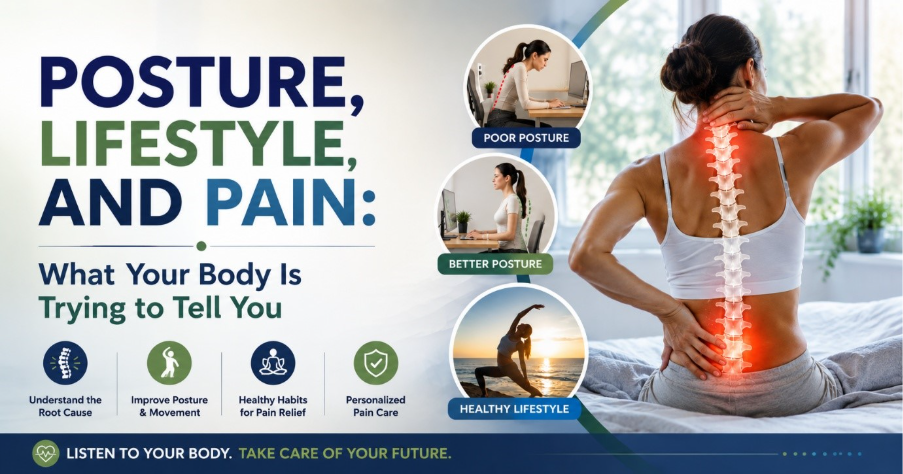
Your body often communicates through discomfort before a problem becomes impossible to ignore. Persistent stiffness after sitting, aching shoulders at the end of a workday or recurring lower back discomfort may all deserve attention. Posture and back pain are frequently discussed together because the way you sit, stand and move can influence stress on the muscles and spine.
However, posture is only one part of the picture. Understanding how lifestyle affects chronic pain can reveal other contributing factors such as inactivity, sleep problems, stress and physical conditioning. Recognizing poor posture pain symptoms early can help you seek appropriate care and explore practical strategies for posture correction for pain relief.
How Posture and Back Pain Can Be Connected
Posture describes how your body is positioned while sitting, standing or moving. Spending long periods in one position or repeatedly using poor movement patterns may place additional strain on muscles and other structures.
Poor posture does not automatically mean it is the sole cause of pain. There are many possible causes of back pain, from muscle and ligament strain to disc-related problems, arthritis and other medical conditions.
That is why poor posture pain symptoms should be considered as part of a broader assessment rather than treated as proof of a single underlying problem.
What Your Daily Lifestyle May Be Telling You
Your everyday habits can influence how your body responds to physical demands.
Prolonged Sitting and Inactivity
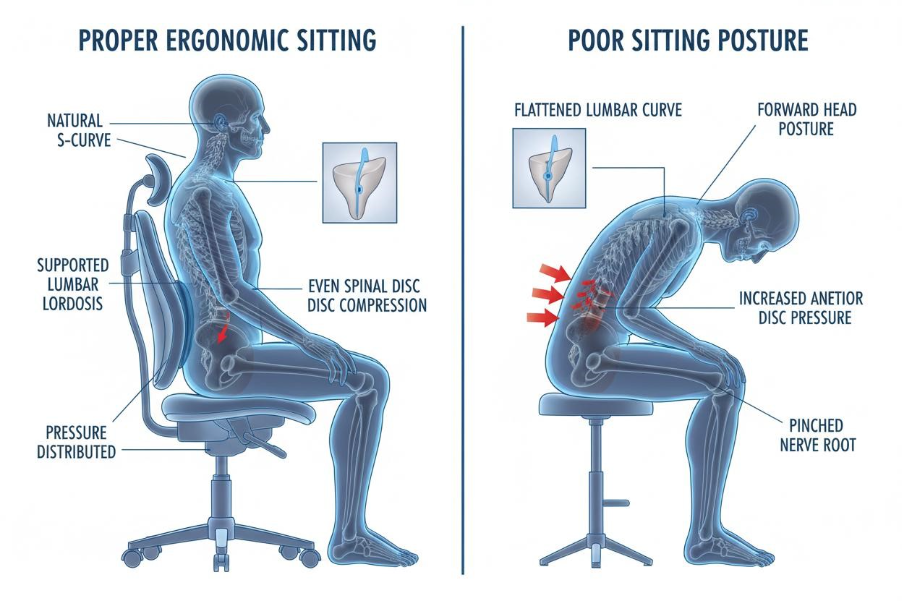
Long periods of sitting can make it harder to maintain comfortable movement throughout the day. When you are not physically active on a regular basis, your back and abdominal muscles may become weaker over time. We recommend regular physical activity and strengthening exercises as part of maintaining back health.
This is an important reason how lifestyle affects chronic pain should be considered when developing a personalized approach to discomfort.
Stress and Sleep
Pain does not exist independently of the rest of your lifestyle. Stress can contribute to muscle tension while chronic pain and sleep difficulties can influence one another. Research increasingly supports considering physical activity, sleep and stress alongside other factors in chronic pain care.
Understanding how lifestyle affects chronic pain can therefore help patients and healthcare professionals look beyond posture alone.
Recognizing Poor Posture Pain Symptoms
Symptoms associated with back discomfort can vary significantly between individuals. Some people experience a dull ache while others may notice stiffness, burning or pain that travels into another part of the body.
Common poor posture pain symptoms may include discomfort after prolonged sitting or standing and muscle fatigue. However, these symptoms can overlap with many other conditions.
Back pain that persists for weeks, becomes severe or causes weakness, numbness or tingling may require evaluation by a medical professional. Back pain accompanied by new bowel or bladder problems or fever requires urgent medical attention.
Posture Correction for Pain Relief
The goal of posture improvement should not be to maintain one rigid position all day. Healthy movement involves changing positions and using your body comfortably.
Improve Your Sitting Position
Use appropriate back support and keep your hips and knees in a comfortable position. Changing position regularly can help avoid staying in one posture for too long. Mayo Clinic recommends changing sitting position frequently.
Build Strength and Flexibility
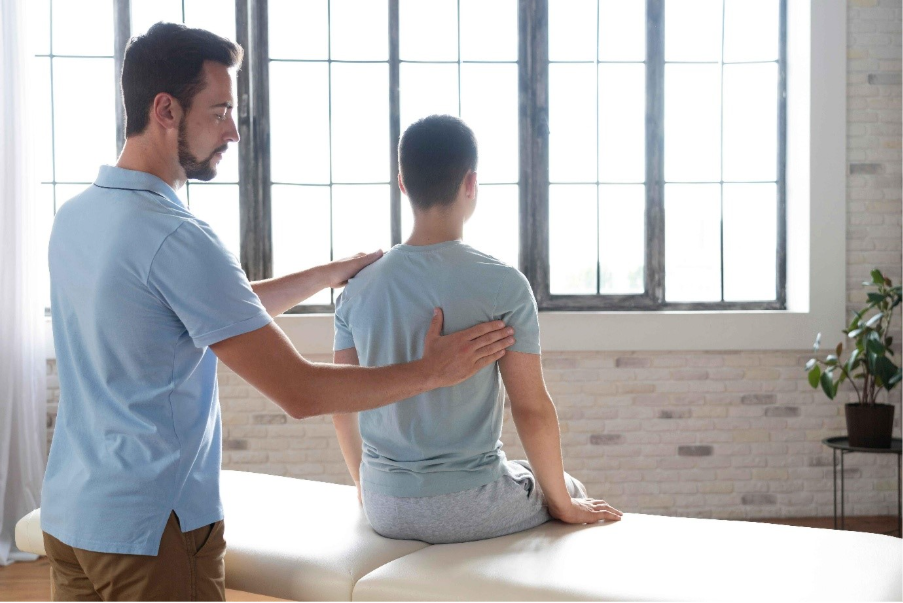
Regular exercises that strengthen the back and abdominal muscles can help improve spinal support. Physical therapy may also teach exercises that improve flexibility, strengthen relevant muscles and address movement patterns.
These approaches can contribute to posture correction for pain relief when they are appropriate for the individual’s condition.
A Broader Approach to Pain Management
Effective pain management is not always about addressing one physical factor. For people with persistent pain, treatment may involve education, physical activity, physical therapy and other approaches based on the individual’s needs.
The World Health Organization recommends a holistic and person-centered approach to chronic primary low back pain that can include education, exercise and selected physical or psychological therapies.
For patients seeking professional guidance, pain management care can be an important part of understanding the possible causes of persistent discomfort and identifying appropriate next steps.
When Lifestyle Changes Are Not Enough
Lifestyle improvements can support health, but they should not replace professional evaluation when symptoms continue or worsen.
Ongoing pain can sometimes indicate an underlying issue that needs proper assessment. A healthcare professional can consider symptoms, medical history and physical findings before recommending an appropriate treatment plan.
For chronic conditions, Chronic pain management may require a personalized combination of approaches rather than a single solution. Current guidance emphasizes individualized care that considers a person’s needs, preferences and abilities.
Conclusion
Posture and back pain should not be viewed as a simple cause-and-effect relationship. Your posture, activity level, sleep, stress and physical conditioning can all form part of the bigger picture. Understanding how lifestyle affects chronic pain can help patients recognize patterns and discuss them with a qualified healthcare professional.
Paying attention to poor posture pain symptoms may encourage earlier evaluation while individualized posture correction for pain relief can support healthier movement when appropriate. Ultimately, effective pain management and Chronic pain management should focus on the individual rather than a single habit or symptom.
Frequently Asked Questions
- Can poor posture cause back pain?
Poor posture can contribute to back strain in some situations. However, back pain has many possible causes. Understanding poor posture pain symptoms requires looking at the individual’s overall health and the specific symptoms they are experiencing.
- How does lifestyle affect chronic pain?
How lifestyle affects chronic pain can involve several factors including physical activity, sleep, stress and general conditioning. A personalized approach can help identify which factors may be relevant to an individual.
- Can posture correction provide pain relief?
Posture correction for pain relief may be useful for some people when combined with appropriate movement and strengthening strategies. Physical therapy can help individuals learn safer movement patterns and exercises.