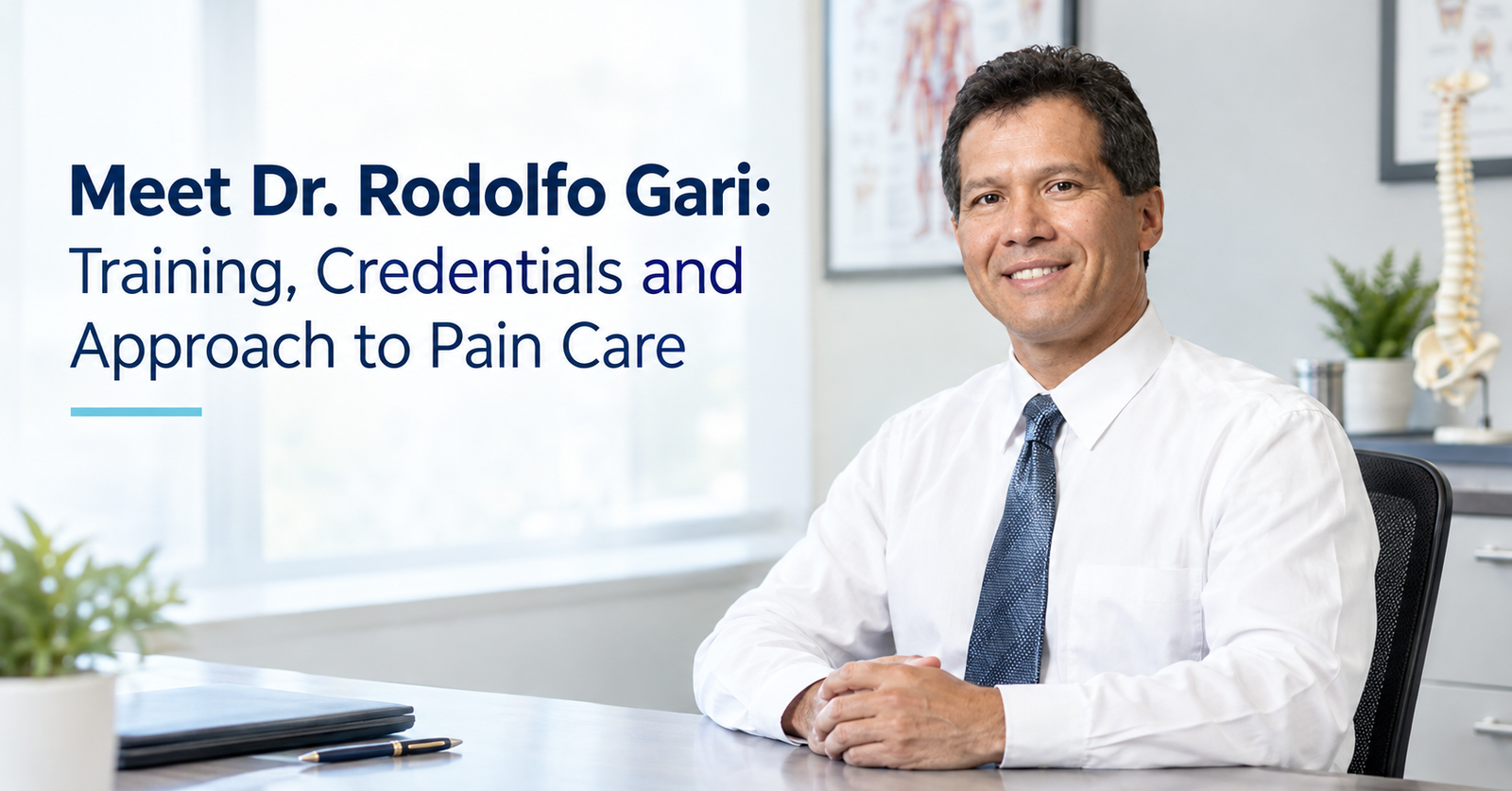
Meet Dr. Rodolfo Gari: Training, Credentials and Approach to Pain Care
Picture a Tuesday morning when your shoulder still hurts after several months of stretching, heat packs and good intentions. Somebody finally says you should see a pain doctor. Fine, but which one? Dr. Rodolfo Gari’s pain management care is available in Tampa, Florida, so we’ll start there. We look at what his practice publicly reports about his work. We also review physician training and certifications worth a quick check and explain how a pain management doctor’s experience shows up during a visit. Patients and referring clinicians can take something useful from it before booking anything.
Who Is Dr. Rodolfo Gari?
Start with what is documented. Dr. Gari is an anesthesiologist. He works as an interventional pain specialist in Tampa. His website keeps returning to clinical experience, thoughtful innovation, and care that leaves patients informed. For details about his own training history, the office is the best source.
Physician Training and Certifications
Pain medicine is a younger specialty than most people assume.
The Path into Pain Medicine
Doctors usually come from somewhere else. Anesthesiology sends most doctors into pain medicine. Neurology and physical medicine and rehabilitation are other well-worn routes. After residency, a fellowship year focuses on pain. The American Board of Medical Specialties recognizes pain medicine as a subspecialty, so that certificate sits on top of the doctor’s original board certification.
A Two-Minute Credential Check
Lookups are quick. ABMS runs a free certification search on its website. Florida’s Department of Health has a license verification page that also shows disciplinary history. If any information about Dr. Gari’s background is not available on his website, please reach out to him at +1 813-531-8550 for clarification.
Pain Management Doctor Experience: What It Really Means

Experience has reduced to several years. Fifteen years of repeating three procedures isn’t the same as fifteen years of working through hard cases. How often does he treat cases like yours? What’s the next step if the first treatment falls flat?
What the Practice Treats
His website names neck, shoulder, lower back and knee pain. Joint problems and cancer-related pain are covered as well. Pain that is still there after three months or so gets the chronic label. Chronic pain management from there is mostly about staying in control of it.
Nerve problems deserve a mention since they’re easy to miss. A disc pressing on a spinal nerve can show up as burning in the calf, nowhere near the spine. A nerve specialist trained in interventional techniques may inject a diagnostic block to see whether that nerve is the culprit. If the pain eases, radiofrequency ablation is one option for longer relief.
Muscles are less dramatic. After a pulled muscle, you’re generally looking for relief in the order of days rather than months. Muscle pain medication is pretty much the same as with any other kind of pain, from the usual OTC anti-inflammatories to a short course of prescription relaxants. Don’t take these for long periods of time. If you’re already on something else, then obviously speak to your doctor before you start.
A Patient-Centered Approach 
Many pain clinics claim to provide patient-centered care, but a good clinic starts by understanding how pain affects your daily life before moving on to paperwork. Whether your goal is to return to gardening, sleep better, or complete a full shift at work, your treatment plan should focus on helping you regain the activities that matter most to you.
Diagnosis Comes First
The practice says it looks like a true source of pain. Painkillers can quiet a signal without explaining it. Once the source is clear, treatment has something to be aimed at. Any pain relief you get is more likely to last.
Treatment Options
The CDC’s 2022 guideline asks clinicians to weigh nonopioid treatments first for many conditions. It also encourages combining approaches. Your plan could be therapy, a prescription, an injection, or a mix of them, with a few changes around the house. When it stalls, the doctor should adjust it.
Pack your scan reports, your medication list and a few lines about sleep, mood and pain triggers. If a procedure comes up, ask what it involves, what the downsides are, and how long you’ll recover.
Ready to Talk It Through?
Pain that has taken over your work, sleep, or weekends deserves a real evaluation. Dr. Rodolfo Gari’s Pain Management is built on listening first, then explaining options in plain language through patient-centered care. Call +1 813-531-8550 to book a visit. Whether your goal is chronic pain management or a second opinion, you’ll speak with a knowledgeable pain-management professional working with you toward pain relief.
FAQs
1. Who is Dr. Rodolfo Gari?
He is an anesthesiologist and interventional pain specialist in Tampa, Florida. His practice highlights clinical experience, thoughtful innovation and well-informed patients.
2. How do I choose a qualified pain management specialist?
Begin with physician training and certifications. Confirm the license and board status through the ABMS and Florida’s Department of Health. Next, ask how often the doctor treats your condition.
3.What should patients look for in pain management physician?
A clear diagnosis, plain answers, and real experience managing problems like yours. Openness to options that don’t involve procedures is also a good sign.
4.What is Dr. Rodolfo Gari’s approach to pain management?
Dr. Rodolfo Gari’s pain management starts with finding the source of the pain. Treatment then focuses on what you want to get back to doing. That means patient-centered pain care: clear explanations, a comfortable visit and options matched to the cause.