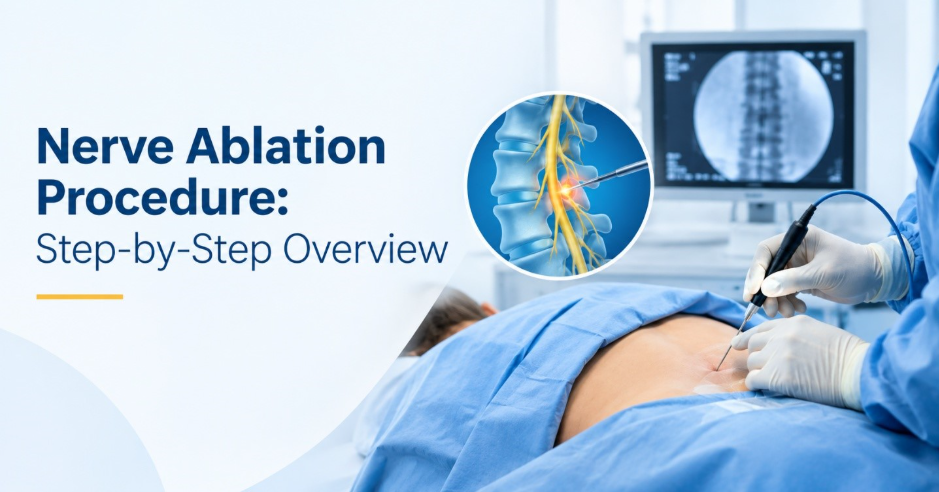
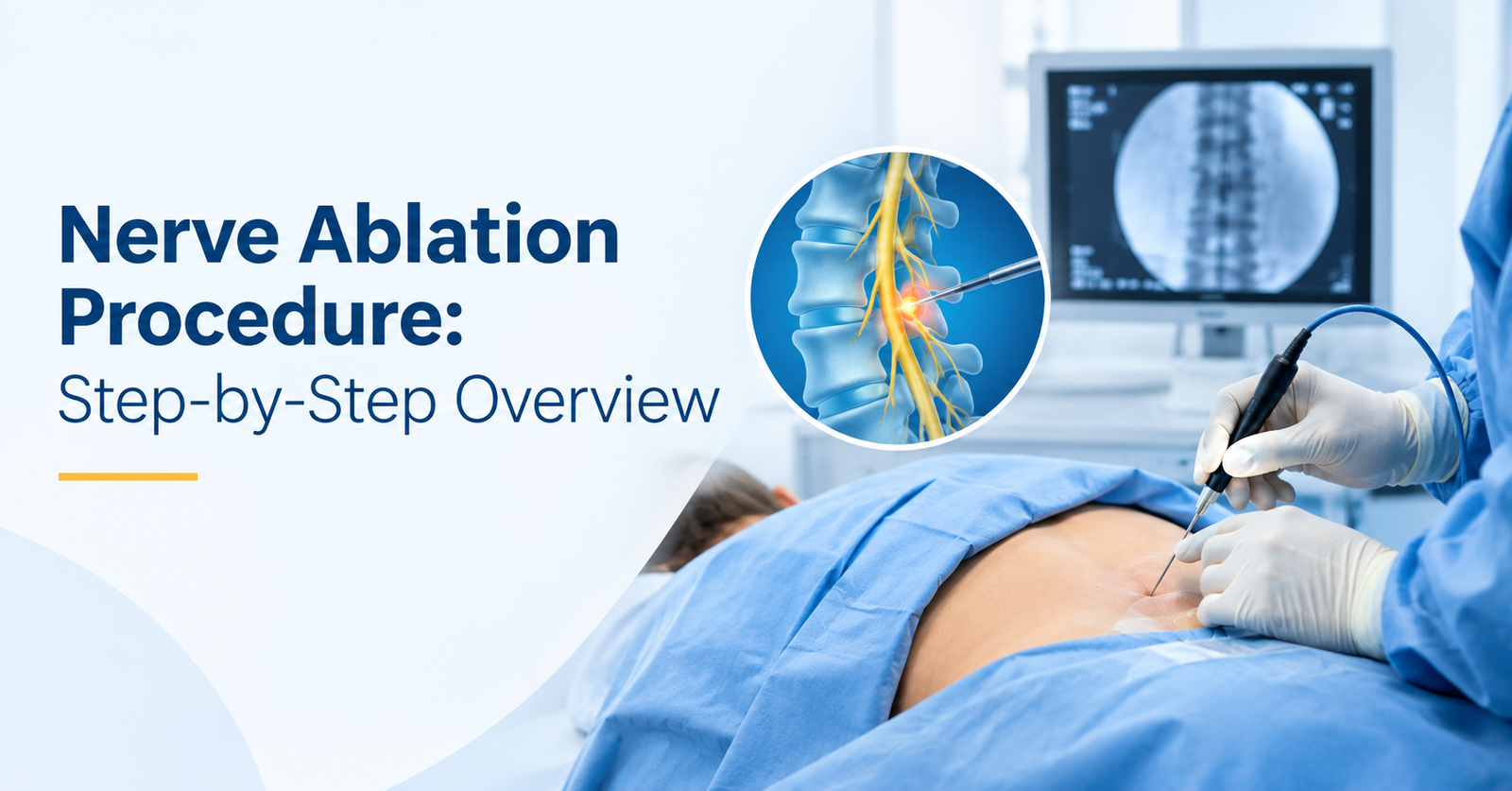
Nerve Ablation Procedure: Step-by-Step Overview
Back pain has a way of taking over everything. You skip the walk, you cancel plans, you start planning your day around how your back feels that morning. At some point, medication and physical therapy just stop moving the needle. That’s usually when a nerve ablation procedure comes up.
It’s a minimally invasive treatment that uses targeted heat to quiet the nerves sending pain signals to your brain and for a lot of patients, that relief sticks around for months. So how nerve ablation works, exactly? Dr. Rodolfo Gari, a Tampa-based nerve specialist with over thirty years in pain management, walks patients through radiofrequency ablation for pain from the first visit to full recovery.
What Is a Nerve Ablation Procedure

Picture turning down the volume on a nerve that won’t stop shouting. That’s basically what a nerve ablation procedure does, heat quiets the nerve fiber carrying pain signals to your brain. There’s no cutting involved, just a needle finding its way to the right spot with the help of live imaging. Patients dealing with nerve problems from arthritis, spinal degeneration or an old injury almost always try other pain management routes first.
Ablation tends to come up once those stop working. Plenty of patients want to know how nerve ablation works before they’ll agree to anything, which is fair. The point isn’t curing what caused the pain in the first place. It’s shutting off the signal so you can actually function again.
How Nerve Ablation Works
Dr. Gari rarely jumps straight into a full nerve ablation procedure. There’s usually a smaller step first: a diagnostic nerve block. Think of it as a test run — a temporary numbing injection that tells you whether you’ve found the right nerve.
Feel noticeably better after that? That’s your confirmation and it’s your green light for radiofrequency ablation for pain. If you’re looking into nerve ablation for back pain specifically, this is where the real diagnosis actually happens, not at the ablation itself.
The Radiofrequency Ablation Process

Once the nerve’s confirmed, a specialized probe warms a small patch of tissue right around the nerve tip. That warmth forms a tiny scar-like lesion and that lesion is what keeps the pain signal from getting through — sometimes for months on end.
It’s a simple concept once you see it in action: the nerve stops carrying the pain message because the pathway itself has been shut down.
Going Through the Steps of Nerve Ablation for Back Pain
Step 1: Talking Through Your History and Scans
Every nerve ablation for back pain treatment starts with a real conversation, not a form. Dr. Gari goes through your scans, your history, everything you’ve already tried, before deciding you’re a good fit for the next step.
Step 2: Positioning and Local Anesthesia
You’ll get settled comfortably on the table while the treatment site is cleaned and numbed. Want something extra to take the edge off? Light sedation is usually available too.
Step 3: Needle Placement and Radiofrequency Energy
A live X-ray image helps place the needle with precision, right where the nerve sits. From there, a short burst of heat energy does the actual work of forming the lesion.
Step 4: Recovery and Aftercare
Most people head home within an hour. You’ll leave with simple instructions on activity, plus muscle pain medication if you need something for the first few days. Relief isn’t instant; it tends to build gradually over one to three weeks.
Who Benefits from Radiofrequency Ablation for Pain?
Facet joint arthritis. Sacroiliac joint dysfunction. Nerve problems left behind after spine surgery. These are the patients who tend to find their way to this nerve ablation procedure, people whose chronic pain management plan has basically stalled.
A lot of them start googling nerve ablation for back pain right after realizing oral medication only buys a few hours of muscle pain relief at a time. Talk to a nerve specialist like Dr. Gari and you’ll usually know within one visit whether radiofrequency ablation for pain is worth pursuing.
Wrapping Up
Nerve pain that won’t ease up after medication and physical therapy is frustrating to live with and for many patients dealing with facet joint arthritis, sacroiliac joint dysfunction or nerve pain after spine surgery, a nerve ablation procedure is what finally gets them back to their normal routine.
It won’t fix the underlying problem, but it can quiet the pain signal for months at a time and once you know how nerve ablation works, from the diagnostic nerve block to the radiofrequency ablation itself, it’s a lot less intimidating than it sounds.
If oral medication is only giving you a few hours of relief, bring up radiofrequency ablation for pain at your next visit, Dr. Rodolfo Gari has over thirty years in interventional pain management and can usually tell within one consultation whether nerve ablation for back pain is worth pursuing for you.
Frequently Asked Questions
Is a nerve ablation procedure painful?
Not really. There’s a pinch when the numbing medicine goes in and after that most patients barely notice the rest. A little soreness might stick around for a day or maybe two, then it’s gone.
Radiofrequency Ablation for Pain — How Long Before It Wears Off?
No two patients are quite the same here. Six months is a fairly typical stretch, though plenty of people make it close to two years before the nerve regenerates and symptoms creep back in.
Is nerve ablation for back pain a permanent solution?
Not permanent, no. It quiets the signal, it doesn’t fix whatever’s causing it in the first place. So down the road, some patients come back and have it done again as part of staying on top of their pain long-term.