
From Clinics to Corporations: Dr. Rodolfo Gari’s Impact on Healthcare Systems
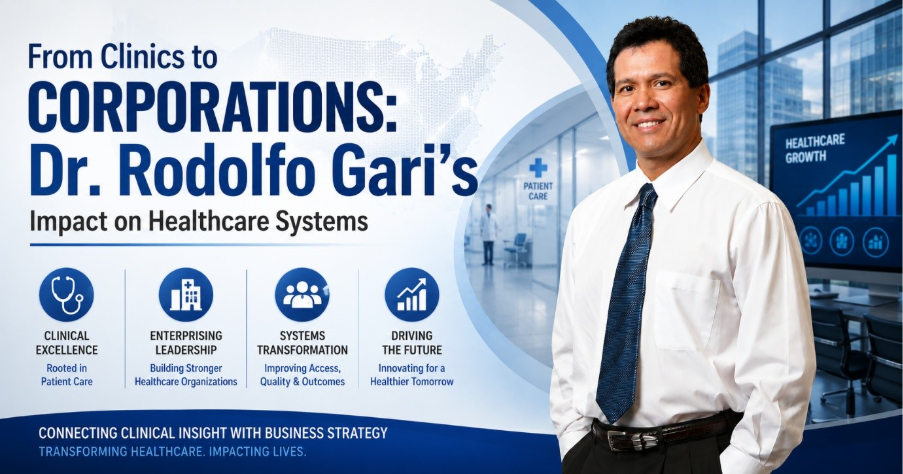
Can a physician influence healthcare far beyond the examination room? As medical organizations face administrative complexity, technology demands and changing patient expectations, healthcare system transformation USA has become a major leadership priority. Delivering quality care is only one part of the challenge. Healthcare organizations must also connect patients, clinicians, staff, technology, compliance and business operations.
Dr. Rodolfo Gari’s career offers an example of a physician moving from clinical medicine into healthcare entrepreneurship. Trained in anesthesiology and pain management, he later pursued business education and became involved in developing medical practices. Dr Rodolfo Gari healthcare leadership provides a useful perspective on how clinical experience can influence organizational thinking.
This journey also reflects growing interest in physician leadership in healthcare. Physicians understand patient care, but organizational leadership requires knowledge of operations, finance, technology and governance. Meanwhile, evolving healthcare business models USA need scalable systems that support growth and patient needs.
From Clinical Practice to Healthcare Leadership
Clinical experience can reveal operational problems that are less visible from a corporate office. Physicians see when administrative processes interrupt care, communication fails or patients struggle to navigate the system. This connection between care and operations is central to Dr Rodolfo Gari healthcare leadership.
A physician may focus on the best treatment for one patient. An executive must also consider whether systems can reliably support thousands of patient interactions. Repeated problems require repeatable solutions.
For example, recurring confusion about follow-up care may require a consistent communication process. Excessive administrative work may require workflow redesign. Poor information sharing may require clearer responsibilities and better coordination.
Dr. Gari later earned an MBA from the University of South Florida College of Business. His career illustrates an important principle of physician leadership in healthcare: medical expertise is valuable, but leading an organization requires additional skills.
Healthcare leaders must understand financial planning, workforce strategy, compliance, technology and operational performance. Physicians do not need to replace specialists in these areas. Instead, they can work with multidisciplinary teams while bringing clinical insight into strategic decisions.
This approach helps leaders consider how business decisions affect care. Scheduling policies may influence access and workload. New software may improve reporting but increase documentation. Physician involvement can connect these consequences to organizational strategy.
Healthcare System Transformation USA Through Scalable Systems
Healthcare system transformation USA requires more than opening clinics or purchasing technology. Sustainable growth depends on systems that work consistently across teams and locations.
The Centres for Medicare & Medicaid Services reported that U.S. healthcare spending reached $5.3 trillion in 2024, representing 18% of gross domestic product. Dr. Gari’s published biography describes his involvement in healthcare ventures and the growth of Physician Partners of America into a multi-location organization. Expansion requires different systems from those used in a single clinic.
Scalable organizations need clear processes for patient access, scheduling, credentialing, documentation, billing, compliance, technology and performance monitoring. This is where healthcare business models USA become important. Leaders must decide what can be standardized and what requires individual professional judgment.
Growth can increase opportunity and risk. Compliance education, auditing, reporting channels and executive accountability must develop alongside operations. Dr Rodolfo Gari healthcare leadership can therefore be considered through both entrepreneurship and the responsibilities of managing healthcare organizations.
Physician Leadership in Healthcare and Corporate Strategy
Physician leadership in healthcare can bridge clinical teams and corporate decision-makers. Modern organizations include physicians, nurses, administrators, finance professionals, compliance officers and technology teams. Each group sees healthcare from a different perspective.
Effective leadership depends on collaboration. A physician leader can explain why a clinical process is necessary while helping operational teams identify unnecessary steps. Technology specialists can recommend automation, while clinicians can evaluate whether it supports patient care or creates friction.
This collaborative approach is relevant to Dr Rodolfo Gari healthcare leadership. His movement across clinical and business roles reflects the physician-executive model, which considers both patient encounters and the systems surrounding them.
For healthcare system transformation USA, the goal is to align people, processes and technology. The continued development of physician leadership in healthcare may strengthen this connection by bringing clinical realities into discussions about access, workflow and organizational growth.

Lessons for Modern Healthcare Business Models USA
First, clinical experience can identify recurring operational problems. Physicians directly observe patient journeys and may recognize delays, communication gaps or inefficient processes.
Second, business skills must be developed. Medical training does not automatically prepare physicians for financial planning or organizational design. Dr Rodolfo Gari healthcare leadership demonstrates the relevance of combining clinical experience with business education.
Third, growth requires scalable systems. A founder cannot personally resolve every scheduling, billing or workflow problem. Organizations need documented processes, capable teams, and clear accountability.
Fourth, compliance must grow with the organization. Responsible healthcare business models USA require training, auditing, governance and oversight. These healthcare business models USA must evolve responsibly.
Finally, physician leadership in healthcare works best through collaboration. Physicians contribute clinical insight, while administrators, nurses, finance teams, compliance specialists and technology experts contribute essential professional knowledge.

Conclusion
Modern healthcare business models USA need balanced leadership. Together, healthcare system transformation USA and Dr Rodolfo Gari healthcare leadership offer a broader view of organizational change.
Dr. Rodolfo Gari’s transition from clinical medicine into healthcare entrepreneurship shows how physicians can influence healthcare beyond direct patient care. Dr Rodolfo Gari healthcare leadership highlights the value of combining clinical knowledge, business thinking, and multidisciplinary collaboration.
As healthcare system transformation USA continues, organizations need leaders who understand the patient journey and the infrastructure supporting it. Strong physician leadership in healthcare can connect clinical realities with strategy, while responsible healthcare business models USA can provide scalable processes, governance and accountability.
Ready to explore patient-focused healthcare strategy and organizational growth? Book a consultation today to discuss approaches for building stronger, more coordinated healthcare systems.
Frequently Asked Questions
1. Why is physician leadership important in healthcare?
Physicians understand clinical workflows and patient needs. Combined with business knowledge and collaboration, their experience can support informed organizational decisions.
2. What makes a healthcare organization scalable?
Scalable healthcare organizations use clear workflows, defined responsibilities, appropriate technology, strong compliance processes and collaborative leadership to support consistent growth.
One thought on “From Clinics to Corporations: Dr. Rodolfo Gari’s Impact on Healthcare Systems ”