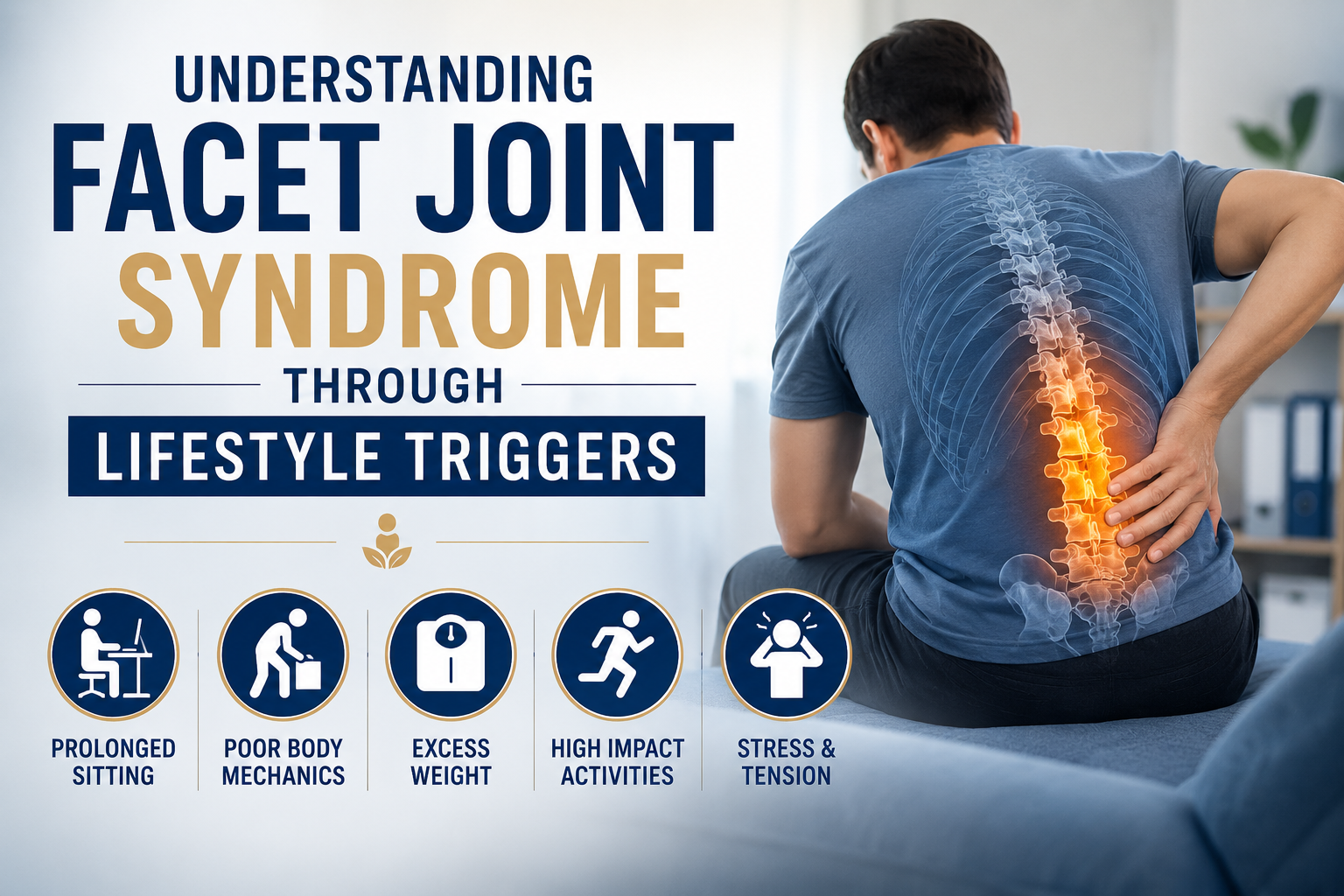
Understanding Facet Joint Syndrome Through Lifestyle Triggers
Persistent back discomfort can affect mobility, productivity and overall quality of life. While many people associate spinal pain with aging or injury, lifestyle habits often play a significant role in symptom development. One condition that is frequently overlooked is facet joint syndrome, a spinal disorder involving the small joints located between vertebrae. These joints help stabilize the spine and guide movement, but they can become irritated or degenerate over time.
Have you ever wondered why your back pain seems worse after long periods of sitting, poor posture or certain daily activities? Many individuals are surprised to learn that common lifestyle choices may contribute to spinal stress and joint inflammation. Understanding these influences is essential for managing symptoms and improving long-term spinal health.
This article explores the relationship between facet joint syndrome and everyday lifestyle factors. We will examine common back pain causes, discuss how specific habits may affect spinal function, review symptoms and diagnosis and explore treatment and prevention strategies. By recognizing lifestyle triggers early, individuals may be able to reduce discomfort, improve mobility and support healthier spinal function for years to come.
Understanding Facet Joint Syndrome and Spinal Health
Facet joints are small but important structures within the spine.
These joints connect adjacent vertebrae and help control movement while maintaining stability.
What Is Facet Joint Syndrome?
Facet joint syndrome occurs when facet joints become inflamed, irritated or damaged.
This condition may develop due to:
- Degenerative changes
- Repetitive stress
- Injury
- Arthritis
- Poor movement patterns
The resulting inflammation can contribute significantly to chronic spinal discomfort.
The Role of Facet Joints
Facet joints support:
- Bending
- Twisting
- Rotation
- Spinal alignment
When these joints become dysfunctional, they may become one of several important back pain causes affecting daily activities.
Why Lifestyle Matters
Unlike traumatic injuries, many cases develop gradually.
Daily habits can influence how much stress is placed on facet joints over time.
Understanding these factors may help reduce the risk of developing facet joint syndrome.
Common Lifestyle Triggers Linked to Facet Joint Syndrome
Everyday habits often affect spinal health more than people realize.
Poor Posture as a Major Contributor
Poor posture places excessive strain on spinal structures.
Common examples include:
- Slouching while sitting
- Leaning forward excessively
- Improper workstation positioning
- Looking down at mobile devices
Over time, these habits may contribute to facet joint syndrome and increased discomfort.
Sedentary Lifestyle Habits
Extended sitting can create significant spinal stress.
When movement is limited:
- Muscles weaken
- Joint stiffness increases
- Flexibility decreases
- Spinal support diminishes
These factors are among the most common back pain causes in modern lifestyles.
Repetitive Movements
Certain occupational and recreational activities involve repetitive bending, lifting or twisting.
Repeated stress may accelerate wear on facet joints and increase symptom severity.
Excess Body Weight
Carrying additional body weight increases pressure throughout the spine.
This added stress may contribute to inflammation and progression of facet joint syndrome.
How Back Pain Causes Relate to Facet Joint Dysfunction
Back pain is often influenced by a combination of underlying factors.
Facet joint disorders represent only one potential source of symptoms.
Mechanical Stress and Joint Degeneration
Mechanical stress accumulates over time.
Factors that increase spinal loading include:
- Heavy lifting
- Repetitive motion
- Poor ergonomics
- Prolonged standing
These influences are common back pain causes that may worsen facet joint irritation.
Aging and Lifestyle Combined
Natural aging affects spinal structures.
When combined with poor lifestyle habits, degeneration may occur more rapidly.
This combination often contributes to worsening facet joint syndrome symptoms.
Muscle Weakness and Instability
Weak core muscles reduce spinal support.
As stability decreases, facet joints may experience greater mechanical stress during movement.
Inflammation and Pain Development
Chronic inflammation often plays an important role in symptom progression.
Inflammatory processes can increase sensitivity and contribute to persistent discomfort.
Recognizing Symptoms of Facet Joint Syndrome
Early recognition allows individuals to seek evaluation and treatment before symptoms become severe.
Common Signs and Symptoms
People experiencing facet joint syndrome may notice:
- Localized back pain
- Neck discomfort
- Morning stiffness
- Reduced flexibility
- Pain during twisting motions
Different spinal regions may produce distinct symptoms when affected.
Cervical Versus Lumbar Symptoms
Neck involvement may produce:
- Neck stiffness
- Shoulder discomfort
- Headaches
Lower back involvement may cause:
- Lumbar pain
- Hip discomfort
- Difficulty standing for extended periods
These symptoms overlap with several other back pain causes, making proper diagnosis important.
When Symptoms Worsen
Many individuals report increased discomfort during:
- Prolonged standing
- Backward bending
- Repetitive movements
- Certain physical activities
Recognizing symptom patterns helps guide evaluation and treatment.
Diagnosing Facet Joint Syndrome Accurately
Accurate diagnosis is necessary because many spinal conditions produce similar symptoms.
Medical History Assessment
Healthcare providers review:
- Symptom location
- Pain triggers
- Previous injuries
- Daily activity patterns
Lifestyle factors often provide important clues regarding facet joint syndrome.
Physical Examination
Providers assess:
- Posture
- Flexibility
- Movement limitations
- Areas of tenderness
Such findings assist healthcare providers in identifying possible pain sources.
Imaging Studies
Diagnostic imaging may include:
- X-rays
- MRI scans
- CT scans
These studies help evaluate structural abnormalities and other possible back pain causes.
Diagnostic Injections
Facet joint injections may help confirm whether symptoms originate from the affected joints.
Pain relief following injection often supports the diagnosis.
Treatment Options for Facet Joint Syndrome
Effective treatment plans typically address both symptoms and contributing lifestyle factors.
Conservative Treatment Approaches
Initial management often includes:
- Physical therapy
- Anti-inflammatory medications
- Activity modification
- Home exercise programs
These strategies may reduce discomfort and improve mobility.
Interventional Procedures
When conservative measures provide insufficient relief, providers may recommend:
- Facet joint injections
- Medial branch blocks
- Radiofrequency ablation
These procedures can help manage pain associated with facet joint syndrome.
Addressing Lifestyle-Related Back Pain Causes
Successful treatment often requires modifying habits that contribute to symptoms.
Examples include:
- Improving posture
- Increasing activity levels
- Using ergonomic workstations
- Practicing proper lifting techniques
These changes help address underlying back pain causes.
Personalized Treatment Planning
Every patient experiences symptoms differently.
Treatment plans should reflect individual goals, health status and symptom severity.
Preventing Facet Joint Syndrome Through Healthy Habits
Although not every case can be prevented, certain habits may support spinal health.
Maintaining Proper Posture
Maintaining proper posture can help minimize excess strain on the facet joints.
Helpful strategies include:
- Sitting with spinal support
- Keeping screens at eye level
- Avoiding prolonged slouching
Staying Physically Active
Regular movement supports:
- Joint flexibility
- Muscle strength
- Spinal stability
- Healthy circulation
These benefits may help reduce the risk of facet joint syndrome.
Strengthening Core Muscles
Core strengthening exercises help stabilize the spine.
Improved support reduces stress on facet joints during daily activities.
Managing Other Back Pain Causes
Patients should also address contributing factors such as:
- Obesity
- Smoking
- Poor ergonomics
- Repetitive strain
These measures support long-term spinal health.
Long-Term Outlook and Lifestyle Management
Long-term success often depends on consistent self-care and symptom management.
Monitoring Symptoms
Regular follow-up evaluations help identify changes in symptom patterns.
Early intervention may prevent worsening conditions.
Maintaining Healthy Daily Habits
Patients who continue healthy routines often experience better outcomes.
Consistency is important for reducing spinal stress and improving function.
Building Sustainable Wellness Practices
Long-term spinal health may involve:
- Exercise programs
- Stretching routines
- Healthy nutrition
- Weight management
These habits help support symptom control and reduce recurrence risks.
Working With Healthcare Providers
Ongoing collaboration with qualified providers helps ensure treatment remains aligned with patient needs.
Adjustments may be made as symptoms evolve over time.
Conclusion
Lifestyle choices can have a substantial impact on spinal health and may contribute to the onset and progression of facet joint syndrome. Factors such as poor posture, inactivity, repetitive movements and excess body weight can increase stress on spinal joints and contribute to several common back pain causes. By understanding these triggers, seeking timely evaluation and adopting healthier daily habits, individuals can improve mobility, reduce discomfort and support long-term spinal function. Early intervention and personalized treatment often provide the best opportunity for lasting relief.
Experiencing persistent back or neck discomfort? Schedule a consultation with a spine or pain management specialist to identify potential lifestyle triggers and develop a personalized treatment plan designed to improve long-term spinal health.