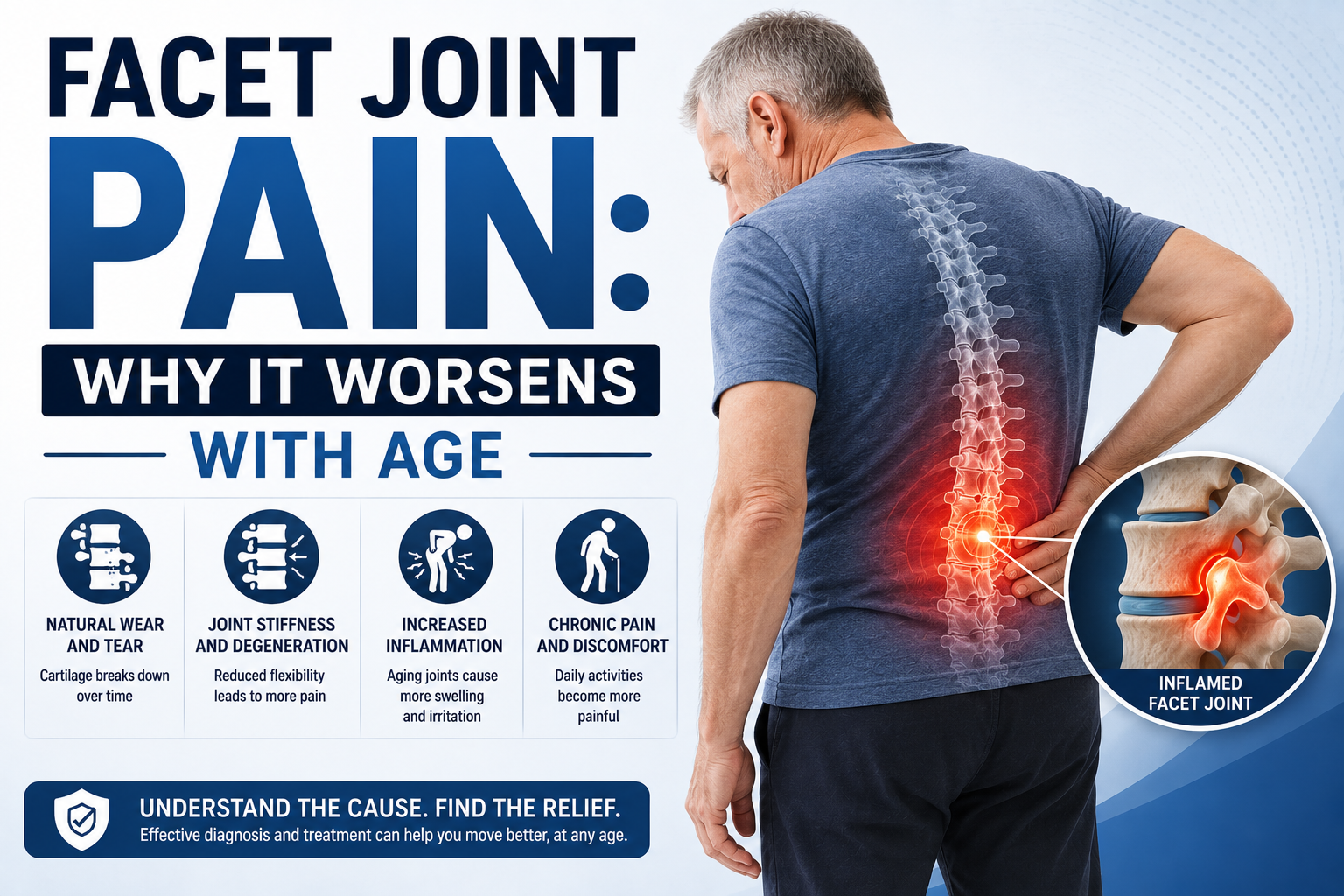
Facet Joint Pain: Why It Worsens with Age
As people age, aches and stiffness often become more common, especially in the back and neck. While many individuals assume these symptoms are simply part of getting older, they may be linked to facet joint pain, a condition that affects the small joints connecting the vertebrae of the spine. These joints play a crucial role in supporting movement, flexibility and stability. Over time, however, natural wear and tear can cause degeneration that leads to discomfort, reduced mobility and chronic pain.
Have you noticed increasing stiffness when getting out of bed or pain that worsens after standing for long periods? These symptoms may indicate changes occurring within the facet joints. Age-related degeneration, inflammation and cartilage breakdown often contribute to the development of spine arthritis, which can further accelerate joint deterioration and pain.
Understanding why facet joint pain becomes more common with age can help individuals recognize symptoms early and seek appropriate treatment. This article explores the anatomy of facet joints, the effects of aging, the relationship between spine arthritis and chronic back pain, available treatment options and strategies that may help maintain spinal health and mobility over time.
Understanding Facet Joint Pain and Spinal Function
The spine consists of multiple structures working together to support movement and stability.
Located between neighbouring vertebrae, facet joints help support spinal movement and stability. These joints guide spinal movement and help prevent excessive motion that could damage surrounding structures.
What Are Facet Joints?
Facet joints serve several important functions:
- Provide spinal stability
- Enable bending and twisting
- Support proper alignment
- Protect spinal nerves
When these joints become inflamed or damaged, facet joint pain can develop and significantly impact daily activities.
How Facet Joints Support Movement
Every time a person bends, twists, stands or walks, facet joints help coordinate movement.
Healthy joints contain smooth cartilage surfaces that reduce friction during motion.
As aging progresses, cartilage deterioration may increase the risk of spine arthritis and joint dysfunction.
Why These Joints Are Vulnerable?
Throughout life, facet joints endure ongoing stress from everyday movement and activity.
Factors contributing to degeneration include:
- Aging
- Repetitive motion
- Poor posture
- Previous injuries
- Excess body weight
These factors often contribute to progressive facet joint pain over time.
Why Facet Joint Pain Worsens with Age?
Aging affects nearly every structure within the body, including the spine.
The gradual breakdown of spinal tissues plays a major role in increasing pain symptoms.
Natural Cartilage Degeneration
Cartilage acts as a protective cushion within joints.
As people age:
- Cartilage becomes thinner
- Joint surfaces experience greater friction
- Inflammation becomes more likely
- Joint movement becomes less smooth
These changes often contribute directly to worsening facet joint pain.
Reduced Joint Lubrication
Healthy joints contain synovial fluid that reduces friction.
With age, joint lubrication may decline, increasing stress on spinal structures.
Over time, this process may promote the development of arthritis in the spine and ongoing discomfort.
Increased Wear and Tear
Years of daily movement place significant demands on facet joints.
Activities such as:
- Lifting
- Walking
- Twisting
- Repetitive bending
can gradually increase joint degeneration and worsen facet joint pain symptoms.
The Connection Between Facet Joint Pain and Spine Arthritis
Many people with chronic back or neck pain experience both conditions simultaneously.
The relationship between facet joint pain and spine arthritis is closely linked.
What Is Spine Arthritis?
Spine arthritis refers to inflammation and degeneration affecting spinal joints.
Common forms include:
- Osteoarthritis
- Degenerative arthritis
- Spondylosis
These conditions frequently involve facet joint deterioration.
How Arthritis Affects Facet Joints
As spine arthritis progresses:
- Cartilage wears away
- Bone surfaces rub together
- Bone spurs may develop
- Joint inflammation increases
These changes often intensify pain and reduce mobility.
Progressive Nature of Degeneration
Unlike temporary injuries, degenerative changes typically develop gradually.
Without proper management, both facet joint pain and spine arthritis may continue worsening over time.
Recognizing Symptoms of Facet Joint Pain
Early recognition can help individuals seek treatment before symptoms become severe.
Common Symptoms
Individuals experiencing facet joint pain may notice:
- Localized back pain
- Neck discomfort
- Morning stiffness
- Reduced flexibility
- Pain with twisting movements
Symptoms often vary depending on the affected spinal region.
Neck Versus Lower Back Symptoms
Cervical facet joint involvement may cause:
- Neck stiffness
- Shoulder discomfort
- Headaches
Lumbar involvement often produces:
- Lower back pain
- Hip discomfort
- Difficulty standing for long periods
Symptoms Associated with Spine Arthritis
People with spine arthritis may also experience:
- Joint tenderness
- Grinding sensations
- Reduced range of motion
- Increased stiffness after inactivity
These symptoms often overlap with facet joint pain, making professional evaluation important.
Diagnosing Facet Joint Pain Accurately
Accurate diagnosis is essential because many spinal conditions produce similar symptoms.
Medical History and Physical Examination
Healthcare providers evaluate:
- Symptom location
- Pain patterns
- Medical history
- Physical limitations
This information helps identify possible causes of facet joint pain.
Imaging Studies
Diagnostic imaging may include:
- X-rays
- MRI scans
- CT scans
These studies help detect structural changes associated with spine arthritis and joint degeneration.
Diagnostic Injections
In some cases, providers use facet joint injections to confirm the source of pain.
Pain relief following injection may indicate that facet joints contribute significantly to symptoms.
Treatment Options for Facet Joint Pain
Treatment plans vary depending on symptom severity and overall health.
Conservative Treatments
Many patients respond well to non-surgical approaches.
Options may include:
- Physical therapy
- Anti-inflammatory medications
- Activity modification
- Exercise programs
Implementing these strategies may support effective management of facet joint discomfort.
Interventional Procedures
When conservative treatments provide insufficient relief, providers may recommend:
- Facet joint injections
- Medial branch blocks
- Radiofrequency ablation
These procedures may reduce inflammation and improve function.
Managing Spine Arthritis Long-Term
Long-term management of spine arthritis often focuses on:
- Maintaining mobility
- Reducing inflammation
- Strengthening supporting muscles
- Preventing further degeneration
These approaches may also improve outcomes for individuals with facet joint pain.
Preventing Progression and Supporting Spinal Health
Although aging cannot be stopped, certain habits may support spinal health.
Maintaining a Healthy Weight
Excess weight increases stress on spinal structures.
Weight management may help reduce pressure contributing to facet joint pain.
Staying Physically Active
Regular movement supports:
- Joint flexibility
- Muscle strength
- Circulation
- Spinal stability
Exercise may also help manage symptoms associated with spine arthritis.
Improving Posture
Good posture can reduce unnecessary pressure on the facet joints.
Simple modifications to daily habits and workspaces may promote lasting spinal health.
Seeking Early Treatment
Prompt evaluation may help slow progression and improve symptom management.
Early intervention often provides better outcomes than waiting for symptoms to become severe.
Conclusion
As the body ages, natural changes within the spine can increase the risk of joint degeneration, stiffness and chronic discomfort. Understanding the relationship between aging, spine arthritis and facet joint pain allows individuals to recognize symptoms early and pursue appropriate treatment. From lifestyle modifications and physical therapy to advanced interventional procedures, multiple options are available to improve comfort and mobility. If persistent back or neck pain is affecting your quality of life, consulting a qualified spine or pain management specialist can help identify the cause and develop a personalized treatment plan.
Experiencing ongoing back or neck pain? Schedule a consultation with a spine specialist to learn more about diagnosis, treatment options and strategies to maintain long-term spinal health.