Frozen Shoulder Treatment: How to Restore Mobility and Reduce Pain
Dealing with stiffness and restricted movement in your shoulder can quickly disrupt your daily routine. Frozen shoulder treatment becomes essential when simple activities such as reaching overhead lifting objects or even sleeping comfortably begin to feel difficult. This condition develops gradually and is often misunderstood in its early stages which leads many individuals to delay proper care.
Have you ever noticed your shoulder slowly becoming tighter over time without any clear injury This gradual restriction is a hallmark of adhesive capsulitis. The condition causes the connective tissue around the shoulder joint to thicken and tighten which limits movement and leads to persistent discomfort. Many people assume the issue will resolve on its own but without the right approach stiffness can worsen and recovery may take longer.
Modern medical advancements have made frozen shoulder treatment more structured and effective. Instead of focusing only on pain relief current approaches aim to restore mobility improve flexibility and prevent long term complications. Early diagnosis and consistent care are key factors in achieving better outcomes.
In this comprehensive guide you will gain a deeper understanding of adhesive capsulitis including how it develops progresses and affects movement. You will also explore detailed frozen shoulder treatment strategies that can help you regain strength reduce pain and return to normal function.
Understanding Adhesive Capsulitis and Joint Changes
What Happens Inside the Shoulder Joint?
The shoulder joint is one of the most flexible joints in the body which allows a wide range of motion. In adhesive capsulitis the capsule surrounding the joint becomes inflamed and begins to thicken.
This thickening reduces the space within the joint and limits movement. The formation of tight bands of tissue further restricts flexibility and causes pain during motion. These internal changes are the primary reason why frozen shoulder treatment is necessary to restore function.
Over time the lack of movement leads to additional stiffness which creates a cycle of pain and restriction. Breaking this cycle is a major goal of effective frozen shoulder treatment.
Why Movement Becomes Restricted?
Restricted movement in adhesive capsulitis occurs due to both structural and functional changes. The tightened capsule prevents normal motion while muscle weakness further limits mobility.
Key factors contributing to restriction include:
- Thickened joint capsule reducing flexibility
- Formation of scar like tissue within the joint
- Reduced use of the shoulder leading to stiffness
These changes highlight the importance of early frozen shoulder treatment to prevent progression.
Detailed Stages of Adhesive Capsulitis
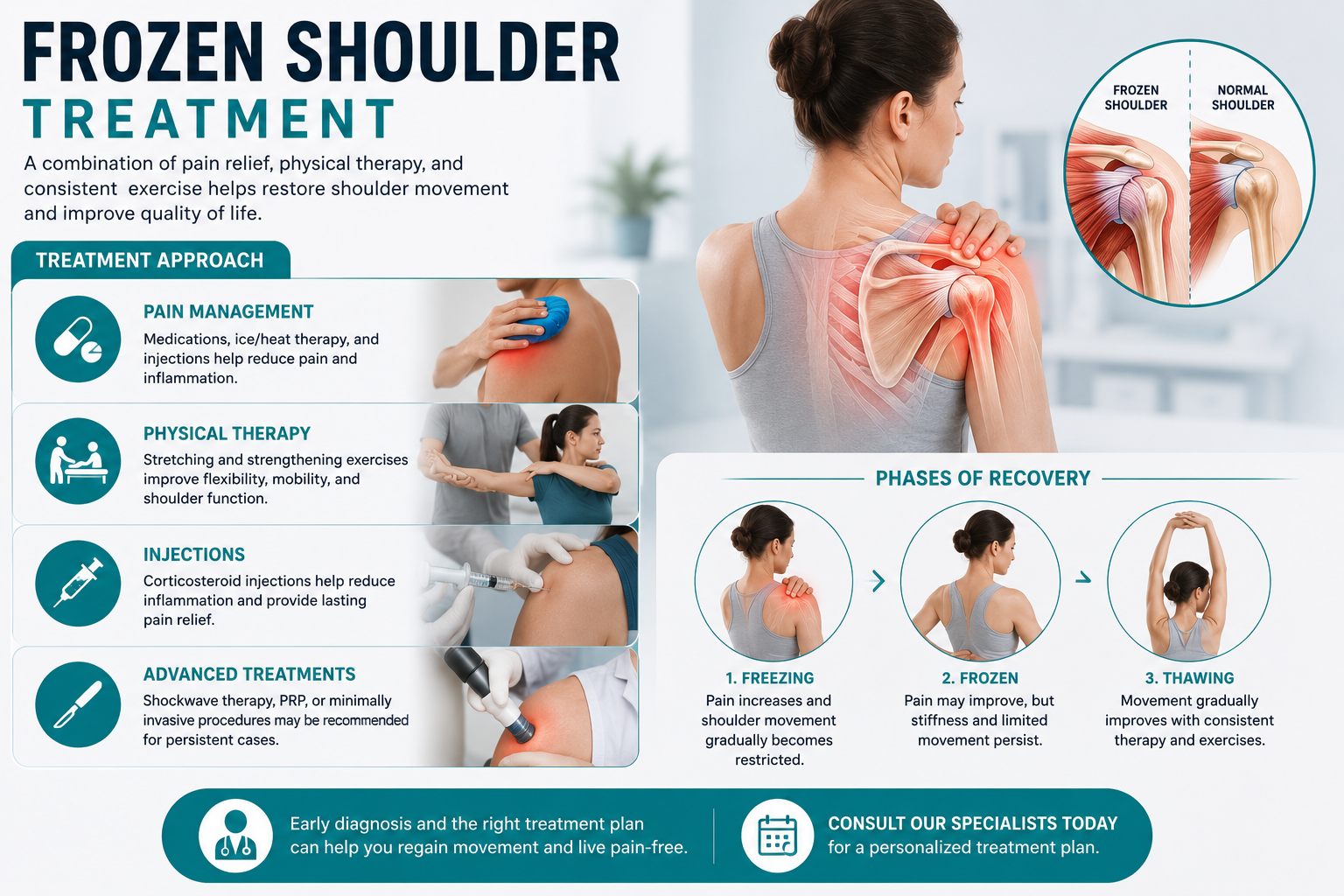
Pain Dominant Freezing Stage
During the initial phase of adhesive capsulitis pain is the most prominent symptom. Movement becomes increasingly uncomfortable and patients may avoid using the shoulder.
This avoidance leads to further stiffness which accelerates the need for structured frozen shoulder treatment. Early intervention at this stage can significantly reduce severity.
Stiffness Dominant Frozen Stage
In the second stage stiffness becomes the main concern. Pain may decrease slightly but mobility is significantly limited.
Patients often find it difficult to perform tasks such as reaching behind their back or lifting their arm. Consistent frozen shoulder treatment is essential to gradually restore movement during this phase.
Recovery Focused Thawing Stage
The final stage involves gradual improvement in movement. The shoulder slowly regains flexibility as inflammation decreases.
Progress during this stage depends on adherence to frozen shoulder treatment plans. Regular therapy and exercises help accelerate recovery and prevent relapse.
Advanced Frozen Shoulder Treatment Approaches
Structured Physical Therapy Programs
Physical therapy remains the most effective method for managing adhesive capsulitis. Therapists design customized programs based on the stage and severity of the condition.
These programs focus on improving range of motion and strengthening surrounding muscles. Gradual progression ensures safe and effective frozen shoulder treatment.
Pain Control and Anti-Inflammatory Care
Managing pain is essential to enable movement and participation in therapy. Medications and supportive care help reduce inflammation.
Pain control methods used in frozen shoulder treatment include:
- Oral medications for inflammation
- Localized treatments for targeted relief
- Supportive therapies to improve comfort
These approaches make it easier to perform exercises required for recovery from adhesive capsulitis.
Image Guided and Injection Based Treatments
In cases where pain is severe additional interventions may be required. Injection based therapies deliver medication directly into the joint.
These treatments help reduce inflammation and improve mobility which enhances the effectiveness of frozen shoulder treatment. They are often used alongside physical therapy for better results.
Rehabilitation Techniques to Restore Mobility
Stretching for Flexibility Improvement
Stretching exercises are essential for increasing joint flexibility. These exercises gradually loosen the tightened capsule in adhesive capsulitis.
Common techniques include:
- Passive stretching guided by a therapist
- Assisted movements using tools or supports
- Controlled range of motion exercises
Regular practice is a key component of successful frozen shoulder treatment.
Strengthening for Joint Stability
Strengthening exercises help support the shoulder and prevent further injury. Building muscle strength improves overall function.
These exercises are introduced gradually as part of frozen shoulder treatment to ensure safety and effectiveness.
Consistency and Long-Term Progress
Recovery from adhesive capsulitis requires patience and consistency. Regular participation in therapy sessions and home exercises ensures steady improvement.
Maintaining consistency is one of the most important aspects of effective frozen shoulder treatment.
Lifestyle Adjustments to Support Frozen Shoulder Treatment
Daily Movement and Activity Modification
Incorporating gentle movement into daily routines helps prevent stiffness. Avoiding complete immobilization is crucial for recovery.
Simple adjustments such as modifying activities can support frozen shoulder treatment and reduce strain.
Posture and Ergonomic Improvements
Good posture reduces stress on the shoulder joint. Proper alignment supports healing and prevents additional discomfort.
Ergonomic adjustments are an important part of managing adhesive capsulitis.
Nutrition and Overall Health Support
Maintaining overall health plays a role in recovery. Proper nutrition supports tissue healing and reduces inflammation.
Healthy habits enhance the effectiveness of frozen shoulder treatment and promote long term joint health.
Preventing Adhesive Capsulitis Recurrence
Maintaining Regular Shoulder Activity
Regular movement helps prevent stiffness and keeps the joint flexible. This reduces the risk of developing adhesive capsulitis again.
Early Management of Shoulder Pain
Addressing minor discomfort early prevents progression. Timely care reduces the need for extensive frozen shoulder treatment.
Building Strength and Flexibility
Ongoing exercise helps maintain joint health. Strength and flexibility reduce the likelihood of recurrence and support recovery from adhesive capsulitis.
When to Seek Medical Help?
Recognizing Persistent Symptoms
If pain and stiffness continue to worsen it is important to seek professional care. Persistent symptoms may indicate advanced adhesive capsulitis.
Benefits of Early Frozen Shoulder Treatment
Prompt treatment can result in quicker recovery and improved outcomes. Timely frozen shoulder treatment helps restore mobility and prevent complications.
Conclusion: Take Control with Frozen Shoulder Treatment
Managing frozen shoulder treatment effectively requires a combination of medical care consistent therapy and lifestyle adjustments. By understanding how adhesive capsulitis develops and progresses you can take proactive steps to improve mobility and reduce pain. With the right approach recovery is achievable and long-term complications can be avoided.
If you are experiencing stiffness or limited movement do not ignore the signs. Timely intervention can play a crucial role in improving your recovery process. Book your consultation today and begin your recovery with expert frozen shoulder treatment.