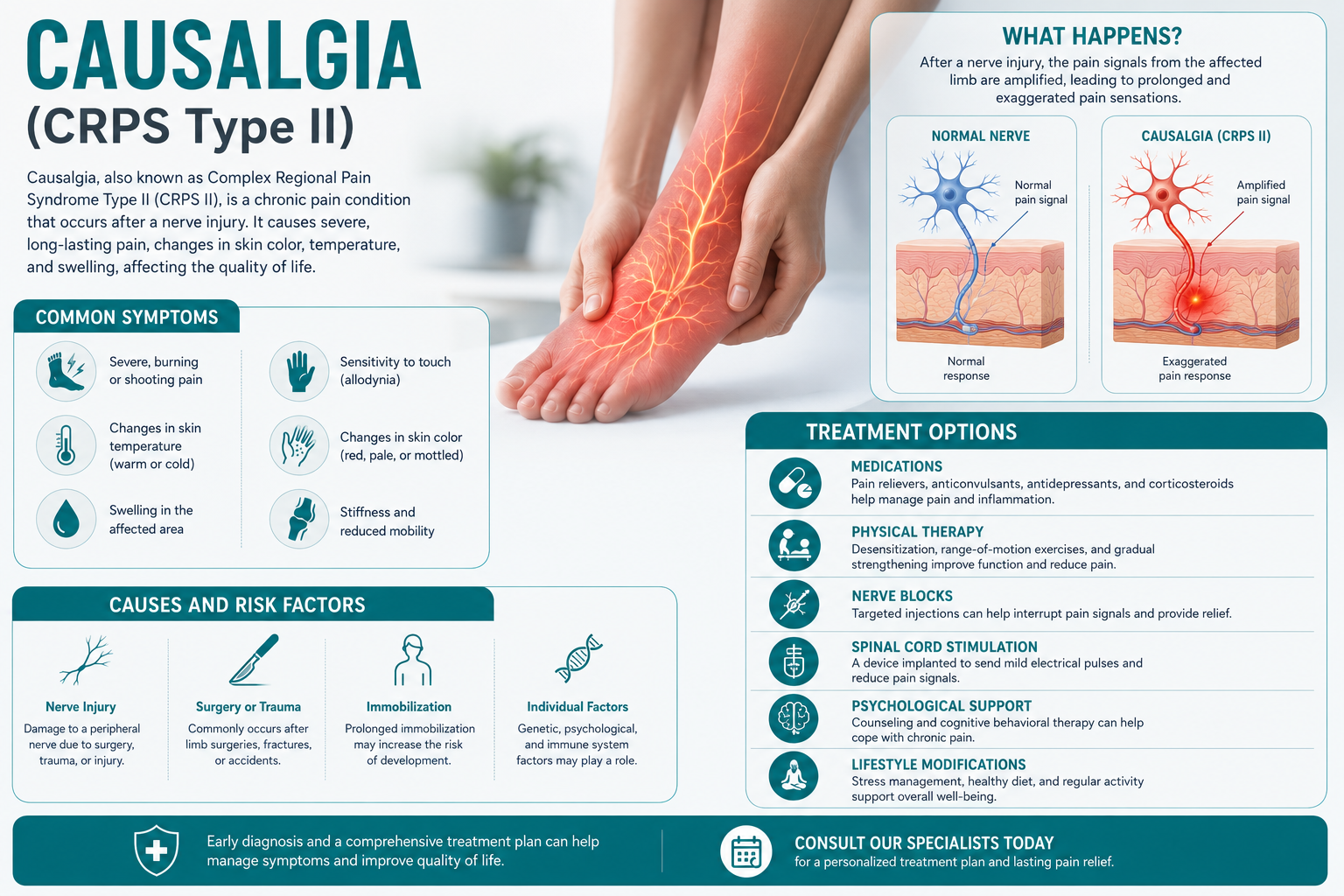
Causalgia (CRPS Type II): Understanding Severe Nerve Pain Conditions
Severe nerve pain can be one of the most distressing medical conditions because it often feels intense persistent and difficult to control. Causalgia is a rare yet serious disorder that develops after damage to a specific nerve and it can continue long after the initial injury has healed. Unlike typical pain responses this condition involves abnormal nerve signalling which amplifies discomfort and creates a prolonged pain cycle.
Have you ever experienced pain that feels far greater than the original injury and does not seem to improve over time? This exaggerated pain response is a defining feature of CRPS type II which is the clinical term often used interchangeably with causalgia. The condition not only affects physical comfort but also interferes with daily activities sleep patterns and emotional wellbeing. Many patients struggle to understand why the pain persists even after the visible injury has resolved.
Advancements in pain medicine have improved the understanding of Causalgia and its underlying mechanisms. Healthcare providers now recognize that early intervention plays a crucial role in preventing long term complications and improving recovery outcomes. Modern treatment strategies focus on reducing nerve sensitivity restoring function and improving quality of life through a multidisciplinary approach.
In this comprehensive guide, you will gain a deeper understanding of CRPS type II including its causes symptoms and progression. You will also explore advanced diagnostic methods and treatment strategies designed to manage Causalgia effectively and help patients regain control over their lives.
What Is Causalgia and How CRPS Type II Develops?
Definition and Key Characteristics
Causalgia is a chronic pain condition that occurs when a peripheral nerve is damaged and begins sending abnormal signals to the brain. These signals are often amplified which causes the brain to perceive pain as more intense than it actually is. This abnormal communication between the nerve and the brain is what makes the condition so challenging to manage.
The condition falls under the category of CRPS type II which specifically involves confirmed nerve injury. This distinguishes it from other chronic pain conditions that may not have a clearly identifiable source of nerve damage. The presence of a known injury helps guide diagnosis and treatment planning.
Patients with Causalgia often describe their pain as burning sharp or electric in nature. This unique pain profile is one of the key indicators used by healthcare providers to identify CRPS type II and begin appropriate management.
How Nerve Damage Triggers Pain?
When a nerve is injured, it can become hypersensitive and start sending continuous pain signals even in the absence of external stimuli. This process is known as central sensitization and it plays a major role in the development of Causalgia. The nervous system essentially becomes overactive which leads to persistent discomfort.
Inflammation around the injured nerve further contributes to this heightened sensitivity. Swelling and chemical changes within the affected area can intensify pain signals and prolong recovery. These mechanisms explain why CRPS type II often persists long after the initial injury has healed.
Understanding these processes is essential for effective treatment because it highlights the need for therapies that target both nerve function and inflammation. Addressing these factors is a central goal in managing Causalgia.
Difference Between CRPS Type I and CRPS Type II
Although both types of complex regional pain syndrome share similar symptoms they differ in their underlying causes. CRPS type II is specifically associated with identifiable nerve damage while type I does not involve a confirmed nerve injury. Understanding this difference helps support accurate diagnosis and appropriate treatment.
In Causalgia the presence of nerve damage provides a clear target for medical intervention. This allows healthcare providers to use specialized treatments that address the affected nerve directly. As a result, treatment strategies for CRPS type II are often more focused and tailored to the individual patient.
Recognizing these differences helps ensure that patients receive the most appropriate care and improves the likelihood of successful outcomes in managing Causalgia.
Common Causes and Risk Factors of Causalgia
Nerve Injuries and Trauma
The most common cause of Causalgia is direct injury to a peripheral nerve. This type of injury can occur during accidents surgical procedures or physical trauma such as fractures or dislocations. When the nerve is damaged it may not heal properly which leads to persistent pain signals.
Traumatic injuries often involve significant force which increases the risk of nerve damage. In such cases the likelihood of developing CRPS type II is higher especially if the injury is severe or not treated promptly. Early medical attention can reduce this risk and improve recovery outcomes.
Understanding the link between trauma and Causalgia helps highlight the importance of proper injury management. Timely intervention can prevent the progression of symptoms and reduce the severity of CRPS type II.
Post Surgical Complications
Surgical procedures can sometimes lead to unintended nerve damage which may result in Causalgia. Even minor procedures carry a risk if nerves are located near the surgical site. Patients may notice symptoms during the recovery phase.
Post surgical pain that is unusually severe or persistent should be evaluated carefully. This type of pain may indicate the development of CRPS type II rather than normal healing. Early detection allows for prompt treatment and better outcomes.
Healthcare providers often monitor patients closely after surgery to identify any signs of Causalgia. This proactive approach helps prevent long term complications and supports effective recovery.
Other Contributing Factors
Several additional factors can increase the risk of developing Causalgia. These include delayed healing poor circulation and underlying medical conditions that affect nerve health. Each of these factors can contribute to abnormal nerve function.
Individuals with chronic conditions may be more susceptible to CRPS type II because their bodies may not respond to injury in a typical way. This makes early intervention even more important for these patients. Addressing underlying health issues can also improve treatment outcomes.
By understanding these risk factors patients and healthcare providers can take preventive measures to reduce the likelihood of Causalgia and improve overall health.
Symptoms of Causalgia and CRPS Type II
Primary Pain Symptoms
The most prominent symptom of Causalgia is severe burning pain that often feels disproportionate to the original injury. This pain may be constant or triggered by movement touch or changes in temperature. It can significantly interfere with daily activities and overall quality of life.
Patients with CRPS type II often describe their pain as deep intense and difficult to localize. The discomfort may spread beyond the initial injury site which makes diagnosis more complex. This widespread pain pattern is a key characteristic of the condition.
Managing these symptoms requires a comprehensive approach that addresses both the physical and neurological aspects of Causalgia. Early treatment can help reduce pain intensity and prevent progression.
Physical and Sensory Changes
In addition to pain patients may experience noticeable changes in the affected area. These changes can include swelling temperature differences and variations in skin colour. Such symptoms are often indicators of underlying nerve dysfunction.
The affected limb may feel warmer or cooler than the surrounding areas due to changes in blood flow. These vascular changes are commonly seen in CRPS type II and contribute to discomfort. Monitoring these symptoms is important for accurate diagnosis.
These physical signs help healthcare providers identify Causalgia and determine the severity of the condition. They also provide valuable information for developing an effective treatment plan.
Functional and Emotional Impact
Living with Causalgia can affect both physical abilities and emotional well-being. Chronic pain often leads to reduced mobility which can limit independence and daily activities. Over time this can result in frustration and decreased quality of life.
Patients with CRPS type II may also experience anxiety depression and sleep disturbances. These emotional challenges can further intensify the perception of pain and make recovery more difficult. Addressing mental health is therefore an essential part of treatment.
A holistic approach that includes physical therapy pain management and psychological support is crucial for managing Causalgia effectively. This comprehensive strategy helps improve overall outcomes.
Conclusion: Managing Causalgia for Better Quality of Life
Understanding Causalgia is essential for recognizing symptoms early and seeking appropriate care. With the right approach individuals can manage pain improve mobility and enhance their overall quality of life. Advances in the treatment of CRPS type II have made it possible to address both the physical and emotional aspects of this condition.
If you are experiencing persistent nerve pain do not ignore the warning signs. Early diagnosis and intervention can significantly improve outcomes and prevent long term complications. Taking proactive steps toward treatment can help you regain control and move toward recovery. Book your consultation today and take the first step toward relief from causalgia.