Carpal Tunnel Syndrome Explained: Symptoms, Causes and Available Treatments
If you have ever felt tingling numbness or weakness in your hand, you may be experiencing carpal tunnel syndrome. This common condition affects the wrist and hand and can interfere with everyday tasks such as typing writing or even holding objects. Over time these symptoms can worsen and lead to reduced hand function if not treated properly.
Have you noticed your fingers falling asleep at night or experiencing discomfort after repetitive hand movements? These are often early carpal tunnel symptoms that should not be ignored. The condition develops when pressure is placed on the median nerve as it passes through the carpal tunnel in the wrist. This pressure leads to inflammation and irritation which results in wrist nerve pain and functional limitations.
With the rise of computer use and repetitive tasks the number of people affected by carpal tunnel syndrome has increased significantly. Fortunately, modern medicine offers a wide range of solutions from simple lifestyle adjustments to advanced treatments that can relieve symptoms and restore function.
In this comprehensive guide you will learn about the causes and warning signs of carpal tunnel syndrome. You will also explore the most effective treatment options available to manage carpal tunnel symptoms and reduce wrist nerve pain for long term relief.
Exploring Carpal Tunnel Syndrome and Its Underlying Development
Understanding the Structure of the Wrist
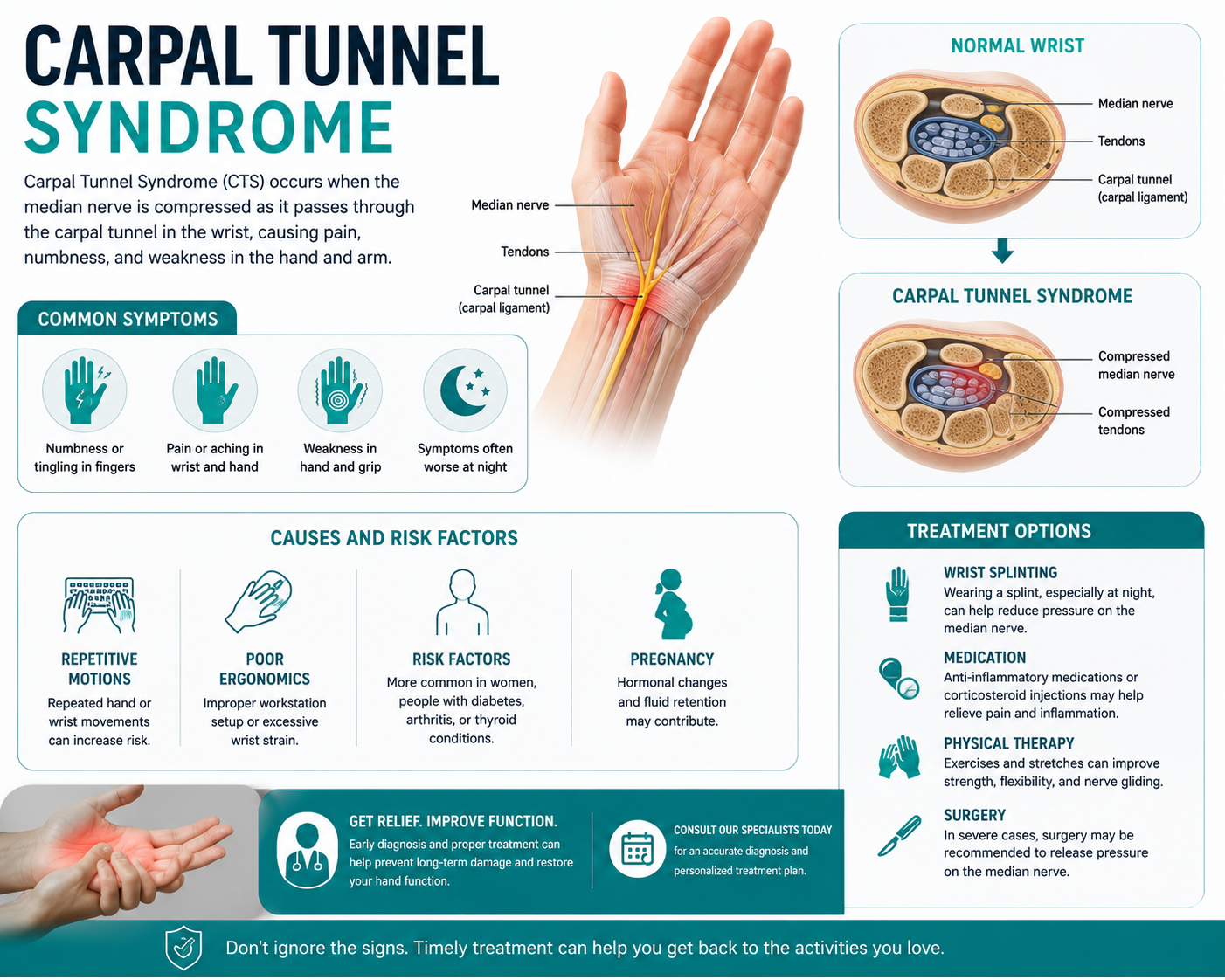
The wrist features a narrow corridor called the carpal tunnel that helps protect the median nerve and tendons. In carpal tunnel syndrome this space becomes compressed which affects nerve function.
This compression leads to irritation of the median nerve resulting in carpal tunnel symptoms such as tingling numbness and weakness. Over time the condition can progress and cause persistent wrist nerve pain.
How Pressure Builds on the Median Nerve?
Different elements can contribute to excess pressure inside the carpal tunnel. Swelling inflammation and repetitive strain all contribute to nerve compression.
Common causes include:
- Repetitive hand movements
- Prolonged wrist flexion
- Fluid retention or inflammation
These factors play a major role in the development of carpal tunnel syndrome and worsening carpal tunnel symptoms.
Why Early Intervention Matters?
Ignoring the first symptoms may increase the risk of long-term nerve damage. Timely care can prevent progression and reduce wrist nerve pain. Early treatment of carpal tunnel syndrome ensures better outcomes and faster recovery.
Common Carpal Tunnel Symptoms to Watch For
Early Signs of Carpal Tunnel Symptoms
Recognizing early carpal tunnel symptoms is essential for preventing long term complications. These symptoms often appear gradually and may be mild at first.
Common early signs include:
- Tingling or numbness in fingers
- Occasional hand discomfort
- Weak grip strength
These signs often indicate the beginning of carpal tunnel syndrome.
Progression of Symptoms Over Time
As the condition worsens carpal tunnel symptoms become more frequent and intense. The discomfort may spread and affect daily activities.
Advanced symptoms include:
- Persistent numbness
- Burning sensations
- Increased wrist nerve pain
These symptoms highlight the need for proper treatment of carpal tunnel syndrome.
Impact on Daily Activities
Severe cases can make simple tasks difficult. Activities such as typing holding objects or driving may become challenging. Managing carpal tunnel symptoms effectively helps reduce wrist nerve pain and improve quality of life.
Common Causes and Risk Factors of Carpal Tunnel Syndrome
Repetitive Motion and Occupational Risks
Jobs that involve repetitive hand movements increase the risk of carpal tunnel syndrome. Continuous strain leads to inflammation within the wrist.
Common risk factors include:
- Typing for long hours
- Assembly line work
- Frequent use of hand tools
These activities contribute to worsening carpal tunnel symptoms.
Medical Conditions and Health Factors
Certain health conditions can increase susceptibility. Conditions such as diabetes and arthritis may contribute to nerve compression.
These factors can intensify wrist nerve pain and accelerate the progression of carpal tunnel syndrome.
Lifestyle and Ergonomic Factors
Poor posture and improper wrist positioning can increase strain on the median nerve.
Improving ergonomics can reduce carpal tunnel symptoms and prevent further wrist nerve pain.
Diagnosis of Carpal Tunnel Syndrome
Clinical Evaluation and Symptom Assessment
Diagnosis begins with a detailed review of symptoms and medical history. Healthcare providers assess the severity and pattern of carpal tunnel symptoms.
They evaluate:
- Frequency of numbness
- Duration of pain
- Activities that trigger symptoms
This helps confirm carpal tunnel syndrome.
Physical Examination and Functional Tests
Doctors perform specific tests to identify nerve compression.
Common tests include:
- Wrist flexion test
- Tapping over the median nerve
- Grip strength assessment
These tests help diagnose carpal tunnel syndrome and assess wrist nerve pain.
Advanced Diagnostic Methods
In some cases, nerve conduction studies may be used to evaluate nerve function.
These tests provide accurate information about the severity of carpal tunnel symptoms and guide treatment decisions.
Treatment Options for Carpal Tunnel Syndrome
Non-Surgical Treatment Approaches
Most cases can be managed with conservative methods. Early treatment focuses on reducing inflammation and relieving pressure on the nerve.
Common options include:
- Wrist splints to support alignment
- Anti-inflammatory medications
- Activity modification
These approaches help manage carpal tunnel symptoms and reduce wrist nerve pain.
Physical Therapy and Rehabilitation
Therapy plays an important role in recovery. Exercises improve flexibility and strengthen the wrist.
Therapy techniques include:
- Stretching exercises
- Strengthening routines
- Nerve gliding exercises
These methods support recovery from carpal tunnel syndrome.
Minimally Invasive and Advanced Treatments
For persistent cases advanced options may be required.
These include:
- Corticosteroid injections
- Ultrasound guided procedures
- Surgical release in severe cases
These treatments aim to relieve pressure and eliminate wrist nerve pain.
Preventing Carpal Tunnel Syndrome
Ergonomic Adjustments and Work Habits
Maintaining proper wrist alignment reduces strain. Improving your workstation ergonomics can lower the chances of developing carpal tunnel syndrome.
Key adjustments include:
- Keeping wrists in a neutral position
- Using ergonomic keyboards
- Taking regular breaks
These steps help reduce carpal tunnel symptoms.
Exercise and Strengthening
Regular exercise improves flexibility and reduces stiffness.
Recommended activities include:
- Wrist stretching exercises
- Hand strengthening routines
- Relaxation techniques
These practices prevent wrist nerve pain and support overall wrist health.
Healthy Lifestyle Choices
Maintaining overall health reduces the risk of nerve compression.
Balanced nutrition and regular activity help prevent carpal tunnel syndrome.
When to Seek Medical Attention?
Warning Signs That Should Not Be Ignored
Certain symptoms require immediate care.
Seek medical attention if you experience:
- Persistent numbness
- Severe wrist nerve pain
- Weakness in the hand
These signs indicate advanced carpal tunnel symptoms.
Importance of Early Treatment
Early intervention improves recovery and prevents complications. Proper care reduces long term damage caused by carpal tunnel syndrome.
Conclusion: Managing Carpal Tunnel Syndrome Effectively
Understanding carpal tunnel syndrome is essential for early detection and effective treatment. By recognizing carpal tunnel symptoms and addressing wrist nerve pain promptly you can prevent progression and maintain hand function. Modern treatment options provide effective solutions that restore comfort and improve daily life.
If you are experiencing persistent symptoms do not delay seeking help. Early care can make a significant difference in your recovery. Book your consultation today and take the first step toward relief from carpal tunnel syndrome.