Shoulder Impingement Syndrome: Diagnosis and Non-Surgical Treatments
Persistent shoulder pain can make even the simplest daily movements feel difficult and uncomfortable. Shoulder Impingement Syndrome is one of the most common causes of shoulder discomfort especially among individuals who perform repetitive arm movements or spend long hours working in fixed positions. This condition occurs when the tendons in the shoulder become compressed or irritated which leads to pain inflammation and restricted movement.
Have you ever experienced pain while lifting your arm or reaching overhead This could be an early sign of shoulder impingement syndrome. Many people ignore these symptoms at first assuming they will resolve on their own. However, without proper care the condition can worsen over time and lead to chronic pain or limited mobility.
Advancements in medical care have made it possible to diagnose this condition accurately and treat it without surgery in most cases. With the right shoulder impingement treatment approach patients can reduce pain restore strength and regain full range of motion. Early intervention plays a key role in preventing long term complications.
In this detailed guide you will learn about the cause’s symptoms and diagnosis of Shoulder Impingement Syndrome. You will also explore effective non-surgical shoulder impingement treatment options that can help you recover and return to your normal activities.
Causes of Shoulder Impingement Syndrome
Anatomy and Mechanical Factors
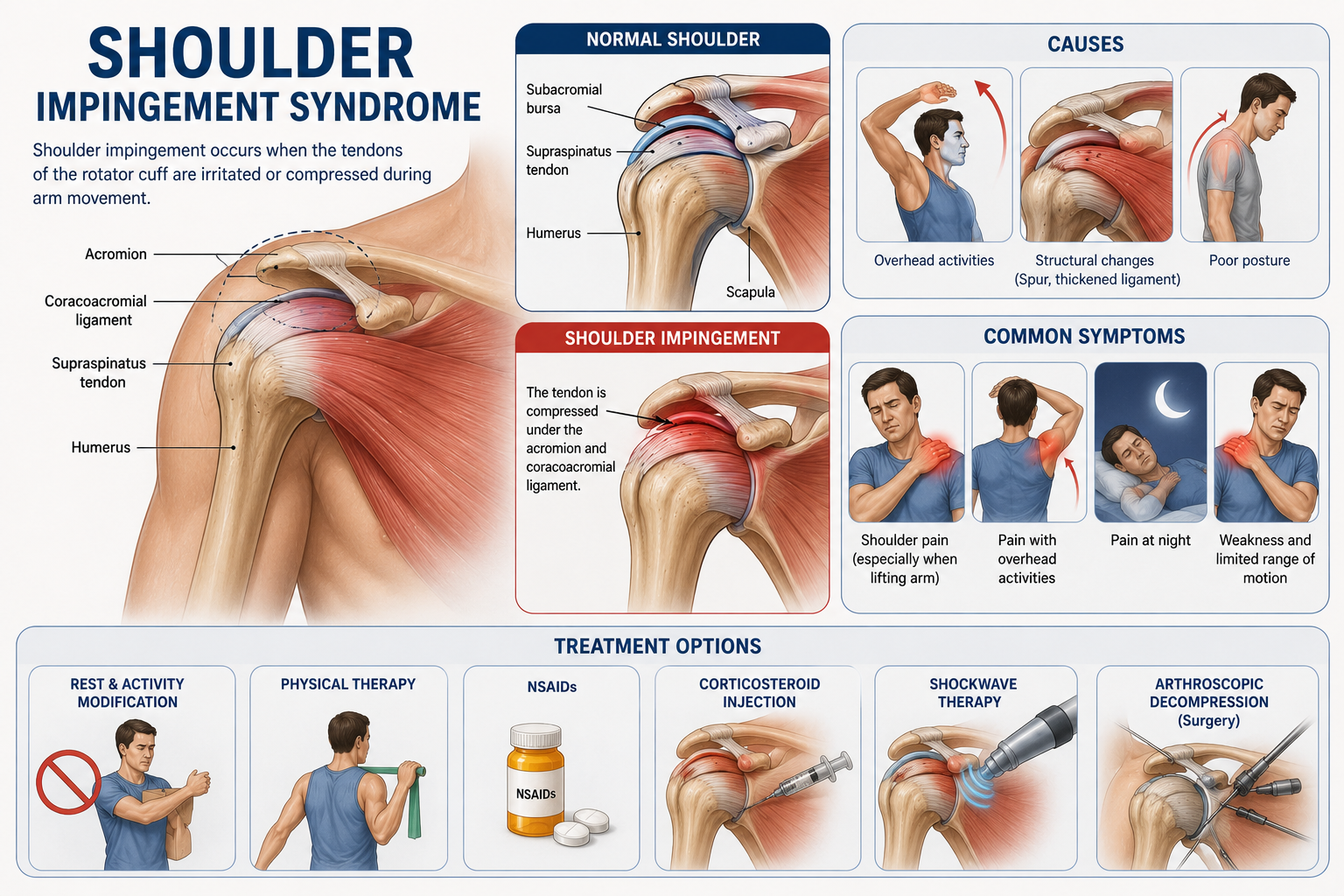
The shoulder joint is a complex structure made up of bones tendons and muscles that work together to allow smooth movement. In Shoulder Impingement Syndrome the space between the acromion and the rotator cuff becomes narrowed.
This narrowing leads to friction when the arm is raised. Over time this repeated compression causes irritation and inflammation which are key contributors to shoulder impingement syndrome.
Key anatomical factors include:
- Narrow subacromial space
- Bone spurs that develop over time
- Structural variations in shoulder shape
These issues often require targeted shoulder impingement treatment to relieve pressure.
Repetitive Movements and Overuse
Repetitive activities are a major cause of Shoulder Impingement Syndrome. Movements that involve frequent lifting or reaching overhead place continuous stress on the shoulder.
Common contributing activities include:
- Sports such as swimming or tennis
- Jobs that involve lifting or manual work
- Repeated overhead motions
These actions can gradually lead to shoulder impingement syndrome and require appropriate shoulder impingement treatment.
Poor Posture and Muscle Imbalance
Posture plays a significant role in shoulder health. Rounded shoulders and forward head posture can reduce the space within the shoulder joint.
This creates conditions that promote Shoulder Impingement Syndrome. Muscle imbalances further increase the risk by placing uneven stress on the joint.
Correcting posture is an important part of effective shoulder impingement treatment.
Symptoms of Shoulder Impingement Syndrome
Early Warning Signs
Recognizing symptoms early can help prevent progression. Initial signs of Shoulder Impingement Syndrome are often mild and may only occur during specific movements.
Common early symptoms include:
- Pain when lifting the arm
- Discomfort during overhead activities
- Mild weakness in the shoulder
These signs often indicate developing shoulder impingement syndrome.
Progressive Symptoms
As the condition worsens symptoms become more noticeable and persistent. Shoulder Impingement Syndrome may lead to continuous discomfort even at rest.
Advanced symptoms include:
- Sharp pain during movement
- Reduced range of motion
- Difficulty performing daily tasks
These symptoms highlight the need for timely shoulder impingement treatment.
Impact on Daily Activities
The effects of shoulder impingement syndrome extend beyond physical discomfort. Simple tasks such as dressing or lifting objects can become challenging.
Managing these symptoms with proper shoulder impingement treatment is essential for maintaining quality of life.
Diagnosis of Shoulder Impingement Syndrome
Clinical Evaluation and Patient History
Diagnosis begins with a detailed assessment of symptoms and medical history. Healthcare providers evaluate the pattern and severity of pain.
They assess:
- Activities that trigger pain
- Duration of symptoms
- Previous injuries
This helps confirm Shoulder Impingement Syndrome.
Physical Examination and Functional Tests
A physical exam is essential for identifying shoulder impingement syndrome. Doctors perform specific tests to evaluate movement and pain response.
These tests include:
- Range of motion assessment
- Strength testing
- Impingement specific manoeuvres
Findings guide appropriate shoulder impingement treatment.
Imaging and Advanced Diagnostics
Imaging tests may be used to confirm the diagnosis and rule out other conditions.
Common methods include:
- X rays to detect bone changes
- MRI scans to assess soft tissues
- Ultrasound imaging for dynamic evaluation
These tools provide a clear understanding of Shoulder Impingement Syndrome.
Non-Surgical Shoulder Impingement Treatment Options
Physical Therapy and Rehabilitation
Physical therapy is the foundation of shoulder impingement treatment. It focuses on strengthening muscles and improving flexibility.
Therapy programs typically include:
- Stretching exercises to improve mobility
- Strengthening routines for shoulder stability
- Posture correction techniques
These approaches are highly effective in managing Shoulder Impingement Syndrome.
Pain Management and Medication
Medications can help reduce inflammation and relieve pain. These are often used alongside other treatments.
Common options include:
- Anti-inflammatory drugs
- Pain relief medications
- Topical treatments
These methods support overall shoulder impingement treatment.
Minimally Invasive Therapies
For persistent cases minimally invasive options may be recommended. These treatments target inflammation directly.
Examples include:
- Corticosteroid injections
- Ultrasound guided procedures
- Advanced pain management techniques
These interventions enhance shoulder impingement treatment outcomes.
Lifestyle Changes to Support Shoulder Impingement Treatment
Improving Posture and Ergonomics
Maintaining proper posture reduces stress on the shoulder joint. Simple adjustments can prevent worsening of Shoulder Impingement Syndrome.
Recommendations include:
- Keeping shoulders aligned
- Adjusting workstation height
- Using supportive seating
These changes are essential for effective shoulder impingement treatment.
Activity Modification and Rest
Avoiding activities that trigger pain is crucial. Rest allows the shoulder to heal and prevents further irritation.
Gradual return to activity is recommended as part of shoulder impingement treatment.
Regular Exercise and Maintenance
Ongoing exercise helps maintain strength and flexibility. This reduces the risk of recurrence.
Consistent routines support long term management of Shoulder Impingement Syndrome.
Preventing Shoulder Impingement Syndrome
Strengthening Shoulder Muscles
Strong muscles provide better support and stability. Regular training helps prevent shoulder impingement syndrome.
Maintaining Flexibility
Flexible muscles reduce strain and improve movement. Stretching is an important preventive measure.
Early Intervention and Care
Addressing symptoms early prevents progression. Timely shoulder impingement treatment ensures better outcomes.
Conclusion: Managing Shoulder Impingement Syndrome Effectively
Understanding Shoulder Impingement Syndrome is the first step toward effective management and recovery. With proper diagnosis and the right shoulder impingement treatment approach most patients can achieve significant relief without surgery. Early care combined with lifestyle changes can restore mobility and improve overall shoulder health.
If you are experiencing persistent discomfort do not ignore the signs. Seeking professional guidance can help you recover faster and prevent complications. Book your consultation today and start your journey toward pain free movement with expert shoulder impingement treatment.