Sacroiliac Joint Fusion: When Chronic SI Joint Pain Requires Surgery
Lower back pain is often assumed to originate from the spine, but in many cases, the true source lies elsewhere. One commonly overlooked cause is the sacroiliac (SI) joint-a small yet critical structure that connects the lower spine to the pelvis. When this joint becomes inflamed, unstable or damaged, it can lead to persistent discomfort that affects mobility, posture and overall quality of life. For individuals experiencing long-term pain that does not respond to conservative therapies, sacroiliac joint fusion may be the most effective path forward.
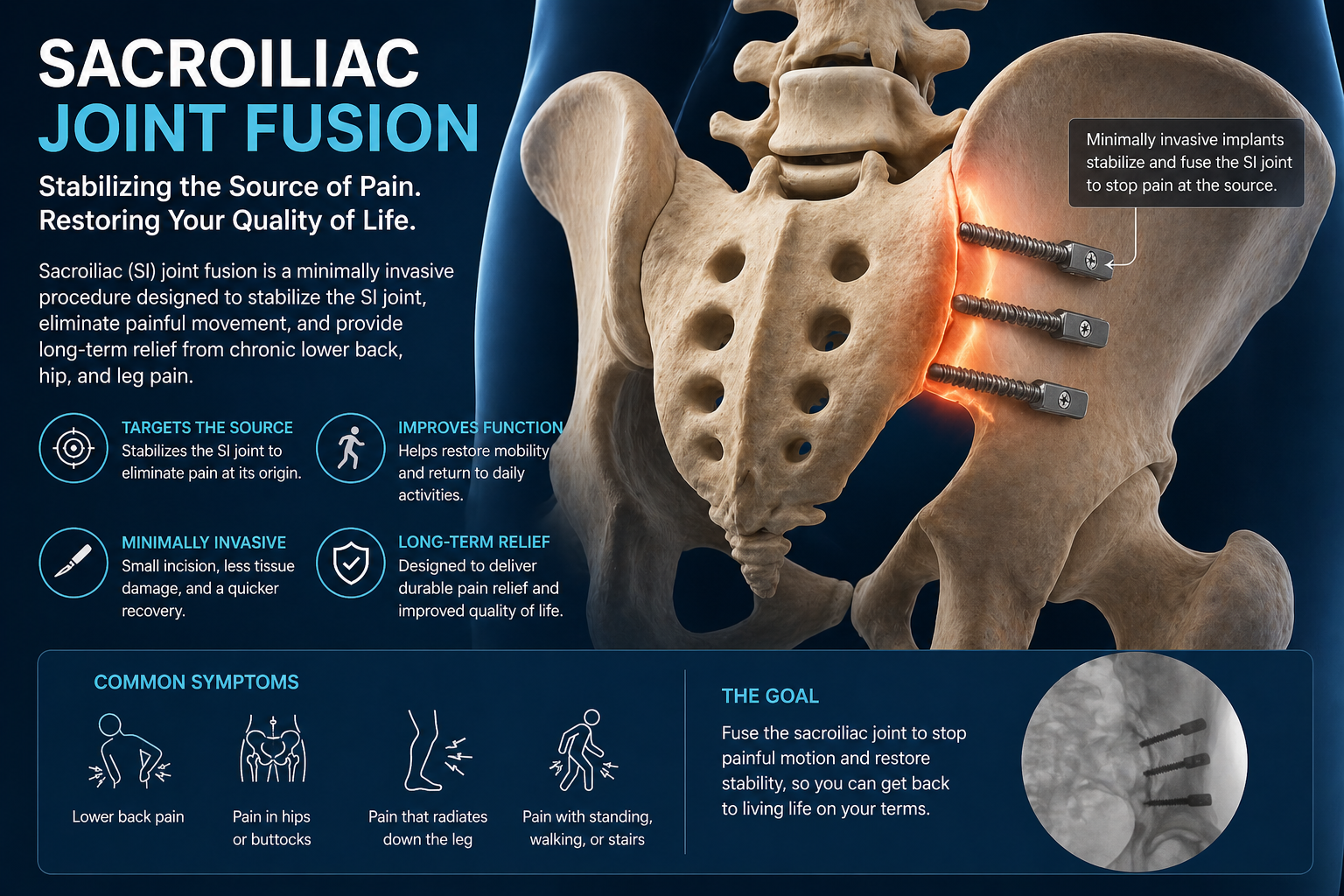
Sacroiliac joint fusion is a specialized surgical procedure designed to stabilize the SI joint by permanently joining the bones together. This eliminates abnormal movement, which is often the primary source of pain. As an advanced form of SI joint pain treatment, it is typically recommended only after non-surgical approaches-such as medications, injections and physical therapy-have failed to provide adequate relief.
Have you ever wondered why your lower back pain persists despite trying multiple treatments? Or why sitting, standing or even walking for short periods causes discomfort? These are common questions among patients with SI joint dysfunction. Understanding the underlying issue is the first step toward effective treatment.
In this comprehensive guide, we will explore every aspect of sacroiliac joint fusion, including the anatomy of the SI joint, causes and symptoms of dysfunction, non-surgical options, surgical techniques, recovery expectations and long-term outcomes. By the end, you will have a clear and detailed understanding of whether this SI joint pain treatment could be the right solution for your condition.
Understanding Sacroiliac Joint Pain
What Is the Sacroiliac Joint and Why Is It Important?
The sacroiliac joints are located at the base of the spine, where the sacrum (the triangular bone at the bottom of the spine) meets the iliac bones of the pelvis. There are two SI joints-one on each side-and they play a crucial role in maintaining stability and balance.
Although these joints have limited movement compared to others in the body, their function is essential. They act as shock absorbers, distributing weight and forces between the upper body and lower extremities. Every time you walk, sit or lift something, the SI joints help stabilize your body.
When these joints function properly, they operate almost unnoticed. However, when they become inflamed or unstable, even minor movements can trigger significant pain. In such cases, patients may eventually require sacroiliac joint fusion if other treatments do not restore stability.
Common Causes of SI Joint Dysfunction
SI joint dysfunction can result from a wide range of factors, often making diagnosis challenging. The condition may develop gradually or occur suddenly after an injury.
Some of the most common causes include:
- Degenerative arthritis: Wear and tear over time can damage the joint surfaces, leading to inflammation and pain.
- Trauma or injury: Falls, car accidents or sports injuries can disrupt the joint’s alignment.
- Pregnancy-related changes: Hormonal shifts loosen ligaments, increasing joint instability.
- Previous spinal surgery: Procedures like lumbar fusion can place additional stress on the SI joints.
- Repetitive stress: Activities that involve heavy lifting or twisting motions can strain the joint.
When these issues persist, they may require advanced SI joint pain treatment, including surgical intervention such as sacroiliac joint fusion.
Symptoms and How They Progress Over Time
SI joint pain often starts subtly but can worsen if left untreated. Early symptoms may be mild and intermittent, making them easy to ignore.
Common symptoms include:
- Pain in the lower back or buttocks
- Discomfort radiating to the hips, groin or thighs
- Increased pain when sitting or standing for long periods
- Difficulty transitioning from sitting to standing
- Reduced range of motion
Over time, the pain may become chronic and more intense, interfering with daily activities and sleep. When symptoms reach this stage and conservative treatments fail, sacroiliac joint fusion may be considered as a long-term SI joint pain treatment.
Non-Surgical SI Joint Pain Treatment Options
Physical Therapy and Lifestyle Modifications
Before considering surgery, doctors typically recommend non-invasive approaches to manage SI joint pain. Physical therapy is often the first line of defence and focuses on strengthening the muscles surrounding the joint.
Therapists design customized exercise programs to improve stability, flexibility and posture. Strengthening the core and pelvic muscles helps reduce strain on the SI joint, which can significantly alleviate pain.
Lifestyle modifications also play an important role. Patients are often advised to:
- Avoid prolonged sitting or standing
- Use proper lifting techniques
- Maintain a healthy weight
- Incorporate low-impact exercises such as swimming or walking
These strategies form the foundation of effective SI joint pain treatment and can delay or eliminate the need for sacroiliac joint fusion in many cases.
Medications and Pain Management
Medications are commonly used to manage inflammation and discomfort associated with SI joint dysfunction. Nonsteroidal anti-inflammatory drugs (NSAIDs) are frequently prescribed to reduce swelling and relieve pain.
In some cases, muscle relaxants or prescription pain medications may be recommended. While these treatments can provide temporary relief, they do not address the underlying cause of the problem.
As a result, patients with persistent symptoms may eventually explore more advanced SI joint pain treatment options, including sacroiliac joint fusion.
Injections and Minimally Invasive Procedures
Injection therapies are another important component of non-surgical treatment. Corticosteroid injections directly target inflammation within the SI joint, providing temporary relief.
Diagnostic injections are also used to confirm whether the SI joint is the source of pain. If the injection significantly reduces pain, it indicates that the joint is likely responsible.
While injections can be effective, their benefits are often short-lived. For patients who require repeated injections without lasting improvement, sacroiliac joint fusion may be recommended as a definitive SI joint pain treatment.
What Is Sacroiliac Joint Fusion?
Detailed Overview of the Procedure
Sacroiliac joint fusion is a surgical technique designed to stabilize the SI joint by permanently joining the bones. This eliminates abnormal motion, which is often the root cause of pain.
The procedure involves placing implants or bone grafts across the joint, allowing the bones to grow together over time. As the joint fuses, it becomes stable and no longer produces pain during movement.
As a long-term SI joint pain treatment, this procedure is particularly beneficial for patients with severe or chronic symptoms.
Step-by-Step Surgical Process
Modern sacroiliac joint fusion is typically performed using minimally invasive techniques, which reduce recovery time and complications.
The procedure generally includes:
- Administering anaesthesia to ensure patient comfort
- Making a small incision near the SI joint
- Using imaging guidance to position instruments accurately
- Inserting implants or bone graft material
- Closing the incision
This advanced SI joint pain treatment usually takes less than an hour and is often performed on an outpatient basis.
Types of Fusion Techniques Explained
There are different approaches to sacroiliac joint fusion, depending on the patient’s condition.
These include:
- Minimally invasive fusion: Smaller incisions, faster recovery
- Open surgery: Used in complex cases, involves larger incisions
Minimally invasive techniques are preferred because they offer better outcomes and fewer complications, making them a leading SI joint pain treatment option.
Benefits of Sacroiliac Joint Fusion
Long-Term Pain Relief and Stability
One of the primary advantages of sacroiliac joint fusion is its ability to provide long-lasting pain relief. By stabilizing the joint, the procedure eliminates the source of discomfort.
Patients often experience significant improvement in pain levels within weeks to months after surgery.
Improved Mobility and Daily Function
Once the joint is stabilized, patients can perform daily activities with greater ease and confidence.
Benefits include:
- Easier walking and movement
- Reduced stiffness
- Improved posture
This makes it a highly effective SI joint pain treatment for restoring quality of life.
Reduced Need for Ongoing Treatments
After successful sacroiliac joint fusion, many patients no longer require frequent medications or injections. This reduces the long-term burden of managing chronic pain.
Risks and Considerations
Potential Complications
Although sacroiliac joint fusion is generally safe, potential risks include infection, bleeding and nerve irritation.
Recovery Challenges and Expectations
Recovery demands patience and careful adherence to medical guidance. Patients must follow activity restrictions and attend follow-up appointments.
Minimizing Risks
Choosing a skilled surgeon and following post-operative guidelines can significantly reduce complications associated with this SI joint pain treatment.
Recovery and Rehabilitation
Immediate Recovery Phase
After sacroiliac joint fusion, patients are monitored and typically discharged within a day. Mild discomfort is common but manageable.
Long-Term Healing Process
Healing takes several weeks to months as the bones fuse together. Pain and mobility typically improve gradually over time.
Role of Physical Therapy
Physical therapy is essential for strengthening muscles and ensuring the success of this SI joint pain treatment.
Conclusion
Sacroiliac joint fusion is a highly effective solution for individuals suffering from chronic SI joint pain that does not respond to conservative treatments. By stabilizing the joint and eliminating painful motion, this advanced SI joint pain treatment offers long-term relief and improved quality of life.
If you are struggling with persistent pain, now is the time to act. Book a consultation today to find out whether sacroiliac joint fusion is the right treatment for you and start your journey toward lasting relief.