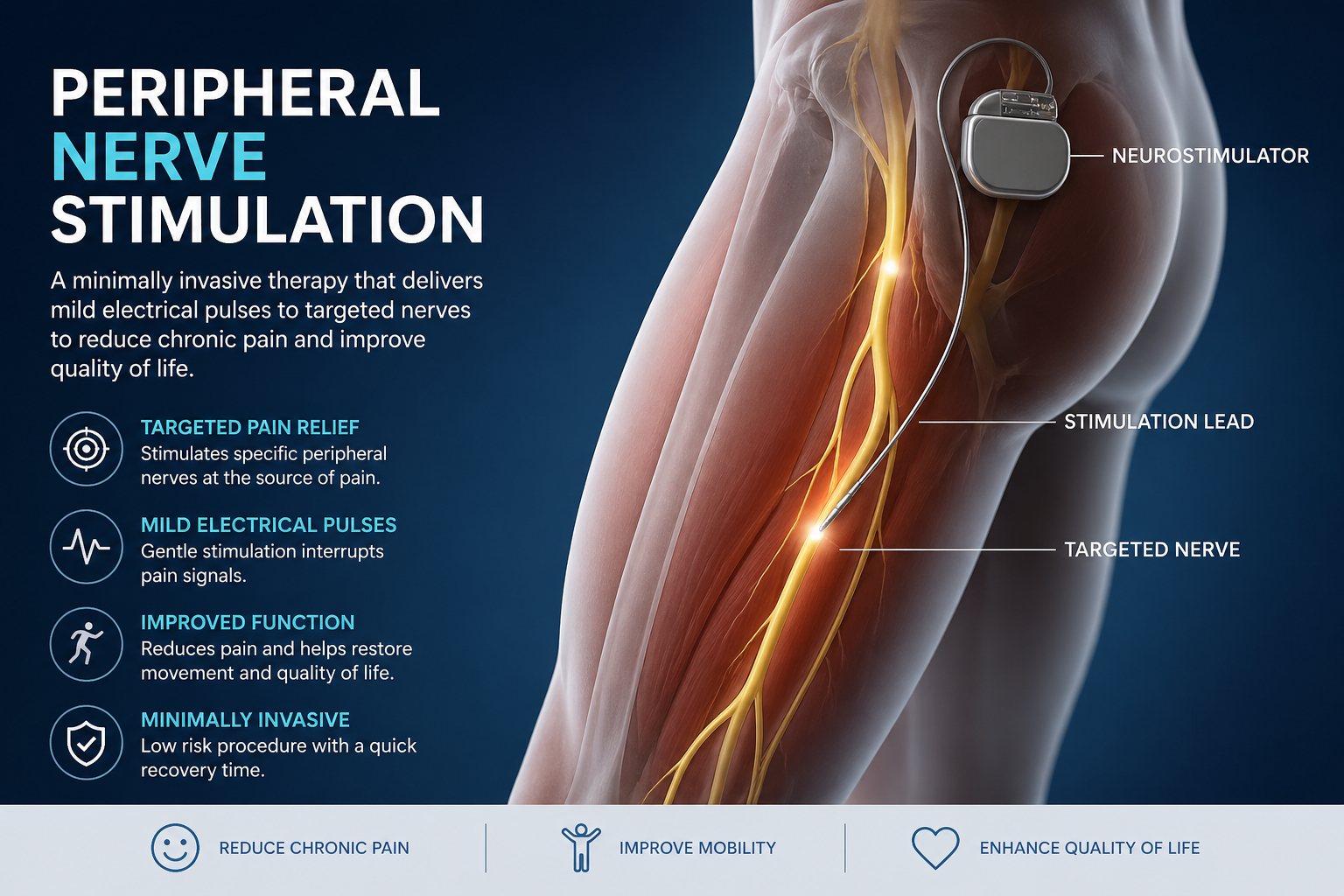
Peripheral Nerve Stimulation: A Modern Approach to Chronic Pain
Chronic pain is a condition that affects millions of people worldwide, often limiting mobility, reducing productivity and significantly impacting emotional well-being. For many individuals, traditional treatments such as medications, physical therapy or even surgery may not provide sufficient or lasting relief. This ongoing struggle leads patients to seek innovative and more effective solutions. One such breakthrough treatment is Peripheral Nerve Stimulation, a cutting-edge technique designed to target pain at its source.
Peripheral Nerve Stimulation is a modern form of nerve stimulation therapy that focuses on interrupting pain signals before they reach the brain. Instead of simply masking discomfort, this therapy works by modifying how the nervous system processes pain, offering a more sustainable and targeted approach. It is particularly beneficial for individuals suffering from chronic nerve-related pain conditions that have not responded well to conventional treatments.
In this in-depth guide, we will explore every aspect of Peripheral Nerve Stimulation, including how it works, the different types available, its benefits, risks and what patients can expect during and after the procedure. By the end of this article, you will have a complete understanding of how this advanced nerve stimulation therapy can transform pain management and improve overall quality of life.
What Is Peripheral Nerve Stimulation?
Understanding Peripheral Nerve Stimulation in Detail
Peripheral Nerve Stimulation is a minimally invasive medical procedure that uses electrical impulses to target specific nerves responsible for pain. These peripheral nerves exist outside the brain and spinal cord and act as pathways for transmitting sensory information, including pain signals. When these nerves become irritated or damaged, they can send persistent pain signals to the brain, resulting in chronic discomfort.
This innovative nerve stimulation therapy involves placing small electrodes near the affected nerve. These electrodes are linked to a device that emits regulated electrical impulses. The purpose of these pulses is to disrupt or alter the pain signals before they reach the brain. As a result, the brain either does not perceive the pain or interprets it differently, often as a mild tingling sensation.
Unlike traditional treatments that rely heavily on medication, Peripheral Nerve Stimulation directly addresses the root cause of pain. This targeted approach makes it highly effective for managing chronic conditions, especially when other treatments have failed.
How Peripheral Nerve Stimulation Works?
The science behind Peripheral Nerve Stimulation is based on neuromodulation, a process that alters nerve activity through electrical stimulation. Pain signals pass through the nerves to the brain, where they are perceived as discomfort. By introducing electrical impulses, this nerve stimulation therapy modifies these signals, effectively reducing or eliminating the sensation of pain.
The process works in several ways:
- It blocks pain signals from reaching the brain
- It replaces pain sensations with mild, non-painful tingling
- It reduces nerve hypersensitivity over time
This combination of effects makes Peripheral Nerve Stimulation a powerful and long-lasting solution for chronic pain management.
Conditions Treated with Peripheral Nerve Stimulation
Peripheral Nerve Stimulation is used to treat a wide range of chronic pain conditions, particularly those involving nerve damage or irritation. It is often recommended when other treatments have not provided adequate relief.
Common conditions include:
- Neuropathic pain caused by nerve damage
- Chronic back and neck pain
- Post-surgical pain syndromes
- Migraine and chronic headaches
- Complex Regional Pain Syndrome (CRPS)
This versatile nerve stimulation therapy can be customized to target specific nerves, making it suitable for various pain conditions.
Types of Peripheral Nerve Stimulation Systems
Implantable Peripheral Nerve Stimulation Devices
Implantable devices are one of the most widely used forms of Peripheral Nerve Stimulation. These systems involve surgically placing electrodes near the targeted nerve and connecting them to a small pulse generator implanted under the skin.
This type of nerve stimulation therapy is designed for long-term pain management. The device continuously delivers electrical impulses, which can be adjusted based on the patient’s needs. Patients are often given a remote control or mobile app to modify the intensity and frequency of stimulation.
Key advantages include:
- Continuous and consistent pain relief
- Customizable settings for individual needs
- Long-term solution for chronic pain
Temporary Peripheral Nerve Stimulation Systems
Temporary systems are often used as a trial phase before committing to permanent implantation. In this approach, electrodes are placed near the nerve for a short period, usually a few days to weeks.
This trial allows patients and doctors to evaluate the effectiveness of Peripheral Nerve Stimulation before making a long-term decision. It is a crucial step in ensuring that the therapy will provide meaningful relief.
Benefits include:
- Non-permanent and reversible
- Helps assess treatment success
- Minimally invasive
Wireless and Advanced Technologies
Recent advancements have significantly improved the design and functionality of Peripheral Nerve Stimulation devices. Modern systems are smaller, more efficient and often wireless, enhancing patient comfort and convenience.
Innovations include:
- Wireless devices controlled via smartphones
- Miniaturized implants with minimal visibility
- Enhanced targeting for precise pain relief
These developments have made nerve stimulation therapy more accessible and effective for a broader range of patients.
Benefits of Peripheral Nerve Stimulation
Targeted Pain Relief Without Medication
One of the most significant benefits of Peripheral Nerve Stimulation is its ability to provide targeted pain relief without relying on medications. Traditional pain management often involves drugs that affect the entire body, leading to unwanted side effects.
This nerve stimulation therapy focuses directly on the source of pain, reducing the need for systemic treatments and improving overall safety.
Minimally Invasive and Reversible
Unlike major surgical procedures, Peripheral Nerve Stimulation is minimally invasive. The implantation process involves small incisions and typically requires only local anaesthesia.
Additionally, the treatment is reversible. If a patient decides to discontinue therapy, the device can be removed without permanent changes to the body. This flexibility makes nerve stimulation therapy a low-risk option.
Improved Quality of Life
Patients who undergo Peripheral Nerve Stimulation often report significant improvements in their daily lives. By reducing pain, the therapy enables individuals to engage in activities they previously avoided.
Improvements include:
- Better sleep patterns
- Increased physical activity
- Enhanced emotional well-being
- Greater independence
This transformative impact makes nerve stimulation therapy a valuable tool in modern pain management.
Procedure: What to Expect
Pre-Procedure Evaluation
Before undergoing Peripheral Nerve Stimulation, patients undergo a comprehensive evaluation. This includes reviewing medical history, conducting physical examinations and sometimes performing imaging tests.
The goal is to identify the exact source of pain and determine whether this nerve stimulation therapy is suitable for the patient.
Trial Phase
The trial phase is a critical step in the Peripheral Nerve Stimulation process. Temporary electrodes are placed near the targeted nerve and the patient monitors their pain relief over several days.
This phase helps ensure that the therapy is effective before proceeding with permanent implantation.
Permanent Implantation
If the trial yields positive results, a permanent device is implanted. The procedure is generally quick and is typically performed on an outpatient basis.
After implantation, the Peripheral Nerve Stimulation device can be adjusted to provide optimal pain relief.
Risks and Considerations
Common Side Effects
While Peripheral Nerve Stimulation is generally safe, some patients may experience mild side effects.
These include:
- Temporary discomfort at the implant site
- Mild swelling or bruising
- Skin irritation
Potential Risks
Although rare, there are potential risks associated with Peripheral Nerve Stimulation, such as infection or device malfunction.
Working with an experienced specialist ensures that this nerve stimulation therapy is performed safely.
Who Should Avoid This Therapy?
Certain individuals may not be suitable candidates for Peripheral Nerve Stimulation, including those with active infections or specific medical conditions.
Is Peripheral Nerve Stimulation Right for You?
Ideal Candidates
Peripheral Nerve Stimulation is ideal for patients with chronic pain that has not responded to conventional treatments.
Consultation and Decision-Making
A detailed consultation with a pain specialist is essential to determine whether this nerve stimulation therapy is the right choice.
Conclusion
Peripheral Nerve Stimulation is a modern, effective and minimally invasive solution for managing chronic pain. By targeting specific nerves and altering pain signals, this advanced nerve stimulation therapy offers long-lasting relief and improved quality of life.
If you are tired of living with persistent pain and are looking for a reliable solution, it may be time to explore this innovative treatment. Book a consultation today to discover how Peripheral Nerve Stimulation can help you regain control and live pain-free.