Desk Job and Sciatica? Here’s How to Find Real Relief
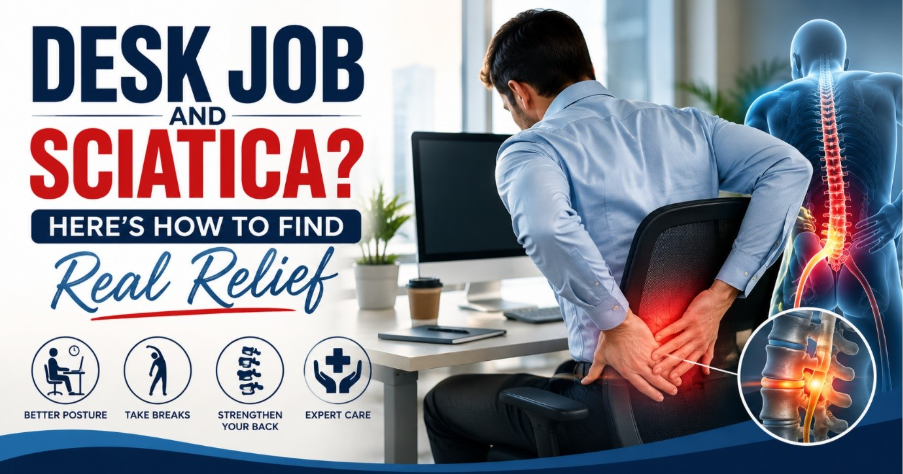
For millions of professionals, a typical workday involves sitting at a desk for six to ten hours. While modern office jobs may seem physically demanding, prolonged sitting places significant stress on the lower back, hips and spine. Over time, poor posture, inadequate ergonomic support and limited movement can contribute to one of the most common causes of radiating leg pain-sciatica pain from sitting.
A compressed or irritated sciatic nerve may trigger sciatica, causing discomfort that begins in the lower back and spreads along the path of the nerve into the leg. The resulting symptoms often include lower back pain, burning sensations, numbness, tingling or pain that travels from the buttock down the leg. For office workers, prolonged sitting can worsen these symptoms, making even routine daily activities uncomfortable.
Fortunately, sciatica doesn’t have to become a permanent part of your work life. With early intervention, lifestyle adjustments, proper ergonomics, targeted therapies and expert medical care, many people experience significant improvement without surgery.
Dr. Rodolfo Gari, MD, specializes in comprehensive pain management and believes that identifying the underlying cause of sciatica is essential for achieving long-term relief. Through personalized treatment plans and minimally invasive pain management techniques, he helps patients return to work and daily activities with greater comfort and mobility.
In this guide, you’ll learn why prolonged sitting contributes to sciatica, practical strategies for reducing pain during the workday and the most effective treatment options available.

What Causes Sciatica Pain from Sitting?
Beginning in the lower spine, the sciatic nerve extends through the hips and into the legs, earning its place as the longest nerve in the human body. For office workers, prolonged sitting increases pressure on the lumbar spine and surrounding muscles, especially when posture is poor.
Common causes include:
- Herniated discs
- Degenerative disc disease
- Piriformis syndrome
- Poor posture
- Weak core muscles
- Extended periods of sitting without movement
Remaining seated for hours at a time reduces blood circulation, tightens hip muscles, and increases pressure on spinal discs, making sciatica pain from sitting progressively worse.
Signs That Your Desk Job May Be Triggering Sciatica
Sciatica symptoms vary from person to person, but several warning signs are common among office workers.
These include:
- Pain extending from the lower back into the buttock and down the leg
- Persistent tingling or numbness in the calf or foot
- Burning sensations along the sciatic nerve
- Discomfort that becomes more noticeable after sitting for too long
- Difficulty standing after prolonged sitting
- Weakness in one leg
- Reduced mobility
If symptoms continue despite stretching or rest, it’s important to seek a professional evaluation before nerve irritation worsens.
Why Sitting Makes Sciatica Worse?
Sitting may appear restful, but it places considerable stress on the lower spine.
- Increased Disc Pressure
Research shows that sitting often creates greater pressure on spinal discs than standing or walking.
- Tight Hip Flexors
Long periods of sitting shorten hip muscles, increasing tension around the pelvis and lower back.
- Reduced Circulation
Remaining in one position decreases blood flow to muscles supporting the spine.
- Poor Posture
Slouching or leaning forward increases spinal compression and places additional strain on the sciatic nerve. These factors explain why many professionals experience worsening symptoms throughout the workday.
How to Relieve Sciatica While Sitting?
Although avoiding sitting altogether isn’t practical, several simple strategies can reduce discomfort.
Improve Your Ergonomics
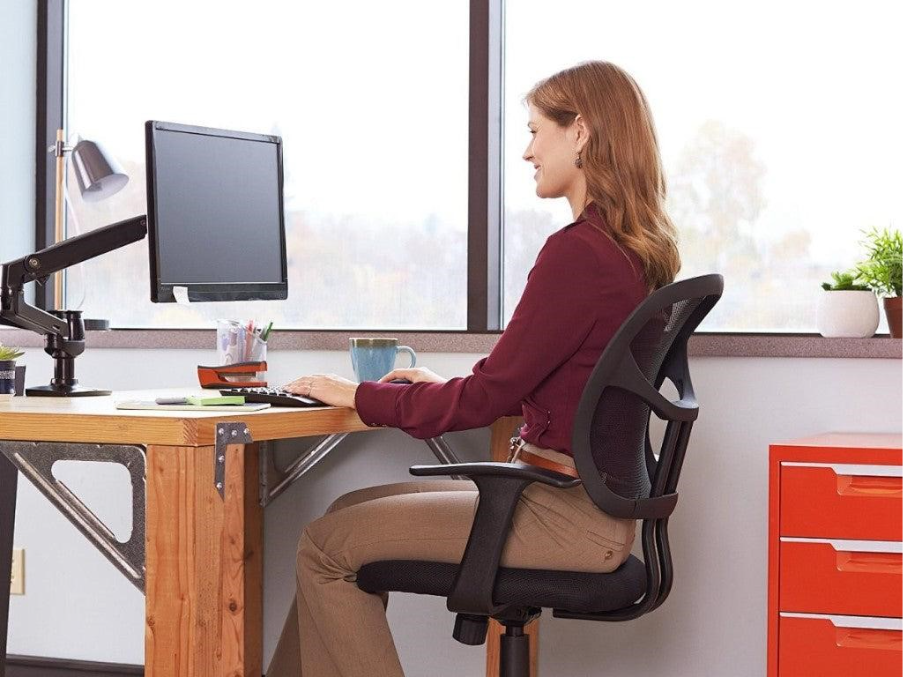
Adjust your workstation so:
- Feet rest flat on the floor
- Knees remain level with hips
- Lower back receives adequate support
- Monitor sits at eye level
- Elbows remain close to the body
Move Throughout the Day
Avoid sitting for long periods by standing, stretching or talking for a few minutes every 30–60 minutes.
Regular movement reduces pressure on spinal discs and improves circulation.
Use Proper Sitting Posture
Maintain a neutral spine while avoiding slouching or crossing your legs.
Stretch Throughout the Day
Gentle stretches targeting the hips, hamstrings and lower back help relieve muscle tension surrounding the sciatic nerve.
These simple habits provide effective desk job sciatica relief for many individuals.
Lifestyle Changes That Help Prevent Sciatica
Adopting simple preventive habits can help protect against recurring symptoms and promote better overall health.
Healthy habits include:
- Regular Exercise
Walking, swimming and low-impact strengthening exercises improve spinal stability.
- Core Strengthening
Strong abdominal and back muscles provide better spinal support.
- Maintain a Healthy Weight
Staying at a healthy weight helps protect the spine by reducing pressure and minimizing stress on the back muscles and joints.
- Quality Sleep
Sleeping on a supportive mattress helps reduce spinal stress overnight.
These long-term strategies complement professional sciatica treatment for office workers.
When Should You See a Pain Management Specialist?
Occasional discomfort may improve with self-care, but persistent symptoms require medical evaluation.
Consult a specialist if you experience:
- Pain lasting more than several weeks
- Increasing numbness
- Leg weakness
- Difficulty walking
- Severe pain affecting work
- Symptoms that interfere with sleep
Early diagnosis often prevents chronic nerve damage and improves treatment outcomes.
Patients seeking comprehensive pain evaluations benefit from identifying the exact source of sciatic nerve irritation before symptoms worsen.
Advanced Sciatica Treatment Options
Every patient’s condition is different.
Dr. Rodolfo Gari develops individualized treatment plans based on each patient’s diagnosis and lifestyle.
Treatment options may include:
- Physical Therapy
Targeted rehabilitation improves flexibility, posture and strength.
- Image-Guided Injections
Minimally invasive injections help reduce inflammation surrounding irritated nerves.
- Medication Management
Appropriate medications may help control inflammation and discomfort.
- Personalized Pain Management
Comprehensive treatment addresses both immediate symptoms and long-term recovery.
Patients exploring minimally invasive pain management treatments often find these therapies effective in restoring function without major surgery.

How Dr. Rodolfo Gari Helps Office Workers Find Lasting Relief?
Dr. Rodolfo Gari believes successful pain management begins with understanding each patient’s daily routine.
He takes a comprehensive approach to sciatica by identifying the root cause of sciatic nerve irritation and creating personalized treatment plans that help patients achieve lasting recovery.
Patients receive:
- Comprehensive Evaluations
Thorough diagnostic assessments identify the exact source of pain.
- Individualized Care Plans
Treatment recommendations are customized for each patient’s condition and work environment.
- Minimally Invasive Solutions
Whenever appropriate, non-surgical options are prioritized to reduce pain and improve mobility.
- Long-Term Prevention
Patients receive education on posture, ergonomics, stretching and lifestyle changes to reduce future flare-ups. This comprehensive approach helps many professionals return to comfortable, productive work.
Conclusion
Long hours at a desk don’t have to mean living with chronic back and leg pain. Understanding the causes of sciatica pain from sitting, maintaining proper workplace ergonomics, taking regular movement breaks and seeking early treatment can help office workers manage symptoms and improve their overall well-being.
Dr. Rodolfo Gari combines advanced diagnostics, personalized treatment plans and minimally invasive pain management techniques to help patients achieve lasting relief and regain their mobility.
If persistent sciatica is affecting your work or daily activities, professional evaluation can help identify the right treatment before symptoms become more severe. Book an appointment today.
Frequently Asked Questions
1. Can sitting all day cause sciatica?
Long hours of sitting can compress the lower spine and place additional pressure on the sciatic nerve, particularly when posture and ergonomics are not ideal. Over time, this may contribute to or worsen sciatica symptoms.
2. What is the best way to relieve sciatica while sitting at work?
Using an ergonomic chair, maintaining proper posture, taking regular movement breaks, stretching throughout the day and adjusting your workstation can help reduce sciatica discomfort while sitting.
3. When should I seek medical treatment for sciatica?
Persistent or worsening sciatica should not be ignored. If your symptoms last for several weeks, cause numbness or weakness or interfere with your daily life, consult a pain management specialist.