
Symptoms That Indicate Severe Foraminal Stenosis
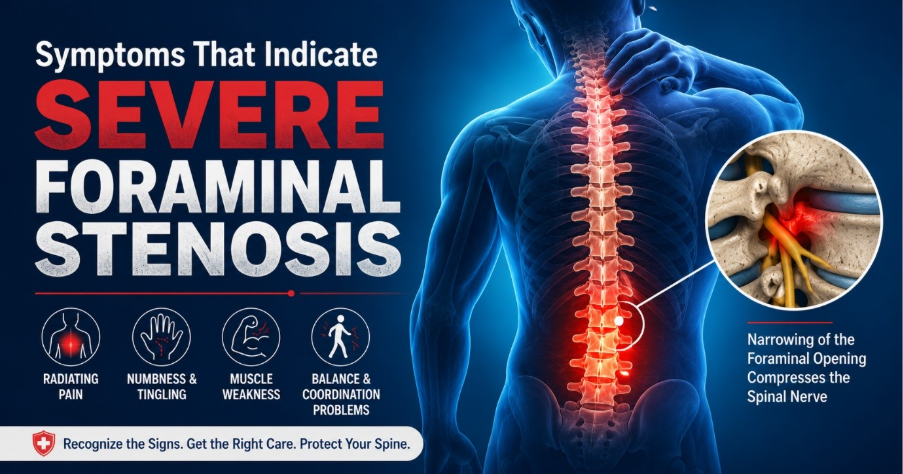
Are you dealing with neck or back pain that spreads to your arms or legs? While short-term discomfort often results from muscle strain or improper posture, ongoing pain combined with numbness, tingling or weakness could signal an underlying spinal issue that needs timely medical assessment. One of the most common warning signs is foraminal stenosis symptoms, which occur when the small openings (foramina) in the spine narrow and compress nearby spinal nerves.
Foraminal stenosis can develop gradually due to aging, arthritis, herniated discs, bone spurs, or degenerative spinal changes. In its early stages, symptoms may be mild and intermittent. However, when the condition becomes severe, nerve compression can significantly impact mobility, daily activities and overall quality of life. Ignoring these symptoms may lead to permanent nerve damage if left untreated.
Recognizing foraminal stenosis symptoms early allows patients to seek timely evaluation and appropriate treatment before complications worsen. From persistent pain and muscle weakness to balance issues and loss of coordination, these symptoms should never be overlooked.
In this article, you’ll learn how to recognize the signs of severe foraminal stenosis, understand why they occur and discover when it’s time to consult a spine specialist for expert diagnosis and treatment.
Understanding Foraminal Stenosis Symptoms
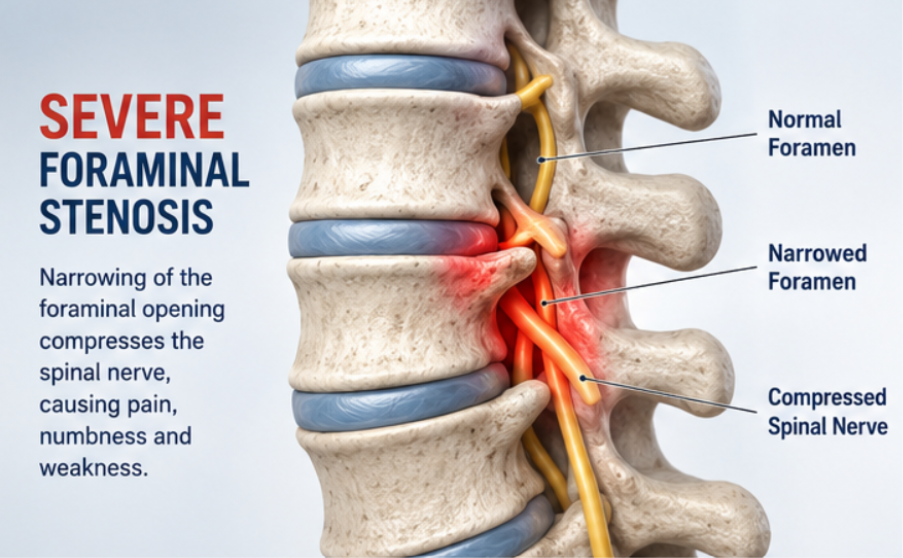
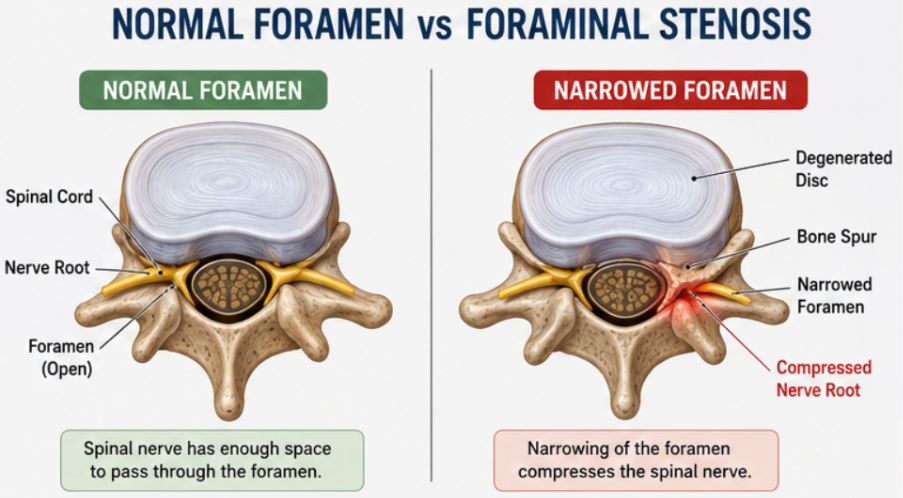
Before recognizing severe symptoms, it’s important to understand what foraminal stenosis is. The spine contains small openings called neural foramina that allow spinal nerves to travel from the spinal cord to different parts of the body. When these passageways become narrower, they may compress nearby spinal nerves, leading to symptoms of foraminal stenosis that differ based on the affected area and the extent of nerve pressure.
This narrowing most commonly affects the cervical (neck) and lumbar (lower back) spine, although it can occur anywhere along the spinal column.
What Causes Foraminal Stenosis?
Several spinal conditions can contribute to narrowing of the foramina, including:
- Age-related degeneration
- Herniated or bulging discs
- Bone spurs caused by arthritis
- Degenerative disc disease
- Thickened spinal ligaments
- Spinal injuries
- Spondylolisthesis
These conditions reduce the available space for spinal nerves, increasing pressure and triggering pain, numbness, or weakness.
Early Foraminal Stenosis Symptoms You Should Never Ignore
The earliest symptoms often appear gradually and may come and go depending on activity levels or body position. Many patients mistake these warning signs for routine muscle pain, delaying medical evaluation until nerve compression becomes more severe.
Common early symptoms include:
- Persistent neck or lower back pain
- Tingling sensations in the arms or legs
- Numbness in the hands, fingers, feet or toes
- Pain that travels from the spine to the shoulders or legs
- Mild muscle weakness
- Increased discomfort while standing or walking
Even if the symptoms appear manageable at first, they may worsen over time without appropriate diagnosis and treatment of the underlying cause.
Severe Foraminal Stenosis Symptoms That Require Immediate Medical Attention
As nerve compression increases, symptoms typically become more intense and begin interfering with daily activities. Severe foraminal stenosis symptoms indicate that nerves are under significant pressure and should be evaluated promptly by a spine specialist.
Persistent Radiating Pain
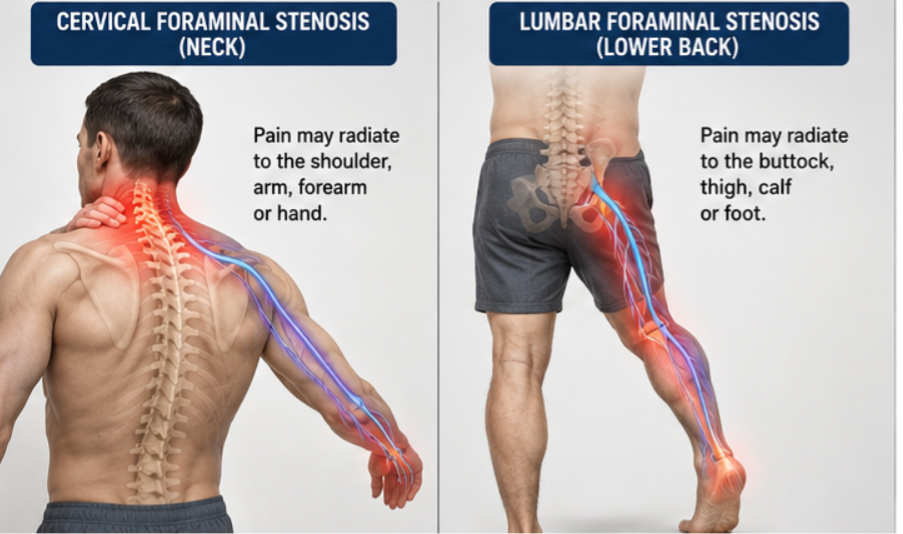
One of the hallmark signs of severe foraminal stenosis is sharp, burning or shooting pain that travels along the affected nerve pathway.
Depending on the location of the compression:
- Cervical foraminal stenosis may cause pain radiating into the shoulders, arms and hands.
- Lumbar foraminal stenosis often causes pain extending into the buttocks, thighs, calves or feet.
Unlike ordinary muscle soreness, nerve pain frequently worsens during walking, prolonged standing, bending or twisting.
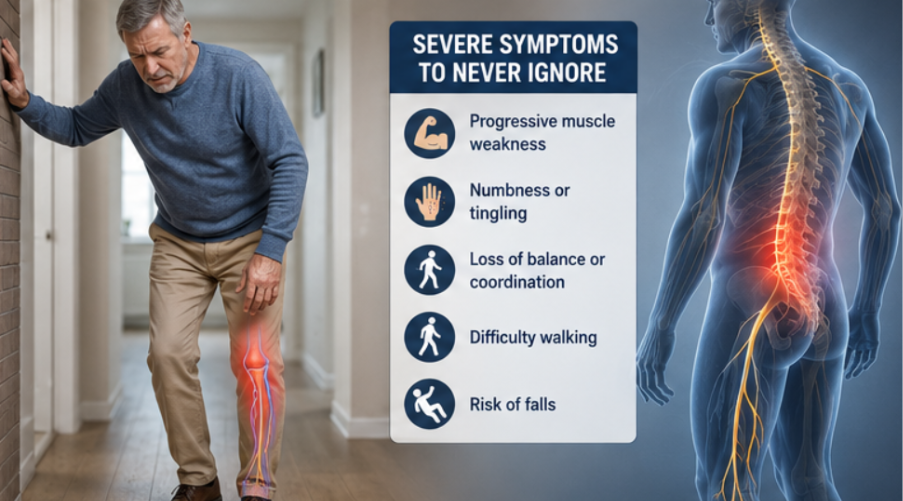
Progressive Muscle Weakness
Muscle weakness is one of the most concerning foraminal stenosis symptoms because it suggests that nerve function is becoming impaired.
Patients may notice:
- Difficulty gripping objects
- Trouble lifting the foot while walking
- Weakness climbing stairs
- Frequent stumbling
- Reduced hand coordination
- Difficulty performing everyday tasks
Without timely treatment, prolonged nerve compression may result in lasting weakness or reduced mobility.
Numbness and Tingling That Continues to Worsen
Occasional tingling may not always indicate a serious condition. However, persistent or worsening numbness often signals increasing nerve compression.
Patients commonly describe these sensations as:
- Pins and needles
- Burning feelings
- Reduced sensitivity to touch
- Loss of feeling in the fingers or toes
- Electric shock-like sensations
When numbness begins affecting balance, coordination or daily activities, prompt medical evaluation becomes essential.
Loss of Balance and Coordination
As severe nerve compression progresses, patients may have trouble maintaining balance or coordinating movements. These foraminal stenosis symptoms often develop gradually but can significantly affect independence and increase the risk of falls.
Warning signs include:
- Frequent stumbling or tripping
- Difficulty walking long distances
- Unsteady gait
- Reduced coordination in the hands or feet
- Difficulty maintaining balance while standing
If these symptoms continue to worsen, they may indicate significant nerve involvement requiring immediate medical attention.
When to Seek Medical Attention for Foraminal Stenosis Symptoms
While mild discomfort may improve with conservative treatments, severe foraminal stenosis symptoms should never be ignored. Prompt diagnosis and appropriate treatment of spinal conditions are essential for minimizing nerve damage and achieving better functional outcomes.
Consult a spine specialist if you experience:
- Persistent pain lasting several weeks
- Progressive numbness or tingling
- Increasing muscle weakness
- Difficulty walking or maintaining balance
- Pain that disrupts daily activities or affects sleep
Seek immediate medical attention if you experience:
- Loss of bladder or bowel control
- Unexpected loss of mobility in one limb
- Severe numbness in the groin or saddle region
- Rapidly worsening weakness
These symptoms may indicate serious spinal nerve compression requiring urgent treatment.
Diagnosis and Treatment Options
To diagnose severe foraminal stenosis, your physician will perform a physical examination, review your symptoms and recommend imaging tests such as MRI, CT scans or X-rays to identify the location and severity of nerve compression.
Based on the severity of the condition, your healthcare provider may recommend one or more of the following treatment options:
Physical therapy to improve flexibility and strength
- Anti-inflammatory medications
- Epidural steroid injections
- Activity modification
- Minimally invasive spinal decompression procedures
- Surgery for severe or persistent nerve compression
Prompt treatment often relieves pain, restores mobility, and prevents long-term complications.
Conclusion
Recognizing foraminal stenosis symptoms early is essential for protecting your spinal health and preventing permanent nerve damage. Persistent pain, numbness, muscle weakness and balance problems should never be dismissed as a normal part of aging. Receiving medical attention without delay helps your healthcare provider uncover the cause of your symptoms and determine the most appropriate course of treatment.
If you are experiencing persistent symptoms of foraminal stenosis, do not wait for them to progress. Book a consultation with an experienced spine specialist today for a thorough assessment and a personalized care plan designed to ease pain, improve mobility and promote lasting spinal health.
Frequently Asked Questions
1. What are the first signs of foraminal stenosis?
Early symptoms include neck or back pain, tingling, numbness and mild weakness that may radiate into the arms or legs.
2. Can foraminal stenosis heal without surgery?
Many mild to moderate cases improves with physical therapy, medications, lifestyle changes and spinal injections. Severe cases may require surgery if nerve compression persists.
3. When is foraminal stenosis considered severe?
The condition is considered severe when nerve compression causes progressive weakness, significant numbness, difficulty walking, balance problems or loss of bladder or bowel control.