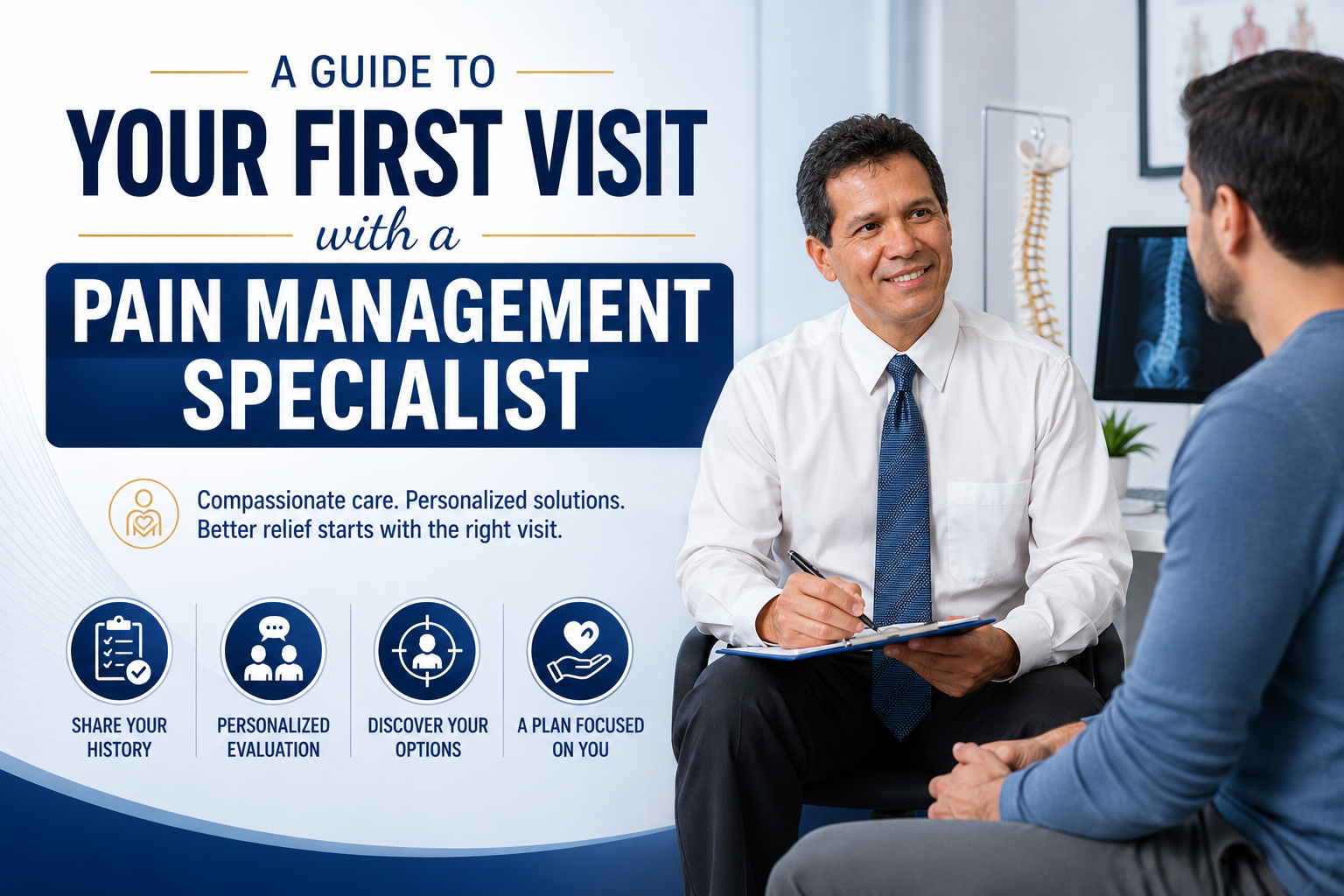
A Guide to Your First Visit with a Pain Management Specialist
Living with persistent pain can affect every aspect of daily life, from work productivity and physical activity to sleep quality and emotional well-being. If your primary care physician has referred you to a specialist or you’ve decided to seek expert help on your own, your first pain management consultation can feel both hopeful and overwhelming. Many patients are unsure what questions will be asked, what tests may be recommended or how treatment decisions are made. Understanding the process ahead of time can help reduce anxiety and allow you to get the most value from your appointment.
Have you ever wondered what happens during a pain specialist appointment and how providers determine the best treatment approach? Pain management specialists use a comprehensive evaluation process designed to identify the root cause of discomfort and develop personalized treatment plans. This approach goes beyond simply treating symptoms and focuses on improving function, mobility and quality of life. In this guide, you’ll learn about pain specialist visit expectations, understand the pain management evaluation process and gain insight into the pain assessment and diagnosis process that helps specialists create effective treatment strategies. By knowing what to expect, you can arrive prepared and take an active role in your care journey.
Understanding the Purpose of a First Pain Management Consultation
Why a First Pain Management Consultation Is Important?
A first pain management consultation serves as the foundation for your entire treatment journey. Unlike routine medical appointments that may focus on immediate symptom relief, pain management specialists take a broader and more comprehensive approach. They seek to understand how pain affects your daily activities, emotional health, work responsibilities and overall quality of life. This detailed evaluation helps identify potential underlying causes and allows providers to develop individualized treatment recommendations. Establishing a complete understanding of your condition early in the process often improves long-term outcomes and treatment success.
How Specialists Approach Chronic Pain?
Pain specialists recognize that chronic pain is often complex and influenced by multiple factors. During your initial appointment, providers evaluate physical symptoms alongside lifestyle, medical history, previous treatments and functional limitations. This holistic approach helps ensure that treatment plans address the full scope of your condition rather than focusing solely on symptom management. Understanding these pain specialist visit expectations can help patients feel more confident and prepared before arriving at their appointment. The goal is to create a collaborative partnership between patient and provider that supports long-term pain relief and improved function.
Preparing for Your First Pain Management Consultation
Medical Records and Documentation
Preparation can significantly improve the effectiveness of your first pain management consultation. Before your appointment, gather relevant medical records, imaging reports, medication lists and information regarding previous treatments. These documents provide valuable insights into your medical history and help specialists avoid unnecessary duplication of tests or procedures. Comprehensive records allow providers to gain a clearer understanding of your condition and make more informed treatment decisions. Being organized can also help streamline the overall evaluation process.
Keeping a Pain Journal
Many specialists encourage patients to track symptoms before their appointment. A pain journal may include information about pain intensity, triggers, activities that worsen symptoms and treatments that provide relief. This information can offer important clues during the pain management evaluation process. Detailed symptom tracking often helps providers identify patterns that may not be immediately apparent during a clinical examination. Consistent documentation can contribute significantly to a more accurate diagnosis and personalized treatment plan.
Pain Specialist Visit Expectations During Your Appointment
Discussing Your Medical History
One of the most important aspects of pain specialist visit expectations involves a detailed discussion of your medical history. Providers typically ask questions about the onset of symptoms, prior injuries, surgeries, medical conditions and previous treatment experiences. This conversation helps establish a comprehensive picture of your health and pain history. Specialists may also inquire about lifestyle factors, occupation, exercise habits and emotional well-being. The more detailed and accurate your responses, the more effectively providers can assess your condition.
Explaining Your Symptoms Clearly
Patients should be prepared to describe their pain in detail. Providers often ask about pain location, intensity, duration, frequency and factors that improve or worsen symptoms. Clear communication plays an important role in the pain assessment and diagnosis process. Describing symptoms accurately helps specialists narrow potential causes and determine appropriate diagnostic strategies. Open and honest communication also helps build trust and improves collaboration throughout treatment.
Understanding the Pain Management Evaluation Process
Physical Examination Procedures
The pain management evaluation process typically includes a comprehensive physical examination. Specialists assess posture, flexibility, strength, range of motion, reflexes and areas of tenderness. These findings help identify potential sources of pain and determine whether specific structures such as joints, muscles, nerves or discs may be contributing to symptoms. The examination also provides valuable information about functional limitations and mobility challenges. This step plays a crucial role in guiding diagnostic and treatment decisions.
Functional Assessments and Movement Analysis
Many specialists incorporate functional assessments into the pain management evaluation process. These evaluations may involve observing how patients walk, bend, stand or perform specific movements. Movement analysis helps providers identify biomechanical issues, muscle imbalances or movement patterns that contribute to discomfort. Understanding these factors allows specialists to develop targeted treatment strategies that address both symptoms and underlying causes. Functional assessments often reveal important information that imaging studies alone cannot provide.
The Pain Assessment and Diagnosis Process Explained
Identifying the Source of Pain
The pain assessment and diagnosis process focuses on determining the underlying cause of symptoms rather than simply treating discomfort. Providers combine information gathered from medical history, physical examination and diagnostic testing to create a comprehensive clinical picture. This approach helps distinguish between different pain conditions and ensures that treatment recommendations are based on accurate findings. Determining the actual source of pain often leads to more effective treatment strategies and improved outcomes over time.
Diagnostic Testing and Imaging
Depending on your symptoms, specialists may recommend imaging studies such as X-rays, MRI scans, CT scans or ultrasound evaluations. These tools provide detailed information about spinal structures, joints, nerves and surrounding tissues. Diagnostic testing serves as an important component of the pain assessment and diagnosis process when additional information is needed. Results help providers confirm diagnoses, rule out serious conditions and develop evidence-based treatment plans. Testing recommendations vary based on individual patient needs and clinical findings.
Treatment Recommendations After Your Evaluation
Personalized Treatment Planning
Following the first pain management consultation, specialists develop individualized treatment plans tailored to each patient’s condition and goals. Treatment recommendations may involve physical therapy, medication management, lifestyle changes, minimally invasive treatments or advanced pain management options. Personalized care plans are designed to address both symptom relief and long-term functional improvement. Treatment recommendations are guided by clinical evaluations, patient goals and overall health status. A collaborative approach to treatment planning helps keep patients actively engaged in their healthcare decisions.
Setting Realistic Expectations
Pain management often involves gradual improvement rather than immediate resolution of symptoms. Providers discuss realistic treatment goals and expected outcomes during follow-up planning. Understanding pain specialist visit expectations regarding recovery timelines can help patients maintain appropriate expectations throughout treatment. Consistent communication and regular monitoring allow providers to adjust treatment strategies as needed. A patient-centered approach supports better long-term results and satisfaction.
Becoming an Active Partner in Your Pain Management
Staying Engaged in Treatment
Successful pain management requires active participation from both patients and providers. Following treatment recommendations, attending appointments and communicating openly about progress are essential components of effective care. Patients who actively participate in their care often achieve better treatment outcomes and enhanced quality of life. Consistency and commitment help maximize the benefits of treatment interventions. Active participation also strengthens the provider-patient relationship.
Building a Long-Term Partnership
Pain management is often an ongoing process that evolves over time. Building a strong relationship with your specialist helps ensure that treatment plans continue to reflect your evolving needs and objectives. Regular communication supports timely adjustments and continued progress. Viewing your first pain management consultation as the start of a collaborative partnership can help you approach treatment with greater confidence and a positive outlook. Long-term partnerships often contribute to more successful outcomes.
Conclusion
Your first pain management consultation is an important step toward understanding the source of your symptoms and developing an effective treatment strategy. By learning about pain specialist visit expectations, understanding the pain management evaluation process and becoming familiar with the pain assessment and diagnosis process, patients can feel more prepared and confident when meeting with a specialist. A comprehensive evaluation helps establish a personalized treatment plan aimed at reducing pain, improving mobility and enhancing overall quality of life. Taking an active role in your treatment journey can help maximize results and support long-term success.
If chronic pain is affecting your daily well-being, seeking guidance from a qualified pain management specialist may be a valuable next step. Prompt evaluation combined with a personalized care plan can help uncover the source of symptoms and guide patients toward better function and lasting relief.