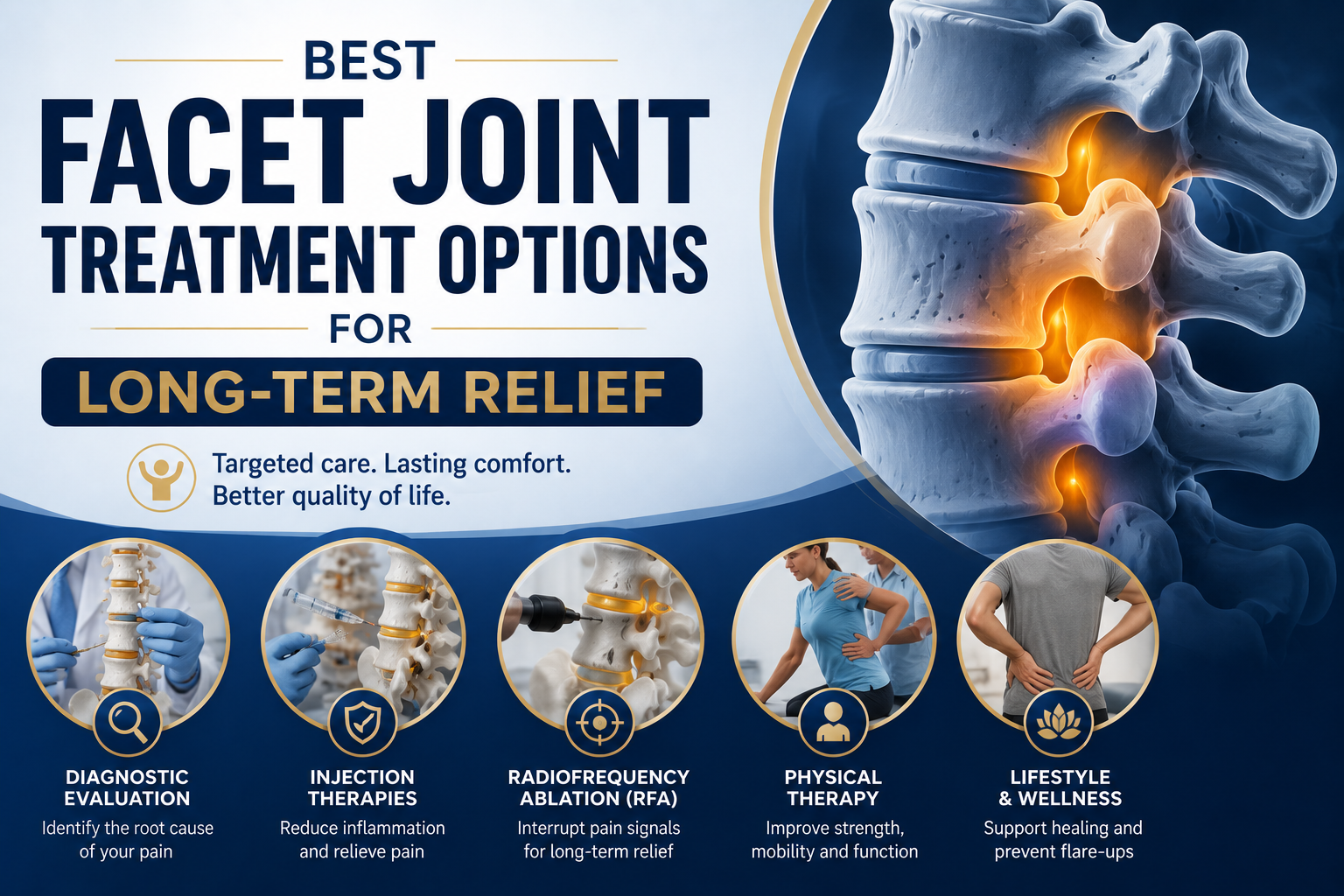
Best Facet Joint Treatment Options for Long-Term Relief
Persistent back pain can interfere with nearly every aspect of daily life. From difficulty performing routine activities to limitations in work, exercise and sleep, ongoing discomfort often affects both physical and emotional well-being. For many people, pain may originate from the facet joints, which are small joints between the vertebrae that provide spinal stability and facilitate movement. When these joints become inflamed or degenerate over time, finding an effective facet joint treatment becomes a priority.
Have you been dealing with chronic back pain that worsens when standing, twisting or bending? If so, facet joint dysfunction may be contributing to your symptoms. Understanding the available treatment options can help patients make informed decisions and pursue strategies that provide meaningful relief.
This article explores the causes of facet joint pain, diagnostic methods, conservative therapies, interventional procedures and long-term management approaches. Understanding today’s facet joint treatment options and their potential advantages can help patients collaborate with healthcare providers to create individualized care plans that support better function, pain relief and overall well-being.
Understanding Facet Joint Treatment and Why It Matters
Facet joints are essential components of spinal stability and movement.
These joints guide motion while preventing excessive spinal movement that could damage surrounding structures.
What Are Facet Joints?
Located at the rear of the spine, facet joints help connect adjacent vertebrae.
Their primary functions include:
- Supporting spinal stability
- Facilitating movement
- Controlling flexibility
- Protecting spinal alignment
When degeneration or inflammation occurs, patients often seek facet joint treatment to help reduce symptoms and restore function.
Common Causes of Facet Joint Pain ?
Several factors may contribute to facet joint problems, including:
- Age-related degeneration
- Arthritis
- Repetitive stress
- Previous injuries
- Poor posture
These conditions frequently contribute to chronic back pain and reduced mobility.
Why Early Treatment Is Important?
Prompt intervention may help:
- Reduce inflammation
- Improve movement
- Prevent worsening symptoms
- Support long-term spinal health
Early evaluation often allows healthcare providers to recommend appropriate facet joint treatment options before symptoms become severe.
Diagnosing the Need for Facet Joint Treatment
Accurate diagnosis plays an important role in successful treatment planning.
Because many spinal conditions produce similar symptoms, healthcare providers use multiple assessment methods.
Medical History and Symptom Review
The diagnostic process typically begins with a detailed evaluation.
Providers assess:
- Pain location
- Symptom duration
- Activity limitations
- Previous treatments
Understanding symptom patterns helps determine whether facet joints contribute to chronic back pain.
Physical Examination
During an examination, providers evaluate:
- Spinal mobility
- Posture
- Range of motion
- Areas of tenderness
These findings may support the need for further diagnostic testing.
Imaging Studies
Common imaging tools include:
- X-rays
- MRI scans
- CT scans
These studies help identify degenerative changes that may require facet joint treatment.
Diagnostic Injections
Facet joint injections may serve both diagnostic and therapeutic purposes.
Pain relief following injection often confirms the facet joints as a significant source of symptoms.
Conservative Facet Joint Treatment Options
Many patients begin with non-surgical approaches before considering advanced procedures.
Physical Therapy
Physical therapy remains one of the most recommended forms of facet joint treatment.
Benefits may include:
- Improved flexibility
- Better posture
- Increased strength
- Reduced joint stress
Targeted exercises often help manage chronic back pain effectively.
Medication Management
Healthcare providers may recommend:
- Anti-inflammatory medications
- Pain relievers
- Muscle relaxants
These treatments may reduce symptoms while supporting participation in rehabilitation programs.
Lifestyle Modifications
Simple lifestyle adjustments can significantly impact spinal health.
Helpful strategies include:
- Weight management
- Regular exercise
- Ergonomic improvements
- Smoking cessation
These changes may complement other facet joint treatment approaches.
Activity Modification
Patients may benefit from avoiding activities that aggravate symptoms.
Temporary modifications often reduce irritation and promote healing.
Interventional Facet Joint Treatment Procedures
If conservative treatments fail to provide adequate symptom relief, interventional procedures may become an option.
Facet Joint Injections
Facet joint injections deliver medication directly into affected joints.
Potential benefits include:
- Reduced inflammation
- Temporary pain relief
- Improved mobility
- Diagnostic confirmation
This form of facet joint treatment is frequently used for both evaluation and symptom management.
Medial Branch Blocks
These injections target nerves that transmit pain signals from facet joints.
Pain relief following treatment may help identify appropriate candidates for additional procedures.
Radiofrequency Ablation
Radiofrequency ablation is a minimally invasive procedure that disrupts pain-transmitting nerves.
Many patients experiencing chronic back pain achieve longer-lasting relief through this technique.
Benefits of Interventional Procedures
Potential advantages include:
- Reduced reliance on medication
- Improved function
- Faster recovery
- Minimally invasive treatment
These procedures often play an important role in comprehensive facet joint treatment plans.
Advanced Facet Joint Treatment Strategies
Some patients require more comprehensive management approaches.
Multidisciplinary Pain Management
Pain specialists often collaborate with:
- Physical therapists
- Rehabilitation experts
- Spine specialists
- Primary care providers
This coordinated approach supports individualized facet joint treatment planning.
Regenerative Medicine Approaches
Emerging therapies may focus on supporting tissue healing and reducing inflammation.
Although research continues, some patients explore regenerative options as part of broader treatment strategies.
Surgical Considerations
Surgery is typically reserved for specific cases involving structural abnormalities or severe symptoms.
The majority of patients with chronic back pain experience improvement with non-surgical treatment approaches.
Personalized Care Plans
Successful outcomes often depend on tailoring treatment to individual needs.
Factors influencing treatment selection include:
- Age
- Health status
- Symptom severity
- Functional goals
Personalized facet joint treatment plans help optimize results.
Long-Term Management of Chronic Back Pain
Achieving relief often requires ongoing attention to spinal health.
Building Strong Supporting Muscles
Strengthening exercises may help:
- Improve stability
- Reduce joint stress
- Enhance posture
- Prevent recurrence
These benefits support long-term management of chronic back pain.
Maintaining Healthy Movement Patterns
Proper body mechanics reduce strain on facet joints.
Healthcare providers frequently recommend movement strategies designed to protect spinal structures.
Monitoring Symptoms
Regular follow-up visits help providers evaluate treatment effectiveness.
Treatment plans may be modified over time in response to changes in symptoms.
Preventing Future Flare-Ups
Patients can reduce recurrence risks by:
- Staying active
- Maintaining healthy weight
- Following exercise programs
- Practicing good posture
These habits complement long-term facet joint treatment success.
Choosing the Right Facet Joint Treatment for Your Needs
All patient experiences pain differently.
Determining the best course of treatment requires a comprehensive evaluation of the patient’s condition.
Factors Influencing Treatment Decisions
Healthcare providers consider:
- Symptom severity
- Diagnostic findings
- Overall health
- Lifestyle demands
These factors help determine the most suitable facet joint treatment approach.
Questions to Discuss with Your Provider
Patients may benefit from asking:
- What is causing my pain?
- Which treatment options are available?
- What outcomes should I expect?
- How long will recovery take?
Clear communication supports informed decision-making.
Setting Realistic Expectations
Improvement often occurs gradually.
Many patients experience meaningful reductions in chronic back pain through consistent treatment and lifestyle adjustments.
Conclusion
Facet joint dysfunction can significantly affect mobility, comfort and overall quality of life. Fortunately, a wide range of facet joint treatment options are available, from physical therapy and medications to advanced interventional procedures such as radiofrequency ablation. Identifying the root cause of symptoms and following an individualized treatment approach can help patients find lasting relief from chronic back pain and promote long-term spinal wellness. Early evaluation and appropriate treatment often provide the best opportunity for improved function and lasting comfort.
If ongoing back pain is limiting your daily activities, schedule a consultation with a spine or pain management specialist to discuss diagnostic options and personalized treatment strategies designed to help you achieve long-term relief.