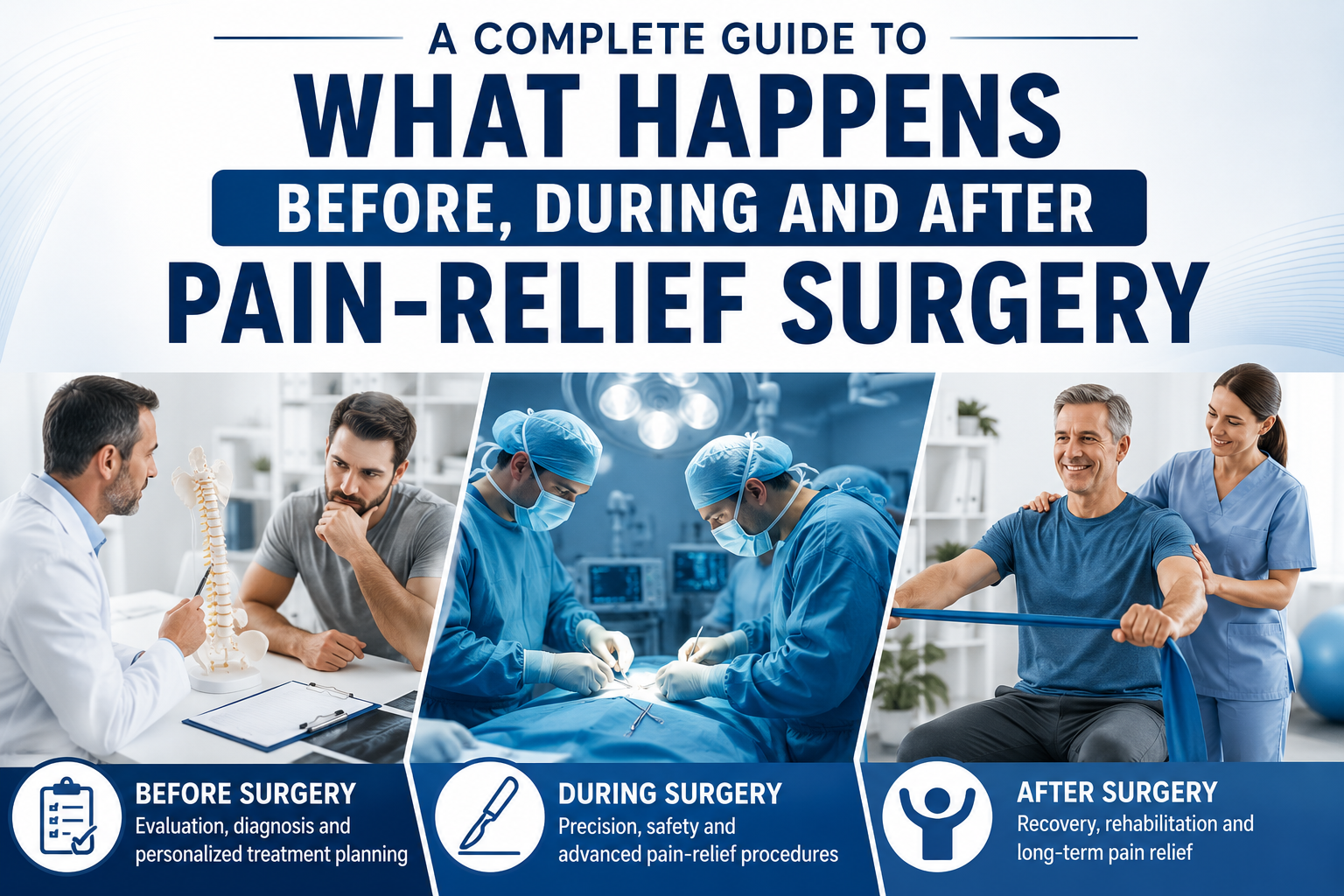
A Complete Guide to What Happens Before, During and After Pain-Relief Surgery
Daily activities can become more challenging when chronic pain is part of everyday life. From limiting mobility to interfering with work, sleep and personal activities, persistent pain often reduces quality of life and makes even simple tasks difficult. For some patients, conservative treatments such as medications, physical therapy or injections may no longer provide adequate relief. In these situations, understanding the pain relief surgery process becomes an important step toward exploring long-term treatment options.
Many patients’ considering surgery has questions about what will happen before the procedure, what occurs during the operation and how recovery unfolds afterward. Concerns about preparation, recovery timelines and potential outcomes are common. Understanding the complete journey can help patients feel more confident and informed as they move forward with treatment decisions.
This article provides a comprehensive overview of the surgical experience, including what to expect before surgery, what happens during common pain relief procedures USA specialists perform and the importance of proper pre- and post-surgery care. By understanding each stage of the process, patients can prepare effectively and improve their chances of a successful outcome.
Understanding the Pain Relief Surgery Process
Pain-relief surgery is not a single procedure. Instead, it refers to various surgical interventions designed to reduce chronic pain, restore function and improve quality of life.
Why Surgery may be recommended?
Most healthcare providers recommend surgery only after conservative treatments have been exhausted.
Common reasons include:
- Chronic back pain
- Herniated discs
- Spinal stenosis
- Nerve compression
- Joint degeneration
- Certain chronic pain disorders
The goal of the pain relief surgery process is to address the underlying cause of pain rather than simply manage symptoms.
Types of Pain Relief Procedures USA Specialists Perform
Several common pain relief procedures USA healthcare providers may recommend include:
- Spinal decompression surgery
- Discectomy
- Spinal fusion
- Joint replacement
- Nerve stimulation procedures
- Minimally invasive spine surgery
Each procedure has unique preparation requirements and recovery expectations.
Determining Surgical Eligibility
Not every patient is a candidate for surgery.
Healthcare providers evaluate:
- Medical history
- Imaging results
- Severity of symptoms
- Response to prior treatments
- Overall health condition
Understanding these evaluations helps patients better understand what to expect before surgery.
What to Expect Before Surgery
Effective surgical outcomes often begin with careful preparation.
Patients who understand what to expect before surgery often experience less anxiety and better recovery outcomes.
Initial Consultation and Evaluation
The surgical process usually begins with a detailed consultation.
During this stage providers review:
- Medical history
- Current symptoms
- Previous treatments
- Imaging studies
- Surgical goals
This evaluation helps determine whether surgery represents the most appropriate treatment option.
Preoperative Testing
Most patients undergo testing before surgery.
Common tests include:
- Blood work
- Electrocardiogram (EKG)
- Imaging studies
- Physical examination
These assessments help identify potential risks and ensure readiness for the procedure.
Preparing for the Procedure
Patients may receive instructions regarding:
- Medication adjustments
- Fasting requirements
- Transportation arrangements
- Recovery planning
Knowing what to expect before surgery allows patients to prepare both physically and mentally for the upcoming procedure.
Building a Recovery Plan
Recovery planning often begins before surgery.
Patients should prepare:
- Comfortable recovery spaces
- Assistance with daily activities
- Follow-up appointments
- Transportation needs
Effective planning supports successful pre and post surgery care and improves the recovery experience.
What Happens During the Pain Relief Surgery Process?
The day of surgery involves several carefully coordinated steps.
Understanding these stages can help reduce uncertainty and improve confidence.
Hospital or Surgical Center Admission
Patients typically arrive several hours before the procedure.
Healthcare teams review:
- Medical records
- Consent forms
- Vital signs
- Surgical plans
This stage marks an important milestone in the overall pain relief surgery process.
Anesthesia Administration
Depending on the procedure patients may receive:
- General anesthesia
- Regional anesthesia
- Local anesthesia with sedation
Anesthesia specialists monitor patients continuously throughout the operation.
The Surgical Procedure
Specific steps vary depending on the surgery performed.
For example:
- Spinal decompression removes pressure on nerves.
- Joint replacement replaces damaged joint surfaces.
- Nerve stimulation procedures involve implanting specialized devices.
Many modern pain relief procedures USA providers offer utilize minimally invasive techniques that reduce tissue disruption and support faster recovery.
Post-Anesthesia Recovery
Following surgery, patients are relocated to a recovery unit where medical staff can closely monitor their condition.
Healthcare teams monitor:
- Heart rate
- Blood pressure
- Oxygen levels
- Pain levels
These immediate recovery measures support effective pre- and post-surgery care.
The First Few Days After Surgery
The recovery period begins immediately after the procedure.
Patients often experience soreness and temporary discomfort as healing begins.
Managing Postoperative Pain
Pain management strategies may include:
- Prescription medications
- Ice therapy
- Positioning techniques
- Physical therapy
Pain management remains an important component of the pain relief surgery process.
Monitoring for Complications
Healthcare providers monitor for:
- Infection
- Excessive swelling
- Bleeding
- Neurological changes
Early identification of complications helps support safer recovery outcomes.
Returning Home
Discharge instructions often cover:
- Activity restrictions
- Medication schedules
- Wound care
- Follow-up visits
Understanding what to expect before surgery often includes preparing for these early recovery responsibilities.
The Value of Proper Care Before and After Surgery
Successful outcomes depend on more than the operation itself.
Comprehensive pre- and post-surgery care significantly influences recovery quality.
Following Medical Instructions
Patients should closely follow provider recommendations regarding:
- Activity levels
- Medications
- Wound care
- Follow-up appointments
These actions help minimize complications.
Physical Therapy and Rehabilitation
Many patients benefit from rehabilitation programs.
Physical therapy may help:
- Restore mobility
- Improve strength
- Reduce stiffness
- Support long-term recovery
Effective pre- and post-surgery care often includes structured rehabilitation plans.
Lifestyle Adjustments
Long-term recovery may involve:
- Weight management
- Exercise programs
- Ergonomic improvements
- Healthy nutrition
These changes can improve surgical outcomes and reduce future pain risks.
Long-Term Recovery and Results
Recovery timelines vary depending on procedure type and individual health factors.
While some individuals recover within weeks, others may need months to achieve full recovery.
Factors Affecting Recovery
Recovery outcomes may be influenced by:
- Age
- Overall health
- Surgical complexity
- Compliance with instructions
- Rehabilitation participation
Realistic Expectations
Surgery often reduces pain and improves function.
However, patients should understand that recovery is gradual.
The pain relief surgery process involves healing stages that require patience and commitment.
Maintaining Long-Term Results
Patients can support lasting benefits through:
- Ongoing exercise
- Proper body mechanics
- Follow-up care
- Healthy lifestyle choices
Many pain relief procedures USA specialists emphasize long-term maintenance to maximize outcomes.
Conclusion
The journey through surgery involves preparation, treatment and recovery. Understanding the pain relief surgery process helps patients make informed decisions and approach treatment with greater confidence. From learning what to expect before surgery to following comprehensive pre- and post-surgery care, each stage plays an important role in achieving successful outcomes. Modern pain relief procedures USA specialists perform continue to provide effective options for patients seeking long-term relief from chronic pain.
If chronic pain is affecting your daily life, schedule a consultation with a qualified pain management specialist to discuss available treatment options and determine whether surgery may be appropriate for your condition.