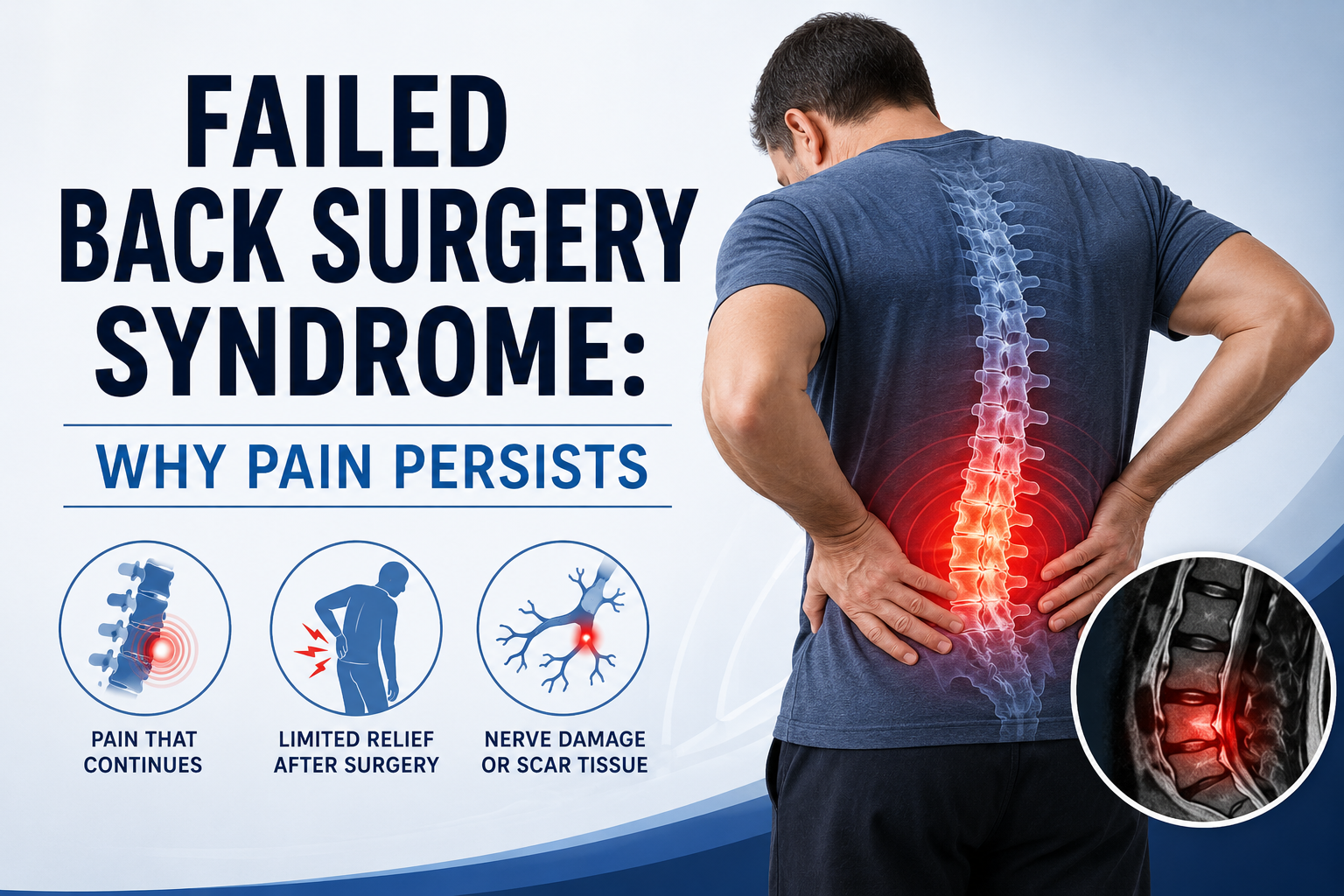
Failed Back Surgery Syndrome: Why Pain Persists
Back surgery is often performed to relieve chronic pain, improve mobility and address structural problems affecting the spine. While many patients experience significant improvement following surgery, some continue to struggle with pain long after the procedure has been completed. For these individuals, ongoing discomfort can be frustrating, confusing and emotionally challenging. This condition is commonly known as failed back surgery syndrome and affects patients whose symptoms persist or return after spinal surgery.
Have you undergone back surgery only to find that your pain never completely disappeared? Or perhaps your symptoms improved initially but gradually returned months later. Understanding why pain persists after surgery is essential for identifying appropriate treatment options and improving long-term outcomes.
This article explores the causes of failed back surgery syndrome, discusses common FBSS symptoms, examines risk factors that contribute to persistent pain and reviews available treatment approaches. By understanding the factors involved, patients can work more effectively with healthcare providers to develop personalized strategies for managing symptoms and improving quality of life.
Understanding Failed Back Surgery Syndrome
Not every spinal surgery achieves the expected outcome.
Although surgical procedures often address structural abnormalities successfully, some patients continue to experience pain despite technically successful operations.
What Is Failed Back Surgery Syndrome?
Failed back surgery syndrome is a term used to describe chronic pain that continues or develops after spinal surgery.
Good posture can reduce unnecessary pressure on the facet joints. Simple modifications to daily habits and workspaces may promote lasting spinal health. Instead, it refers to situations where surgery does not fully eliminate symptoms or where new pain develops after treatment.
Why the Condition Is Complex
Persistent pain after surgery can result from multiple factors.
These may include:
- Ongoing nerve irritation
- Scar tissue formation
- Recurrent disc problems
- Adjacent segment degeneration
- Misdiagnosed pain sources
Because several mechanisms may contribute simultaneously, failed back surgery syndrome often requires comprehensive evaluation.
How Common Is It?
The likelihood of persistent pain varies depending on the procedure performed and the underlying condition being treated.
Healthcare providers emphasize realistic expectations because surgery may not eliminate all symptoms for every patient.
Common FBSS Symptoms Patients Experience
Recognizing symptoms is an important step toward obtaining appropriate treatment.
Persistent Back Pain
One of the most common FBSS symptoms is ongoing pain in the lower back.
This discomfort may:
- Remain unchanged after surgery
- Return after temporary improvement
- Gradually worsen over time
Pain intensity varies among individuals.
Leg Pain and Nerve Symptoms
Many patients report:
- Radiating leg pain
- Numbness
- Tingling sensations
- Muscle weakness
These FBSS symptoms may indicate continued nerve involvement despite previous treatment.
Reduced Mobility
Persistent pain can make routine activities difficult.
Patients may experience:
- Difficulty walking
- Reduced flexibility
- Trouble standing for long periods
- Limitations during daily activities
Emotional and Psychological Effects
Chronic pain often affects emotional well-being.
Some individuals with failed back surgery syndrome may experience:
- Anxiety
- Depression
- Sleep disturbances
- Reduced quality of life
Addressing both physical and emotional symptoms is often important for successful management.
Why Failed Back Surgery Syndrome Occurs
Understanding potential causes helps explain why pain may continue after surgery.
Scar Tissue Formation
Scar tissue naturally develops during healing.
In some cases, excessive scar tissue may irritate nearby nerves and contribute to ongoing pain associated with failed back surgery syndrome.
Recurrent Disc Herniation
A previously treated disc may herniate again.
This recurrence can create symptoms like those experienced before surgery and may contribute to persistent discomfort.
Incorrect Diagnosis
Successful surgery depends on identifying the correct source of pain.
If another structure contributes to symptoms, surgery may not fully resolve the problem.
Nerve Damage
Long-standing nerve compression may cause permanent nerve changes.
Even after pressure is relieved, pain may persist due to ongoing nerve sensitivity.
These mechanisms frequently contribute to FBSS symptoms that continue after surgery.
Risk Factors for Failed Back Surgery Syndrome
Certain factors may increase the likelihood of persistent pain.
Multiple Prior Surgeries
Patients who undergo several spinal procedures often face greater risks.
Each operation may alter spinal anatomy and increase complexity.
Advanced Degenerative Changes
Conditions such as:
- Degenerative disc disease
- Arthritis
- Spinal instability
can increase the risk of developing failed back surgery syndrome.
Smoking and Lifestyle Factors
Smoking may impair healing and reduce surgical success.
Other contributing factors include:
- Physical inactivity
- Obesity
- Poor overall health
Psychological Factors
Research suggests emotional health can influence recovery outcomes.
Stress, anxiety and depression may affect pain perception and recovery experiences.
Diagnosing Failed Back Surgery Syndrome
Accurate diagnosis is essential for identifying appropriate treatment options.
Comprehensive Medical History
Healthcare providers review:
- Previous surgeries
- Symptom progression
- Current limitations
- Treatment history
This information helps determine potential causes of persistent pain.
Physical Examination
Providers evaluate:
- Strength
- Reflexes
- Mobility
- Sensory function
These assessments help identify sources of ongoing symptoms.
Imaging Studies
Diagnostic testing may include:
- MRI scans
- CT scans
- X-rays
These studies help detect structural issues associated with failed back surgery syndrome.
Diagnostic Procedures
Additional evaluations may include:
- Nerve conduction studies
- Diagnostic injections
- Electromyography
These tests help clarify the source of FBSS symptoms.
Treatment Options for Failed Back Surgery Syndrome
Treatment depends on the specific cause of symptoms and individual patient needs.
Conservative Management
Many patients benefit from non-surgical approaches.
Options may include:
- Physical therapy
- Medication management
- Activity modification
- Exercise programs
These treatments often help improve function and reduce pain.
Interventional Pain Procedures
Healthcare providers may recommend:
- Epidural steroid injections
- Nerve blocks
- Radiofrequency ablation
These interventions may help manage symptoms associated with failed back surgery syndrome.
Spinal Cord Stimulation
Spinal cord stimulation is commonly considered for patients experiencing persistent nerve-related pain.
The therapy delivers mild electrical signals that may alter pain perception.
Many individuals with severe FBSS symptoms achieve meaningful relief through this treatment.
Revision Surgery
In selected cases, additional surgery may be appropriate.
Revision procedures are typically considered only after careful evaluation confirms a correctable structural problem.
Living With Failed Back Surgery Syndrome
Long-term management often focuses on improving function and quality of life.
Setting Realistic Expectations
Understanding that improvement may be gradual can help patients maintain realistic expectations during recovery.
Treatment goals often include:
- Pain reduction
- Improved mobility
- Increased independence
- Better daily functioning
Physical Rehabilitation
Structured rehabilitation programs can help patients:
- Strengthen supporting muscles
- Improve flexibility
- Enhance endurance
- Restore confidence in movement
Emotional Support
Managing chronic pain may require emotional support resources.
Patients often benefit from:
- Counselling
- Support groups
- Stress-management techniques
Addressing emotional well-being can improve overall outcomes.
Long-Term Self-Care Strategies
Successful symptom management may include:
- Regular exercise
- Healthy weight management
- Smoking cessation
- Consistent medical follow-up
These strategies often help individuals living with failed back surgery syndrome maintain better quality of life.
Preventing Persistent Pain After Surgery
Although not all cases can be prevented, certain steps may reduce risk.
Careful Patient Selection
Appropriate surgical candidates generally achieve better outcomes.
Healthcare providers evaluate multiple factors before recommending surgery.
Thorough Diagnostic Evaluation
Accurate diagnosis remains essential.
Identifying the true source of pain improves treatment planning and outcome expectations.
Following Postoperative Instructions
Patients should adhere closely to recommendations regarding:
- Activity restrictions
- Physical therapy
- Follow-up appointments
- Medication usage
These measures support optimal recovery and may reduce the likelihood of developing persistent FBSS symptoms.
Conclusion
Persistent pain after spinal surgery can be frustrating, but understanding the causes behind failed back surgery syndrome is an important step toward finding effective treatment. Whether symptoms result from scar tissue, nerve irritation, recurrent structural problems or other factors, a comprehensive evaluation can help identify appropriate management strategies. From physical therapy and interventional treatments to advanced therapies such as spinal cord stimulation, multiple options are available to improve function and quality of life. If you continue to experience pain after back surgery, consulting a qualified spine or pain management specialist can help determine the most effective path forward.
Experiencing ongoing pain after spinal surgery? Schedule an appointment with a spine or pain specialist to discuss diagnostic approaches and customized treatment options tailored to your needs.