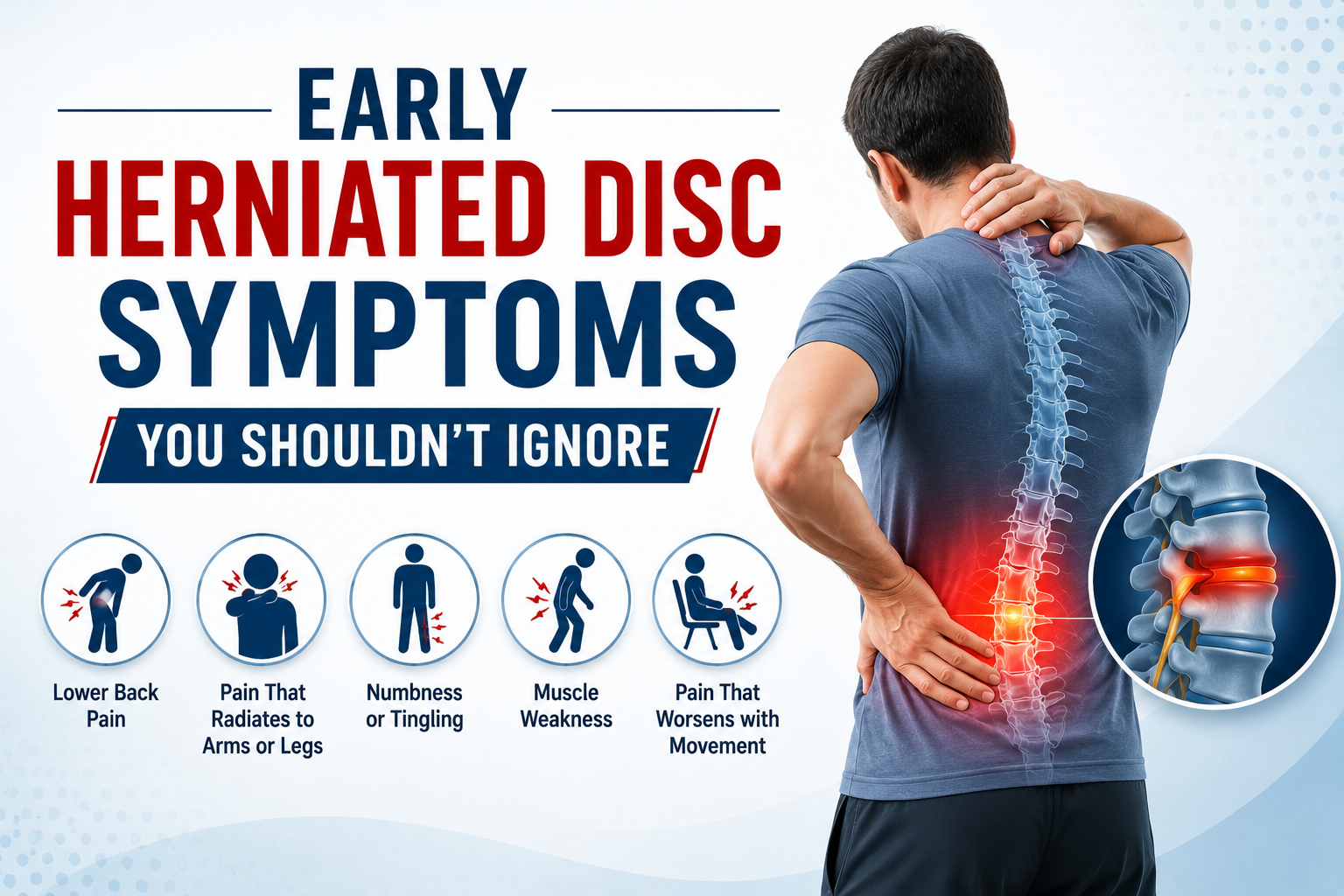
Early Herniated Disc Symptoms You Shouldn’t Ignore
Have you been experiencing persistent back pain tingling sensations or unexplained numbness that does not seem to go away? These symptoms may appear minor at first, but they could signal a more serious spinal condition. A herniated disc symptom often develops gradually which makes it easy for many people to overlook the early warning signs until the condition begins affecting daily activities.
The primary role of spinal discs is to absorb shock between the bones of the spine. They absorb shock and allow the spine to move comfortably. When one of these discs becomes damaged the soft inner material can push through the outer layer and place pressure on nearby nerves. This process is known as disc herniation. Depending on the location and severity of the problem symptoms can range from mild discomfort to significant pain and weakness.
Recognizing a herniated disc symptom early can help prevent complications and improve treatment outcomes. Early intervention often allows patients to manage symptoms with conservative treatments before more advanced procedures become necessary. Understanding the signs of early disc issues can also help individuals seek medical attention before nerve damage progresses.
In this guide we will explore the most common symptoms of a herniated disc explain how the condition develops discuss risk factors and review when professional evaluation becomes essential.
Understanding a Herniated Disc Symptom
Before discussing symptoms, it is important to understand what happens during a disc herniation.
The spine contains a series of vertebrae separated by discs. Each disc consists of a tough outer layer and a soft gel-like centre. These structures work together to absorb pressure and support flexibility.
Over time age-related wear repetitive stress poor posture and injuries can weaken the outer disc wall. When this outer layer develops a tear or weak spot the inner material may push outward. If the displaced material irritates or compresses nearby nerves symptoms can develop.
A herniated disc symptom can vary depending on the location of the affected disc. Some individuals experience only mild discomfort while others develop severe pain numbness or muscle weakness.
Several factors increase the risk of disc herniation including:
- Aging and disc degeneration
- Heavy lifting
- Repetitive bending
- Obesity
- Smoking
- Sedentary lifestyle
- Poor posture
- Occupational strain
People who understand these risk factors are often better prepared to recognize early disc issues before symptoms become more severe.
Persistent Back or Neck Pain
One of the earliest warning signs of a disc herniation is persistent pain in the neck or lower back.
Many people initially assume the discomfort is caused by muscle strain or fatigue. However, pain associated with a herniated disc often behaves differently. It may continue for weeks or months and may become worse with certain movements.
Pain usually develops in the area where the disc is damaged. A herniated disc can cause pain in different areas depending on its location, with lower back herniations typically causing back pain and neck herniations leading to neck discomfort.
Patients frequently describe the pain as:
- Sharp
- Aching
- Burning
- Stabbing
- Persistent
Unlike temporary muscle soreness disc-related pain may not improve significantly with rest alone.
Certain activities can also worsen symptoms including:
- Sitting for long periods
- Bending forward
- Twisting
- Lifting heavy objects
- Coughing
- Sneezing
If these signs occur consistently, they may signal a herniated disc that should be examined by a healthcare provider.
Persistent pain should never be ignored especially when it begins interfering with work physical activity or sleep quality.
Tingling and Numbness May Indicate Early Disc Issues
As a herniated disc begins affecting nearby nerves sensory symptoms often develop.
Tingling and numbness are among the most common signs of early disc issues. These sensations occur because compressed nerves struggle to transmit signals normally between the brain and affected body parts.
Patients frequently describe symptoms as:
- Pins and needles
- Burning sensations
- Reduced sensitivity
- Partial numbness
- Electrical sensations
Different nerves can cause symptoms to develop in different parts of the body.
For example, cervical disc herniations may cause:
- Hand tingling
- Finger numbness
- Arm sensations
Lumbar disc herniations may cause:
- Leg tingling
- Foot numbness
- Calf sensations
Many people dismiss these symptoms because they may come and go initially. However recurring numbness or tingling can indicate ongoing nerve irritation.
A herniated disc symptom involving nerve compression should be evaluated promptly because prolonged nerve pressure may increase the risk of lasting neurological complications.
Early diagnosis often improves treatment effectiveness and recovery potential.
Radiating Pain Is a Common Herniated Disc Symptom
Radiating pain differs from localized back or neck discomfort.
Instead of remaining in one area the pain travels along the path of an affected nerve. This occurs when herniated disc material directly compresses a nerve root.
A herniated disc symptom involving radiating pain can sometimes feel more severe than the pain originating in the spine itself.
Common examples include:
Sciatica
Sciatica develops when lumbar disc herniation affects the sciatic nerve.
Symptoms may include:
- Pain in the buttock
- Leg pain
- Calf discomfort
- Foot pain
- Burning sensations
The pain often travels down one side of the body and may worsen while sitting.
Cervical Radiculopathy
When disc herniation occurs in the neck symptoms may radiate into the shoulder’s arms and hands.
Patients may experience:
- Arm pain
- Shoulder pain
- Hand discomfort
- Finger tingling
- Muscle fatigue
The presence of radiating pain can be a clear sign of nerve-related irritation or compression.
Recognizing this type of herniated disc symptom can help patients seek evaluation before symptoms progress further.
Muscle Weakness Should Never Be Ignored
While pain often receives the most attention muscle weakness can be a more concerning symptom.
Nerves control muscle movement throughout the body. When nerve signals become disrupted muscle performance may decline.
People experiencing early disc issues may notice subtle changes such as:
- Reduced grip strength
- Difficulty carrying objects
- Trouble climbing stairs
- Leg fatigue
- Balance problems
Initially these changes may seem insignificant. However, weakness can gradually worsen if nerve compression continues.
In some cases, patients develop foot drop which makes lifting the front part of the foot difficult during walking.
Muscle weakness can affect everyday activities including:
- Walking
- Driving
- Exercising
- Household chores
- Occupational tasks
A herniated disc symptom involving weakness should always be assessed by a healthcare professional because it may indicate significant nerve involvement.
Prompt treatment can help protect nerve function and improve recovery outcomes.
Changes in Mobility and Daily Function
Many individuals with disc herniation notice changes in mobility before receiving a diagnosis.
Movement can become restricted when pain, stiffness and nerve irritation are present. Daily activities that once seemed straightforward may become challenging.
Common mobility changes include:
- Difficulty bending
- Reduced flexibility
- Slower walking speed
- Trouble standing for long periods
- Difficulty changing positions
These limitations often develop gradually which makes them easy to overlook.
People experiencing early disc issues sometimes alter their movements unconsciously to avoid discomfort. Over time these compensations may contribute to additional muscle strain and reduced physical function.
Monitoring changes in mobility can provide valuable information during medical evaluation.
When combined with pain numbness or weakness mobility limitations often strengthen the likelihood that a herniated disc symptom is affecting nerve function.
Serious Symptoms That Require Immediate Medical Attention
Most disc herniations can be managed successfully with conservative treatment. However certain symptoms require urgent evaluation.
The following symptoms warrant immediate medical evaluation:
- Loss of bladder control
- Loss of bowel control
- Severe weakness
- Progressive numbness
- Difficulty walking
- Numbness around the groin area
These symptoms may indicate a rare but serious condition known as cauda equina syndrome.
Cauda equina syndrome occurs when multiple nerve roots become compressed within the lower spinal canal.
Potential symptoms include:
- Severe back pain
- Leg weakness
- Urinary retention
- Saddle anaesthesia
- Loss of sensation
This condition is considered a medical emergency because delayed treatment can result in permanent neurological damage.
Recognizing severe herniated disc symptom patterns can help patients obtain urgent care when necessary.
Diagnosis and Treatment for Early Disc Issues
Accurate diagnosis begins with a comprehensive evaluation.
Healthcare providers typically review:
- Medical history
- Symptom duration
- Pain patterns
- Functional limitations
- Neurological findings
A physical examination often includes testing:
- Muscle strength
- Reflexes
- Sensation
- Mobility
- Balance
Healthcare providers may suggest imaging studies to support the diagnosis.
Common imaging methods include:
MRI
An MRI provides comprehensive imaging of spinal discs, nerve structures and surrounding soft tissues. It is often considered the preferred diagnostic tool for disc herniation.
CT scan
CT imaging may be used when MRI is unavailable or unsuitable.
X-Rays
While X-rays do not show discs directly, they help identify structural abnormalities affecting the spine.
Treatment options vary depending on symptom severity.
Conservative approaches often include:
- Physical therapy
- Anti-inflammatory medications
- Activity modification
- Stretching programs
- Strengthening exercises
More advanced cases may require injections or surgical intervention.
Conclusion
Recognizing a herniated disc symptom early can significantly improve treatment outcomes and reduce the risk of long-term complications. Symptoms such as persistent back pain radiating discomfort numbness tingling and muscle weakness should never be dismissed as normal aging or temporary strain. These warning signs often indicate underlying nerve irritation that benefits from prompt medical evaluation.
Understanding the signs of early disc issues allows individuals to seek treatment before symptoms worsen and before nerve damage becomes more difficult to manage. If you have noticed any of the symptoms discussed in this guide, consider scheduling a professional assessment. Book a consultation with a spine specialist today and take the first step toward improved spinal health mobility and quality of life.