
Why Does Sciatica Keep Coming Back? Treatment Options for Chronic Sciatic Nerve Pain

Recurring sciatica can be frustrating. Just when the pain running from your lower back into your buttock or leg begins to settle, it may return and disrupt sleep, work or everyday movement. Repeated flare-ups are not always a sign of a new injury. They may mean the original source of nerve irritation is still present, or that another condition is affecting the nerve.
Understanding why symptoms return is the first step toward choosing the right care. This guide explains common causes, practical treatment options and when persistent sciatic nerve pain needs medical attention from a qualified healthcare professional you trust.
What Is Recurring Sciatica?
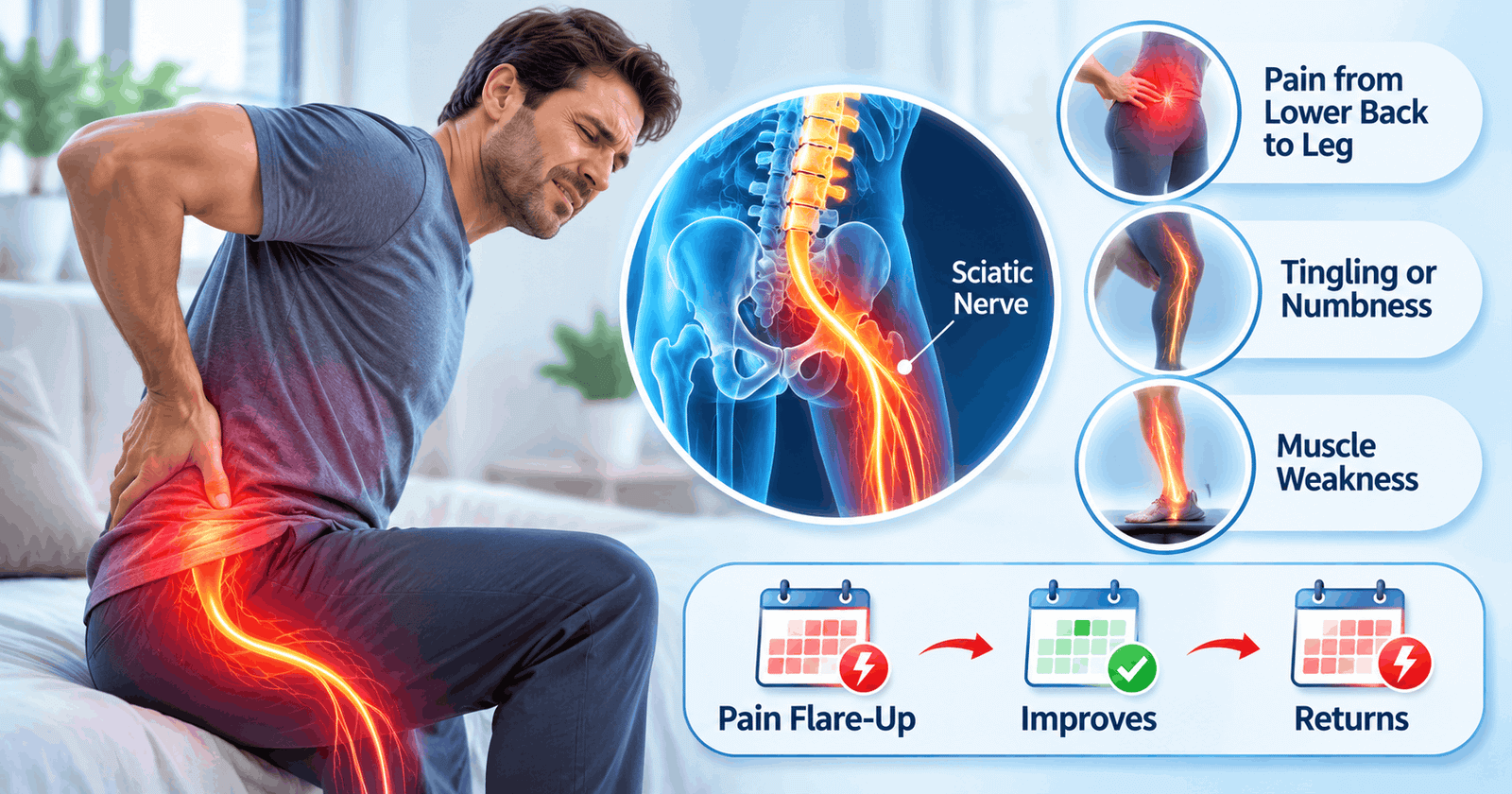
Sciatica is nerve-related pain that occurs when the sciatic nerve pathway is affected by pressure or irritation in the lower spine. The pain often starts in the lower back or buttock and travels down one leg. Some people also experience tingling, numbness or muscle weakness.
Recurring sciatica means these symptoms improve and then return, sometimes after weeks or months.
The sciatic nerve is the biggest nerve found in the human body. Because it travels from the lower spine through the buttocks and down the legs, problems affecting its nerve roots can cause symptoms in several areas.
Why Does Sciatica Keep Coming Back?
There is rarely one explanation for every flare-up. Several underlying conditions and everyday habits may contribute to repeated symptoms.
A Herniated or Bulging Disc
A spinal disc can bulge or herniate and irritate a nearby nerve root. Symptoms may improve as inflammation settles, but the underlying disc problem may continue to cause discomfort. Learn more about disc-related back pain and how doctors evaluate these conditions.
Spinal Stenosis
Spinal stenosis occurs when spaces within the spine become narrower. This pressure may irritate nearby nerves and result in pain, numbness or reduced muscle strength.
Symptoms may become more noticeable when standing or walking for extended periods.
Repeated Strain and Limited Movement
Long periods of sitting, poor lifting techniques and sudden increases in physical activity may aggravate existing back problems. Weakness or reduced flexibility can also make everyday movements more difficult.
An Underlying Condition Has Not Been Addressed
Pain medication may temporarily reduce discomfort without resolving the cause. This is one reason chronic sciatic nerve pain can return after a period of improvement.
Identifying the underlying condition is essential for choosing appropriate care.
What Are the Treatment Options for Recurring Sciatica?
The right sciatic nerve pain treatment depends on the source of nerve irritation, symptom severity and overall health. A treatment that works for one person may not be suitable for another.

Physical Therapy and Guided Exercise
Physical therapy is often an important part of sciatica care. A therapist can recommend exercises that improve flexibility, strengthen supporting muscles and encourage safer movement.
Gentle activity is generally preferable to prolonged bed rest. Exercises should be adjusted if they increase symptoms.
Medication and Pain Management
Depending on the diagnosis, a healthcare professional may discuss medication to manage discomfort. Anti-inflammatory medicines may be considered for some patients, but they have potential side effects and may not work well for nerve-related pain.
Muscle relaxants or other medicines should only be used when clinically appropriate. Medication alone is rarely a complete long-term strategy.
Image-Guided Epidural Injections
For selected patients with severe symptoms, an epidural steroid injection may be considered. The medication is delivered into the epidural space near affected spinal nerves to help reduce inflammation.
These injections may provide temporary relief, but results vary. They do not correct every structural cause of sciatica and are not appropriate for everyone.
Surgical Evaluation
If significant symptoms continue despite appropriate non-surgical treatment, or if there is progressive neurological weakness, a surgical opinion may be necessary.
Spinal decompression procedures can relieve pressure on affected nerves in appropriately selected patients. The decision depends on examination findings, imaging and the patient’s overall condition. For additional information, explore these non-surgical treatment options.
How Can You Prevent Sciatica from Coming Back?
Although no method can guarantee that symptoms will never return, healthy movement habits may help reduce the risk of further flare-ups.
Consider these practical steps:
- Maintain an active lifestyle with exercises appropriate for your condition.
- Strengthen your core and back muscles through guided exercises.
- Change your sitting position frequently throughout the day.
- Use safe lifting techniques.
- Maintain a healthy weight where appropriate.
- Follow your prescribed rehabilitation plan.
- Address new or worsening symptoms early.
Long-term sciatica relief usually involves managing the underlying cause rather than relying only on short-term pain relief.

When to Consult a Specialist for Chronic Sciatic Nerve Pain
Consider a medical evaluation if sciatic nerve pain keeps returning, lasts several weeks, affects your sleep or makes everyday activities difficult.
A healthcare professional may review your symptoms, medical history and physical examination findings. Imaging such as an MRI may be appropriate when the results are likely to change treatment decisions.
Seek emergency medical attention if you develop new difficulty controlling your bladder or bowel, numbness around the groin or saddle area, or severe or rapidly worsening weakness in your legs. These can be warning signs of serious nerve compression. For more guidance, read about when to see a pain specialist.
Conclusion
Recurring sciatica can affect your mobility, sleep and quality of life. However, repeated flare-ups do not mean you have to accept ongoing discomfort as part of everyday life. Understanding the underlying cause is the key to choosing suitable sciatic nerve pain treatment.
Whether the issue involves a disc condition, spinal narrowing or another source of nerve irritation, an individualized approach can help address symptoms and improve daily function. With appropriate assessment, rehabilitation and medical guidance, many people can work toward better pain management and long-term sciatica relief.
Frequently Asked Questions
- Why Does Sciatica Keep Coming Back?
Sciatica may return because the original cause of nerve irritation remains. Disc problems, spinal stenosis, repeated strain and incomplete rehabilitation can all contribute to recurring symptoms.
- What Causes Chronic Sciatic Nerve Pain?
Common causes include herniated discs, spinal stenosis and other conditions that compress or irritate spinal nerve roots. A proper assessment helps identify the source.
- What Is the Best Treatment for Recurring Sciatica?
No single treatment works for everyone. The right approach may involve physical therapy, medications, targeted injections or surgery, depending on the cause and severity of the condition.
- How Can I Prevent Sciatica from Coming Back?
Regular movement, guided strengthening exercises, safe lifting habits and avoiding prolonged sitting may help reduce flare-ups. Follow a plan suited to your medical condition.
- When Should I See a Pain Management Specialist for Chronic Sciatica?
Seek an evaluation if pain persists, repeatedly returns or interferes with daily activities. New bladder or bowel problems, saddle numbness or progressive leg weakness require emergency assessment.