
Trigger Point Injections for Muscle Knots: A Patient-Friendly Guide
Picture a hard little lump under the shoulder blade. It hurts when pressed and now and then sends an ache toward the head. Heat helps for maybe an hour. Stretching helps a little bit. Then it’s back again. When that cycle drags on, trigger point injections for muscle knots are worth raising with your doctor.
Below, we walk through how trigger point injection therapy works, who tends to benefit and what the studies really say. If you’re after pain relief, you’ll get plain answers. If you’re a clinician considering a referral, you’ll get a fair summary from Rodolfo Gari MD.
Knots 101
The medical term is myofascial trigger point. Everyone else just says a knot. It’s a small, irritable patch inside a tight band of muscle. Pressing on it often brings back your usual pain or sets off pain somewhere nearby. A knot in the upper back can ache all the way up toward the neck, for example.
Many develop after overuse, injury or long stretches of bad posture. If one hangs around for weeks or months, a doctor may call it myofascial pain syndrome. Around that point, a heating pad stops cutting it. Muscle knot pain treatment turns into a medical question. ters even more because one visit rarely fixes anything and the plan has to hold up over time.
How Trigger Point Injection Therapy Works
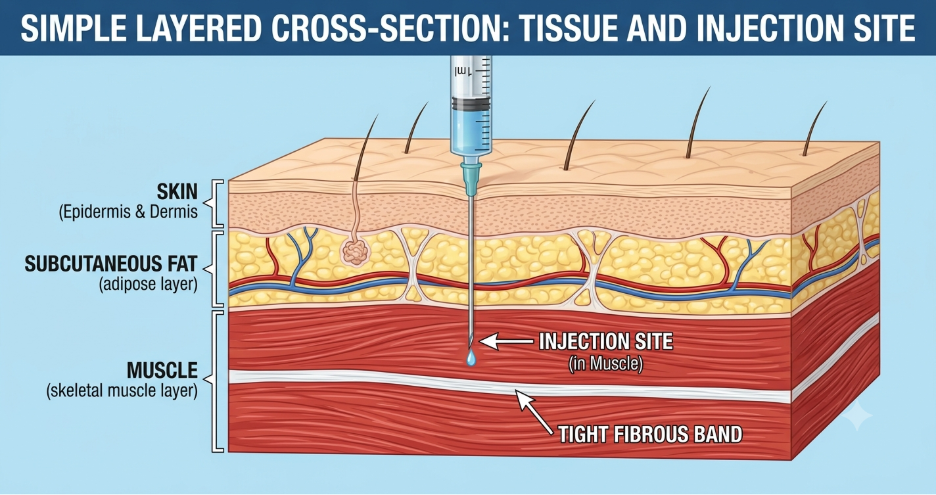
Your doctor starts by locating the knot with their fingers. A thin needle then goes in, delivering a local anesthetic such as lidocaine. Some physicians add corticosteroid to the mix. Others skip it. When the needle hits the knot, you’ll usually feel the muscles jump for a second.
What to Expect During Your Visit?
It’s a short visit. Your doctor cleans the skin then injects each knot they’ve found, one at a time. The whole thing can take just a few minutes. Afterward, the area may feel sore.
Most persistent pain traces back to one of two places: nerves or muscles. Here is how each tends to feel:
Combining Injections with Other Care
Muscle knot pain treatment rarely stops at the needle. Stretching and physical therapy often come up, along with a few tweaks to how you sit, stand and move through the day. Sometimes muscle pain medication joins the plan too. The goal is less painful, enough that you can rebuild strength without flinching. ed conditions and medication safety before suggesting anything. Choosing a nerve specialist who explains each step makes a real difference.
How Well Do Injections for Myofascial Pain Work?
StatPearls, a widely used clinical reference, calls trigger point injection therapies an effective primary or adjunctive option for inactivating trigger points. The trials are less convincing. A 2019 meta-analysis of head, neck and shoulder myofascial pain found local anesthetic lowered pain by about 1.6 points on a 10-point scale over one to four weeks compared with dry needling.
Its authors still rated the evidence low quality. An older Pain Medicine review couldn’t say the treatment clearly works or clearly fails. So where does that leave you? Injections for myofascial pain look like a reasonable tool for muscle pain relief. They just shouldn’t be expected to do the job alone.k
Who May Benefit and What Are the Risks?
Injections for myofascial pain suit some people better than others. Doctors usually think about trigger point injections for muscle knots when there’s one clear tender spot that hasn’t eased after stretching, heat or physical therapy. An active infection at the site means waiting.
Bleeding disorders, blood thinners and anesthetic allergies need a closer look first. Tell your doctor about any muscle pain medication you take. Burning, numbness or shooting pain often points to nerve problems rather than a muscle knot. A nerve specialist can work out which one you’re dealing with through an exam and testing. That answer shapes the right muscle knot pain treatment.
Possible Side Effects
Most people get nothing worse than a sore spot or a small bruise at the injection site. Infection and bleeding are possible but unlikely. If the knot sits near the ribs, there’s a slim chance the needle punctures a lung (pneumothorax) so it’s worth choosing a doctor who does these injections often. Too much anesthetic reaching the bloodstream, called systemic toxicity, is rare.
Where Injections Fit in Chronic Pain Management
Pain that lasts is rarely tied to a single cause. Chronic pain management usually starts with finding out what is actually keeping it going. Procedures and rehab follow, along with goals that suit your life. A pain management physician or nerve specialist may walk you through muscle knot pain treatment choices such as dry needling, physical therapy or a nerve-focused procedure.
For the bigger picture, start with our piece on multimodal pain management. You can also browse what else Rodolfo Gari MD has published.
Conclusion: Take the Next Step Toward Pain Relief
Trigger point injections for muscle knots won’t solve every kind of pain. For the right patient, they can support muscle pain relief, particularly when paired with rehabilitation. The evidence is modest, so keep your expectations modest as well. Whether you’re considering muscle knot pain treatment or injections for myofascial pain, begin with an accurate diagnosis. Everything in chronic pain management builds from there.
Dr. Rodolfo Gari is an experienced interventional pain management physician and nerve specialist who treats muscle pain and nerve problems. He takes a patient-first approach. Schedule a consultation with Dr. Gari to find out whether trigger point injection therapy fits your situation. Muscle pain relief can start with a single conversation.
Frequently Asked Questions
1. Are trigger point injections for muscle knots painful?
A little, yes. The needle stings for a moment as it goes in. Some people also feel a small jump in the muscle. Any soreness usually settles within days.
2.How Long Do Injections for Myofascial Pain Last?
That varies from person to person. Studies generally track pain relief across a span of weeks. Some people need repeat sessions or muscle pain medication alongside rehabilitation.
3.Can injections treat nerve pain such as sciatica?
Not directly. Trigger point injection therapy is aimed at muscle knots. Sciatica and similar nerve problems need their own evaluation.