Kyphoplasty vs Vertebroplasty: Which Spine Procedure Is Right for You?
Severe back pain can feel debilitating, especially when it stems from a spinal fracture that limits your ability to move, sit or even sleep comfortably. If you’ve recently been diagnosed with a spinal fracture, you may have come across the terms kyphoplasty vs vertebroplasty while researching treatment options. These procedures are often recommended when conservative treatments fail, but understanding which one is right for you can feel overwhelming.
The comparison of kyphoplasty vs vertebroplasty is essential when choosing the most effective vertebral compression fracture treatment. Both procedures are minimally invasive and aim to stabilize fractured vertebrae, reduce pain and restore mobility. However, they differ in technique, recovery outcomes and overall benefits, which makes selecting the right option a critical decision for long-term spine health.
In this comprehensive guide, we will explore the key differences between kyphoplasty vs vertebroplasty, how each procedure works, their benefits, risks and recovery timelines. By the end of this article, you will have a clear understanding of both procedures and be better equipped to discuss your treatment plan with your healthcare provider confidently.
Understanding Kyphoplasty vs Vertebroplasty
What Is Kyphoplasty vs Vertebroplasty?
When discussing kyphoplasty vs vertebroplasty, both procedures are designed to treat spinal fractures known as vertebral compression fractures. These fractures occur when one or more vertebrae collapse, leading to severe pain, reduced mobility and potential spinal deformity.
Both techniques fall under the category of vertebral compression fracture treatment, as they aim to stabilize the damaged vertebra and alleviate pain. However, the key difference lies in how the stabilization is achieved and whether the structure of the vertebra is restored.
Causes of Vertebral Compression Fractures
Understanding the underlying causes of spinal fractures helps clarify why procedures like kyphoplasty vs vertebroplasty are necessary. These fractures often develop due to weakened bones or sudden trauma.
Common causes include:
- Osteoporosis, which reduces bone density and strength
- Falls or accidents that place pressure on the spine
- Cancer that weakens spinal bones
- Long-term use of medications like steroids
In many cases, patients require advanced vertebral compression fracture treatment because non-surgical options are not sufficient to relieve pain or restore function.
Goals of Treatment
Both procedures share similar goals despite their differences. When comparing kyphoplasty vs vertebroplasty, the focus is on improving the patient’s quality of life.
Primary goals include:
- Stabilizing the fractured vertebra
- Reducing pain quickly and effectively
- Improving mobility and function
- Preventing further spinal collapse
These goals make both procedures effective options for vertebral compression fracture treatment.
Kyphoplasty Procedure Explained
How Kyphoplasty Works
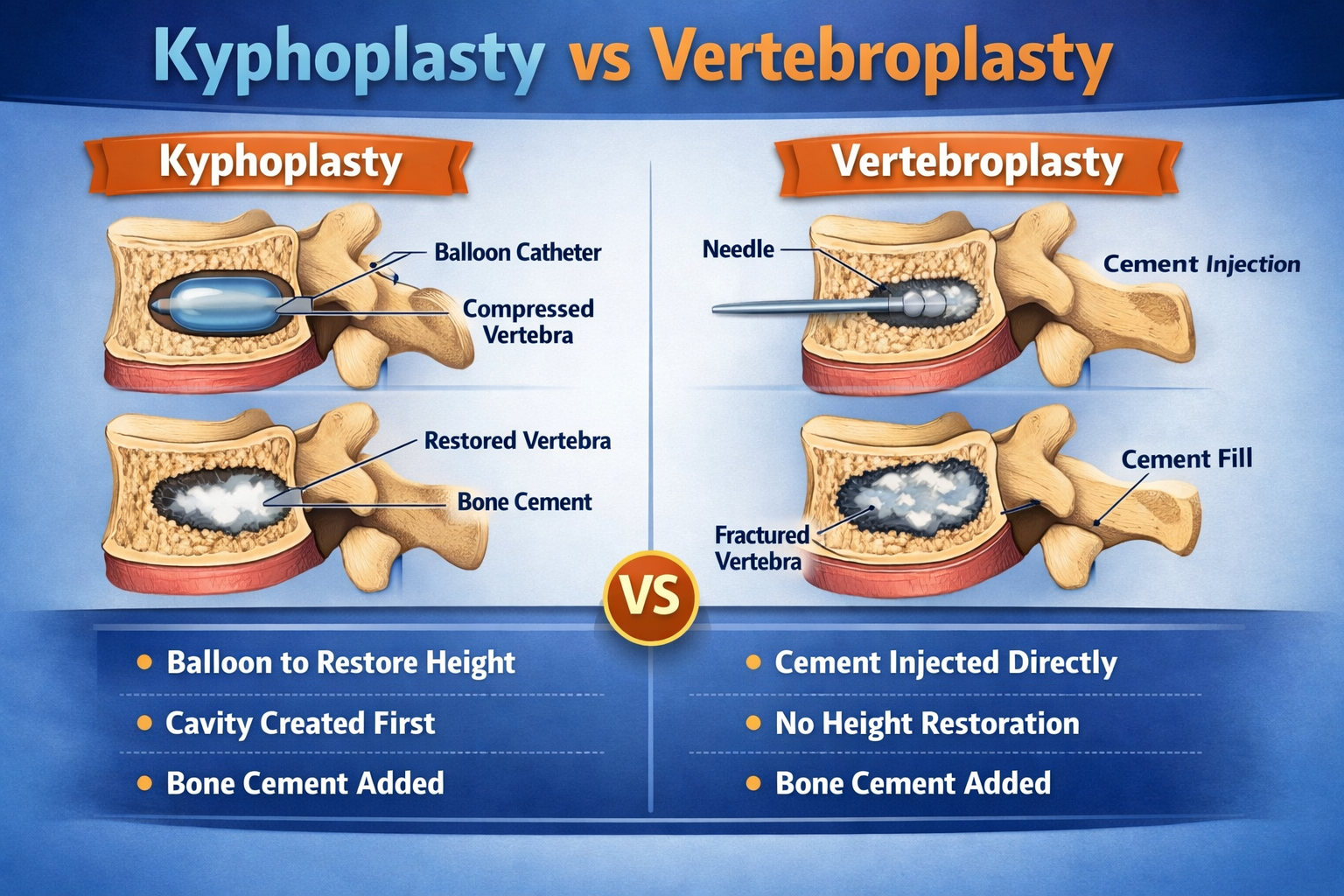
In the debate of kyphoplasty vs vertebroplasty, kyphoplasty stands out due to its ability to restore the shape of the vertebra. The procedure begins with the insertion of a small balloon into the fractured vertebra. This balloon is gently inflated to create space and elevate the collapsed bone.
Once the space is created, medical-grade bone cement is injected into the cavity to stabilize the vertebra. This dual-action approach makes kyphoplasty a highly effective vertebral compression fracture treatment, especially in cases where structural correction is needed.
Benefits of Kyphoplasty
Kyphoplasty offers several advantages that make it a preferred option in certain cases.
Key benefits include:
- Restoration of vertebral height and alignment
- Reduction in spinal deformity such as kyphosis
- Significant and rapid pain relief
- Lower risk of cement leakage due to controlled placement
These benefits play a major role in the kyphoplasty vs vertebroplasty decision-making process.
When Kyphoplasty Is Recommended
Doctors typically recommend kyphoplasty for patients with more severe fractures or noticeable spinal deformity.
Common indications include:
- Collapsed vertebrae with height loss
- Severe, persistent pain
- Postural changes due to fracture
As a specialized vertebral compression fracture treatment, kyphoplasty is ideal for patients needing both stabilization and structural correction.
Vertebroplasty Procedure Explained
How Vertebroplasty Works
When analysing kyphoplasty vs vertebroplasty, vertebroplasty is considered a simpler and faster procedure. It involves injecting bone cement directly into the fractured vertebra without creating space beforehand.
The cement rapidly hardens, stabilizing the fracture and alleviating pain. This straightforward approach makes vertebroplasty an effective vertebral compression fracture treatment for many patients.
Benefits of Vertebroplasty
Vertebroplasty offers several advantages, particularly for patients seeking quick relief.
Key benefits include:
- Shorter procedure time
- Immediate stabilization of the fracture
- Rapid pain relief
- Minimally invasive with small incisions
These benefits make vertebroplasty a strong contender in the kyphoplasty vs vertebroplasty comparison.
When Vertebroplasty Is Recommended
Vertebroplasty is often recommended for patients with stable fractures that do not require structural correction.
Suitable cases include:
- Mild to moderate compression fractures
- Patients with minimal spinal deformity
- Individuals needing quick recovery
It remains a reliable vertebral compression fracture treatment for pain management and stabilization.
Kyphoplasty vs Vertebroplasty: Key Differences
Technique Comparison
Understanding the technical differences between kyphoplasty vs vertebroplasty is essential for choosing the right procedure.
Key differences include:
- Balloon insertion in kyphoplasty vs direct injection in vertebroplasty
- Height restoration vs stabilization only
- Slightly longer procedure vs shorter duration
Both methods are effective forms of vertebral compression fracture treatment, but their approach varies significantly.
Effectiveness and Outcomes
Both procedures have high success rates, but the outcomes differ depending on the severity of the fracture.
Comparison highlights:
- Kyphoplasty improves spinal alignment and posture
- Vertebroplasty provides faster pain relief
- Both reduce pain significantly and improve mobility
These factors are central to the kyphoplasty vs vertebroplasty decision.
Risks and Complications
Although both procedures are generally safe, they still involve some level of risk.
Common risks include:
- Cement leakage
- Infection
- Bleeding
- Nerve irritation
Selecting the appropriate vertebral compression fracture treatment helps minimize these risks and ensures better outcomes.
Recovery Timeline: Kyphoplasty vs Vertebroplasty
Immediate Recovery
Patients undergoing kyphoplasty vs vertebroplasty typically experience noticeable pain relief shortly after the procedure.
Immediate recovery includes:
- Monitoring in a recovery room
- Limited activity for 24 – 48 hours
- Pain management with medications
Short-Term Recovery
Within a few weeks, most patients can return to light activities and daily routines.
Typical progress includes:
- Improved mobility
- Reduced dependence on pain medication
- Gradual return to normal activities
Both procedures offer efficient vertebral compression fracture treatment with relatively quick recovery.
Long-Term Recovery
Long-term results are typically favourable for both procedures.
Key results include:
- Enhanced spinal stability
- Improved posture (especially with kyphoplasty)
- Better quality of life
Choosing the Right Procedure for You
Factors to Consider
Choosing between kyphoplasty vs vertebroplasty requires careful evaluation of multiple factors.
Important considerations include:
- Severity and type of fracture
- Bone density and overall health
- Pain level and symptoms
- Age and lifestyle
Consulting a Specialist
A spine specialist will use diagnostic tools such as MRI or X-rays to determine the best vertebral compression fracture treatment for your condition.
Personalized Treatment Plan
Every patient is different and the choice between kyphoplasty vs vertebroplasty should be tailored to individual needs. A personalized approach ensures optimal results and long-term recovery.
Conclusion
When deciding between kyphoplasty vs vertebroplasty, it’s important to consider your specific condition, symptoms and treatment goals. Both procedures are highly effective forms of vertebral compression fracture treatment, offering significant pain relief, improved mobility and enhanced quality of life.
If you are struggling with persistent back pain caused by a spinal fracture, don’t delay seeking expert advice. Book a consultation today with a spine specialist to determine the most suitable treatment option and take the first step toward recovery and long-term spinal health.